
Unbiased headlines. Facts, not spin.
Unbiased Headlines is an independently owned news organization. We bring you the facts, not opinions, written fresh from 110+ named sources. Sources linked so you can verify it yourself.
 economy
Major Story (7/10)
Event date: October 30, 2026 ·
Polish President Cuts Short Senegal Trip After Police Secure Constitutional Tribunal and Its Chief Is Suspended
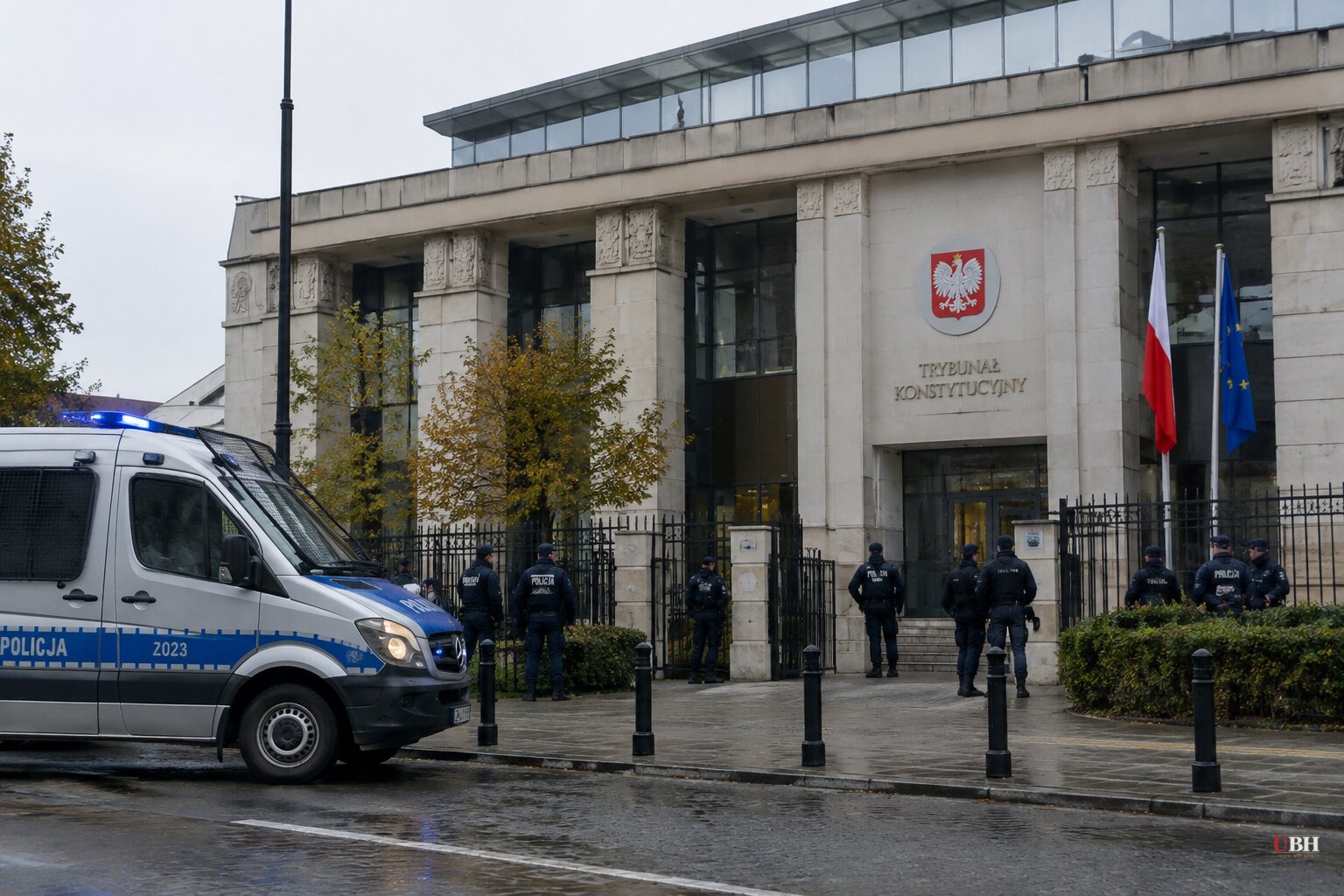
Poland's decade-long fight over its top court turned physical on Friday, Oct. 30. Police secured the Constitutional Tribunal in Warsaw, and the court's president, Bogdan Święczkowski, was suspended, according to the tribunal's own website. His deputy was suspended too.
President Karol Nawrocki was en route to Senegal when the news broke. He ordered the plane turned around. "At such a moment, the President must be in Poland," he posted on X. "I'm interrupting my flight to Senegal. I'm returning."
What triggered it
Święczkowski was appointed under the previous Law and Justice (PiS) government. He had refused to let judges chosen by the current parliamentary majority take their seats.
Nawrocki, a PiS ally elected last year, has refused to swear in three of six judges nominated by parliament. The president's role in the swearing-in is the choke point. Without it, the Tusk government's nominees can't join the bench.
The government's route around that, according to Breitbart's account, was to have the speaker of the Sejm swear in its picks. One of them, Anna Korwin-Piotrowska, then announced she was dismissing Święczkowski and his deputy, Bartłomiej Sochański, and taking control of the body.
That was the escalation. Police blocked Święczkowski from entering the building.
Scuffles and street protests
Dozens of protesters gathered outside. Police said they secured the Tribunal and that dangerous objects were thrown at officers. Some demonstrators prayed. Others carried signs reading "Stop destroying the state."
PiS leader Jarosław Kaczyński and former Prime Minister Mateusz Morawiecki joined the crowd and called the move unlawful and a coup, according to Rzeczpospolita as relayed by Breitbart.
What happened when Nawrocki reached the building is disputed. A government minister said the president forcefully bumped into Korwin-Piotrowska and pushed through a group of judges. Nawrocki's allies say the judges, whom they call usurpers, used force against him and trampled his constitutional authority over swearing-in. Three protesters were reportedly arrested.
Leaked audio from a late-night meeting inside the Tribunal reportedly captures Nawrocki telling Korwin-Piotrowska and two others that they are not judges. Zbigniew Bogucki, head of the president's chancellery, is reported to have accused her of staging a coup. Neither account has been independently confirmed beyond that reporting.
Riot police reinforced security around the court on Saturday, Oct. 31.
Nawrocki demanded that "the forces of coercion" leave the building. He accused the Tusk government of violating the constitutional order and forcibly taking over a constitutional body. Citing a threat to internal security, he called urgent consultations with parliamentary forces.
The government's case
Tusk returned to power in 2023 promising to restore the judiciary's independence. He defended the action on X: "After years of PiS-led lawlessness, this is a difficult process, sometimes painful, and it requires decisive action. There is no other way."
There is institutional backing for his premise. The EU's top court ruled in December 2025 that the Tribunal was not "independent and impartial" because of politicized appointments made under PiS. In 2021, the EU warned that PiS actions posed a "systemic risk to the rule of law in Poland." The EU withheld billions of euros in funds during the PiS years.
In October, the Venice Commission, an advisory body of the Council of Europe, concluded that the new judges had the right to take up their posts with or without Nawrocki's endorsement. The European Commission reaffirmed that position on Sunday, Nov. 1.
Tusk's government has also been blocked repeatedly. Two successive PiS-aligned presidents, Andrzej Duda and now Nawrocki, vetoed its efforts.
The president's case
Nawrocki's position is that the constitution gives the president a role in swearing in judges, and that a parliamentary shortcut with police at the door strips it away. He calls the removal of the Tribunal's chief "a forcible takeover of a constitutional body."
His camp also points out that the government used the police to physically take control of a court. That is a fair thing for anyone, left or right, to be uneasy about, whichever side of this fight they favor. The two sides' legal claims are in direct conflict, and neither has been settled by a ruling the other accepts.
PiS itself is hardly clean on this. It spent eight years in power installing judges in seats already filled under the previous government, which is how the Tribunal ended up in this state.
Politics and money
The fight has spilled beyond Warsaw. Marine Le Pen has used the crisis to decry "strong-arm tactics" in the EU, and Kaczyński last week accused Brussels of wanting to turn the EU into a centralized state.
The Guardian's editorial board argues the legal and moral facts favor Tusk but calls the move risky ahead of an election due by next autumn. It notes the move may hand Kaczyński a cause to unite a far right that has split three ways. That is the paper's view, not an established outcome.
Poland's security posture is also in play. Defense has historically been an area of cross-party agreement. Poland's 2026 defense spending stood at 4.8% of GDP, or $53.8 billion, the largest share in NATO. A Legal 500 analysis says that consensus has fractured this year and that gridlock could cloud the signals Warsaw sends to defense contractors and partners. It adds that any future government is expected to keep spending high and keep close ties to Washington.
Nawrocki is a vocal Trump supporter who has floated calling a planned U.S. base in Poland "Fort Trump."
What's unresolved
The immediate issue is who actually controls the Constitutional Tribunal. That includes whether Korwin-Piotrowska and the other parliament-chosen judges can sit, and whether Święczkowski's suspension stands. Nawrocki's consultations with parliamentary parties, which he called to stabilize the situation, are the next test of whether either side blinks before the 2027 election.
Sources used for this briefing
6 links from 6 independent newsrooms (syndicated copies of the same report count once)
These are the sources it draws on, linked so you can verify.


