
Unbiased headlines. Facts, not spin.
Unbiased Headlines is an independently owned news organization. We bring you the facts, not opinions, written fresh from 110+ named sources. Sources linked so you can verify it yourself.
 economy
Major Story (8/10)
Class Counsel Asks Trade Court to Order Tariff Refunds for All 330,000 Importers; DOJ Wants Only Plaintiffs Paid
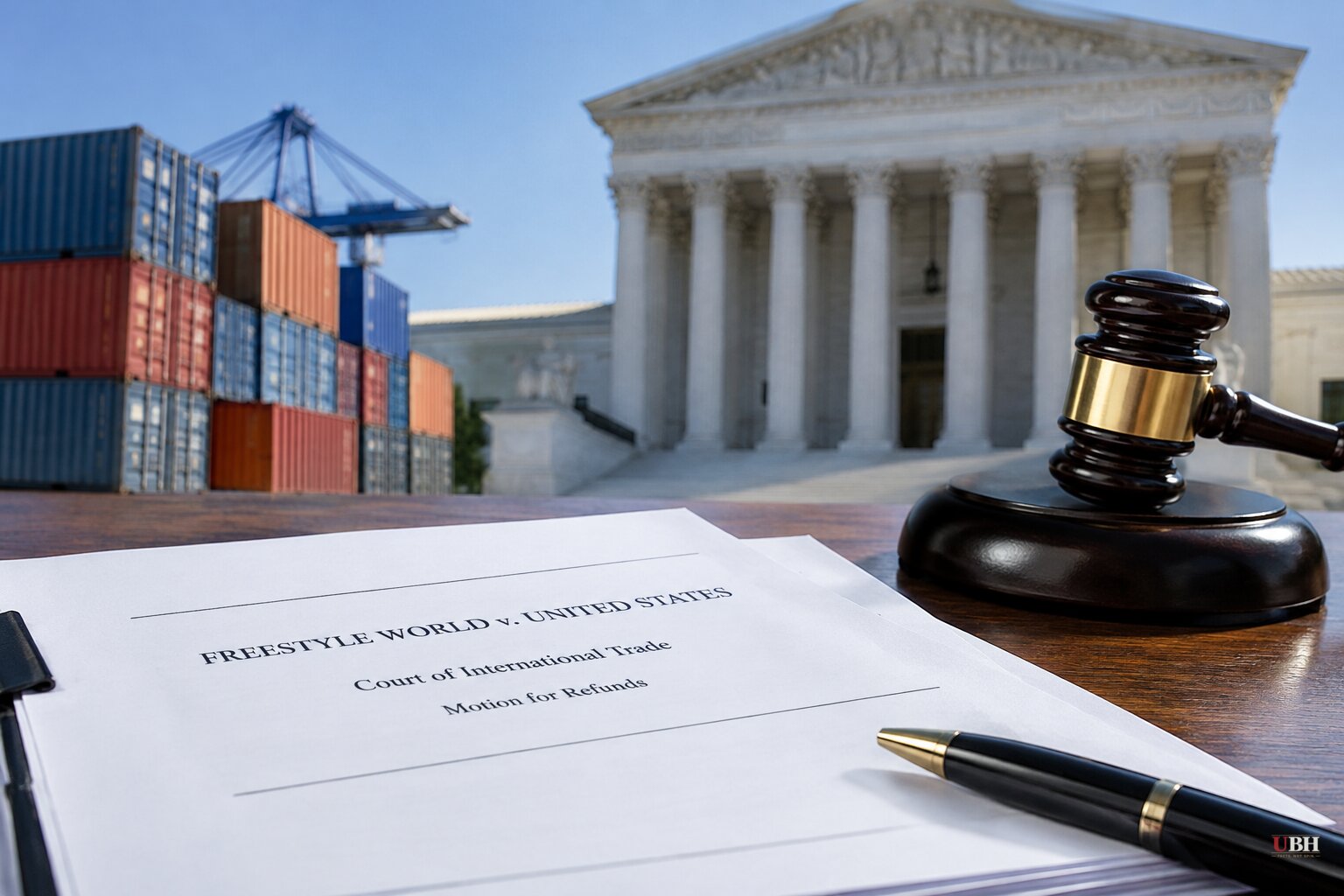
The government collected the money. The Supreme Court said it had no authority to. Now the fight is over who gets it back.
On Tuesday, Nov. 10, class counsel in Freestyle World, Inc. v. United States asked the U.S. Court of International Trade to enter a relief order covering more than 330,000 importers of record. The order would return money collected under the International Emergency Economic Powers Act (IEEPA) tariffs, about $166 billion in total, to every member of the class. That includes importers who never filed their own lawsuits.
The Trump administration is fighting that. It wants refunds to go only to importers who sued.
What the motion asks for
The Supreme Court ruled in February that tariffs imposed under IEEPA exceeded the president's powers. That opened the door to refunds for the companies that paid the duties at the border.
The court certified the class on Oct. 8. Class counsel co-leads Lawrence Friedman of Barnes, Richardson & Colburn, along with Elizabeth Cabraser and Nicholas Diamand of Lieff Cabraser Heimann & Bernstein, say the proposed order would give the agency "the authority it says it needs to provide full refunds with interest to all class members, including the tens of thousands of small businesses who lack the resources to bring their own cases."
They added that they will keep working with the court and the government "to make sure all importers who paid these unlawful tariffs receive the refunds they are owed as quickly as possible."
Who has been paid and who hasn't
Customs and Border Protection has been paying refunds through its Consolidated Administration and Processing of Entries system, known as CAPE. More than $115 billion had gone back to American companies as of August.
Thousands of importers are still waiting. Fortune reported that some hit technical errors in their CAPE submissions. Others lacked the legal resources of larger firms or did not file the right paperwork. Some bought through a larger third-party importer of record, so the refund runs to someone else.
Those gaps are the reason the class action exists. Thousands of larger companies have already filed individual suits. A small business that imported a few shipments has far fewer options.
The administration's position
The administration has not budged on scope. It argues that only importers who independently sued should receive refunds, according to the reporting on the case. The Justice Department, which represents the government, has until Nov. 13 to answer the initial complaint. It has until Dec. 9 to respond to the motion for relief.
The filings should lay out the government's legal argument for a plaintiff-only remedy. The motion's central claim is that the agency needs court authority to pay everyone, and that the order would supply it.
The dispute is not new. Judge Richard Eaton issued a universal refund order in April, according to ua.news, and the administration appealed that ruling in June. The class action is a separate vehicle aimed at the same result.
Why the money matters
Fortune reported that tariffs became a flashpoint in the affordability debate and that many companies raised prices to offset the import taxes. Fortune also reported that refunds would ease the financial strain on those companies. Whether any of that money reaches consumers depends on what the companies choose to do with it. Nothing in the court filings requires a pass-through.
A universal order would also be a large transfer back out of the Treasury. At $166 billion, it is a very big number to move without a legislative appropriation. The refund is owed because the government collected the tax without legal authority. That is a different thing from a spending program.
Trade numbers, a separate question
The IEEPA ruling does not end the tariff debate. The Commerce Department reported Wednesday that the September trade deficit fell 0.7% to $105 billion. Economists had expected $108 billion. Exports rose 1.9% and imports rose 1.2%. Through September, the deficit was 12.2% smaller than a year earlier.
Harvard economist Jason Furman posted charts showing the overall deficit at about 2.7% of GDP, versus 2.9% in 2024 and 3.3% in 2025. Excluding data-center goods such as computers, accessories, semiconductors and telecom equipment, the deficit shrinks to 0.7% of GDP. Computer imports alone jumped $7.6 billion in September.
Breitbart Business Digest reads those numbers as proof that Trump's tariffs are working. Furman's charts separate out the AI equipment buildout. They do not tie the narrower deficit to any particular tariff, and the refund case concerns only the IEEPA duties the Supreme Court struck down.
What comes next
The court has not ruled on the motion. The first checkpoint is Friday, Nov. 13, when the Justice Department's answer to the complaint is due. The second is Dec. 9, when the government must say in writing why refunds should not reach every importer of record. That filing will show how hard the administration intends to fight for a plaintiff-only remedy.
Sources used for this briefing
5 links from 3 independent newsrooms (syndicated copies of the same report count once)
These are the sources it draws on, linked so you can verify.


