
Unbiased headlines. Facts, not spin.
Unbiased Headlines is an independently owned news organization. We bring you the facts, not opinions, written fresh from 110+ named sources. Sources linked so you can verify it yourself.
 economy
Low Interest (4/10)
Event date: November 9, 2026 ·
Kazakhstan and Uzbekistan Agree to More Weekly Flights to China as Beijing Deepens Central Asia Ties
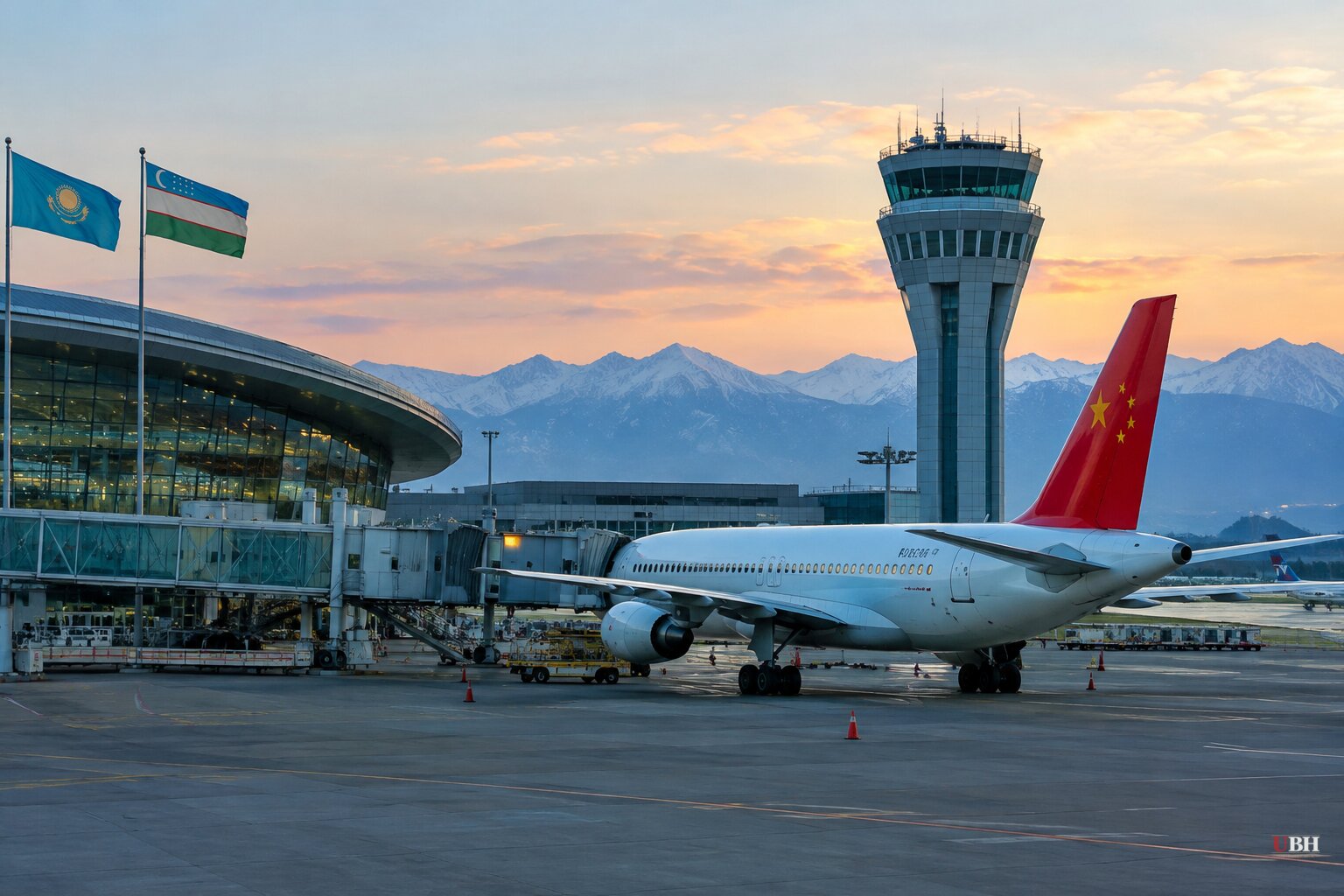
China's footprint in Central Asia grew on several fronts at once this month, and the air-travel numbers are the easiest to count.
Aviation officials from China, Kazakhstan, Kyrgyzstan, Tajikistan, Turkmenistan and Uzbekistan met in Tashkent from Nov. 3 to 5 for the third session of the Central Asia-China (C5+1) Working Group on Civil Aviation. The agenda covered the "Air Silk Road" agreement, liberalizing air transport markets and harmonizing regulations.
The flight numbers
Kazakhstan agreed to lift permitted weekly flights to China from 150 to 180 and to add routes to Chengdu and Kashgar. That follows a July deal in which Kazakh and Chinese authorities raised the cap from 124 to 152 and expanded approved Chinese destinations to 11 cities.
Uzbekistan's Ministry of Transport said it signed documents with China raising authorized weekly flights from 100 to 114. It signed a separate deal with Kazakhstan. Weekly flights on both the Tashkent-Almaty and Tashkent-Astana routes rise from 42 to 60, and every other route between the two countries goes from 14 to 20.
The demand is real. Kazakhstan has 117 scheduled weekly flights to China, up 52% from a year earlier, and by late October airlines were flying 21 routes between the two countries. Kazakhstan's Ministry of Transport said more than one million passengers had flown between them so far this year.
Air Astana and China Southern Airlines signed a strategic partnership on Oct. 30 to make connections between their networks easier. It builds on existing codeshares.
The next working-group meeting is scheduled for Kyrgyzstan in 2027.
A region that is flying a lot more
A Eurasian Development Bank study published Oct. 13 found Central Asian airlines carried 31.7 million passengers in 2025, almost double the 2019 figure. Seat capacity grew an average of 7.7% a year from 2015 to 2025, nearly triple the global rate. Air cargo more than quadrupled between 2023 and 2025 to 335,700 metric tons, with Uzbek operators accounting for about 67%.
Kazakhstan handled 48.7% of the region's passengers in 2025. Uzbekistan's airports handled 12.66 million passengers in the first nine months of 2026, up 13%, according to Uzbekistan Airports.
Trade is the backdrop. China-Central Asia trade hit $106.3 billion in 2025, up 12% from the year before.
Astana wants to be the hub. Kazakhstan says it is drafting a 25-year civil aviation master plan with the International Civil Aviation Organization. It is also modernizing the airports in Almaty and Urzhar, building a second runway in Shymkent, and completing regional airports in Zaisan, Katonkaragay and Kendirli.
Money, uranium and a stalled reactor
On the sidelines of the Second Tien Shan Forum on Economic Cooperation in Central Asia, Kazakhstan and China discussed a direct investment fund with initial capital of up to $200 million. Kazakh officials also proposed folding existing financing tools into a single Kazakh-Chinese project-financing and insurance window, with a few pilot projects to test it. If it goes ahead, it would expand the use of the yuan in bilateral project finance.
Kazakh manufacturers signed agreements worth roughly $100 million at the China International Import Expo. The companies and terms were not disclosed.
Kazatomprom CEO Meirzhan Yussupov told President Kassym-Jomart Tokayev the company has new natural uranium supply agreements with major utilities in India and China. China remains the main buyer of Kazakh uranium, and the India deal points to some diversification.
The nuclear plant is the slow part. Negotiations on Kazakhstan's second nuclear power plant continue nearly 18 months after Astana picked China National Nuclear Corporation as the preferred contractor. Kazakhstan's Energy Ministry has not said what the holdup is.
Internet traffic is moving east too
The South China Morning Post reported that after Ukrainian drones hit three Russian data centers last month, taxi, delivery and payment apps stopped working across Central Asia. Days later, Tajikistan launched an internet link between Dushanbe and Beijing over optical fiber through the Pamir Mountains.
The link gives direct access to Hong Kong, a major internet traffic exchange point in Asia-Pacific. It is Tajikistan's fifth international communication access point.
Other governments are building out their own infrastructure. Tajik President Emomali Rahmon ratified a five-year National Civil Aviation Safety Program running to 2031. Turkmen President Serdar Berdymukhamedov endorsed measures to strengthen aviation safety.
It remains unclear whether the larger commitments will move at the pace of the flight caps. The Kazakh-Chinese investment fund is still only a proposal, and the Chinese-built nuclear plant has gone about 18 months without an announced explanation for the delay.
Sources used for this briefing
7 links from 6 independent newsrooms (syndicated copies of the same report count once)
These are the sources it draws on, linked so you can verify.


