
Unbiased headlines. Facts, not spin.
Unbiased Headlines is an independently owned news organization. We bring you the facts, not opinions, written fresh from 110+ named sources. Sources linked so you can verify it yourself.
 economy
Notable (5/10)
AARP: Social Security Could Pay Full Benefits Through 2059 If Taxable Payroll Had Held Its Share of GDP
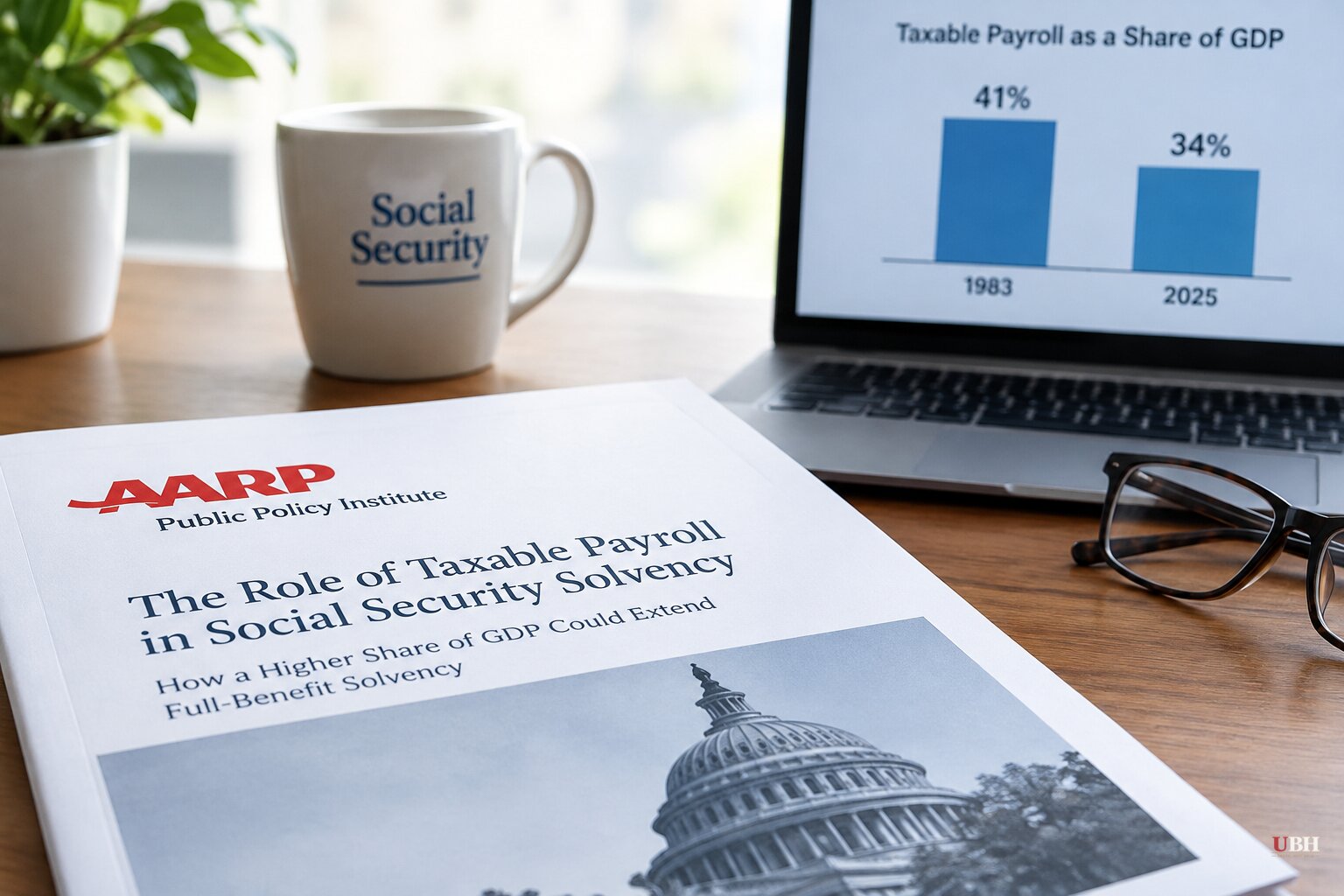
Social Security's main revenue base has shrunk relative to the economy. That is the central finding of a report the AARP Public Policy Institute released Tuesday, Nov. 10.
Taxable payroll was 41% of GDP in 1983. It was 34% in 2025, and the Social Security trustees project it will stay there. Had the share held, AARP says, the program would have collected an extra $10.8 trillion between 1984 and 2034, in inflation-adjusted 2025 dollars. It could then pay full scheduled benefits through 2059, 25 years past the current projected depletion date.
Where the trust funds stand
The trustees said in June that the combined retirement and disability trust funds could be depleted in the third quarter of 2034. At that point, 83% of scheduled benefits would be payable without congressional action.
The retirement fund alone runs dry sooner, in the fourth quarter of 2032, with 78% of benefits payable. AARP built its analysis on the 2034 combined date because Congress has shifted money between the funds before.
Payroll taxes supplied 91% of Social Security's income in 2025. Interest income made up 5%. Federal income tax paid by higher-income beneficiaries on their benefits made up 4%.
What AARP says changed
"Social Security's finances have weakened not simply because America has grown older, but because the economy has changed, while the program's revenue system has not," said Richard Johnson, AARP's vice president of financial security and the report's author.
The report points to several shifts. Labor income's share of GDP fell from 65% in 1970 to 57% in 2023. Corporate profits and investment returns, which carry no Social Security tax, grew faster than worker pay. More business owners now organize as S corporations, which lets them report part of their compensation as profit that escapes the payroll tax. AARP also cites automation.
Wage growth has been concentrated at the top, and the payroll tax stops at a cap. The cap is $184,500 in 2026 and rises to $192,300 in 2027. In 1983, lawmakers expected the cap to cover 90% of earnings. According to the Roosevelt Institute, a liberal think tank, coverage fell to around 83% by 2000 and has mostly stayed there.
Aging is part of the story too, and AARP says so. The worker-to-beneficiary ratio is expected to fall from 3.4 in 2000 to 2.4 in 2030, and falling birth rates shrink it further. Johnson's argument is that demographics are not the whole explanation.
The proposed fixes
The report does not endorse a specific solution. It cites bills in Congress that would raise or eliminate the cap and tax investment income above a threshold. They include the Social Security 2100 Act, the Social Security Expansion Act and the Medicare and Social Security Fair Share Act. The 2100 Act would scrap the cap and add a tax on investment income for taxpayers earning more than $400,000.
AARP says Sens. Bernie Moreno (R-Ohio) and Elizabeth Warren (D-Mass.) have proposed eliminating the cap but have not introduced legislation. It is an unusual pairing across party lines.
According to AARP, 6% of individuals had earnings at or above the cap in 2024. Johnson said the proposals "would not affect lower- or middle-income taxpayers." AARP estimates that eliminating the cap entirely, with no added benefits for the new contributions, would close 67% of the program's 75-year shortfall. That leaves roughly a third unresolved.
The advocacy angle
AARP represents Americans 50 and older, and its conclusions line up with its members' interests. Bill Sweeney, the group's senior vice president for government affairs, said the findings undercut calls to raise the retirement age and cut benefits.
"Social Security isn't facing insolvency because retirees are taking out too much; it happened because the economy changed and Congress never took action to keep up with it," Sweeney said. Johnson put it this way: "The fix for Social Security isn't cutting earned benefits; it's rebuilding the revenue behind them."
Those are AARP's conclusions, not the trustees'. The 2059 figure is a hypothetical. It asks what would have happened had the tax base tracked the economy, and it does not say the base could have been kept there without policy changes or tradeoffs.
The trustees' numbers set the timeline. Without legislation, the retirement fund is projected to run short in late 2032 and the combined funds in 2034. Moreno and Warren have floated eliminating the cap, but no bill carrying that proposal has been introduced, so Congress has no vehicle for it yet.
Sources used for this briefing
7 links from 6 independent newsrooms (syndicated copies of the same report count once)
These are the sources it draws on, linked so you can verify.


