
Unbiased headlines. Facts, not spin.
Unbiased Headlines is an independently owned news organization. We bring you the facts, not opinions, written fresh from 110+ named sources. Sources linked so you can verify it yourself.
 economy
Notable (6/10)
Event date: November 5, 2026 ·
Experts Say Trump's Midterm Loss Raises Odds of a U.S.-India Trade Deal by December as Talks Continue
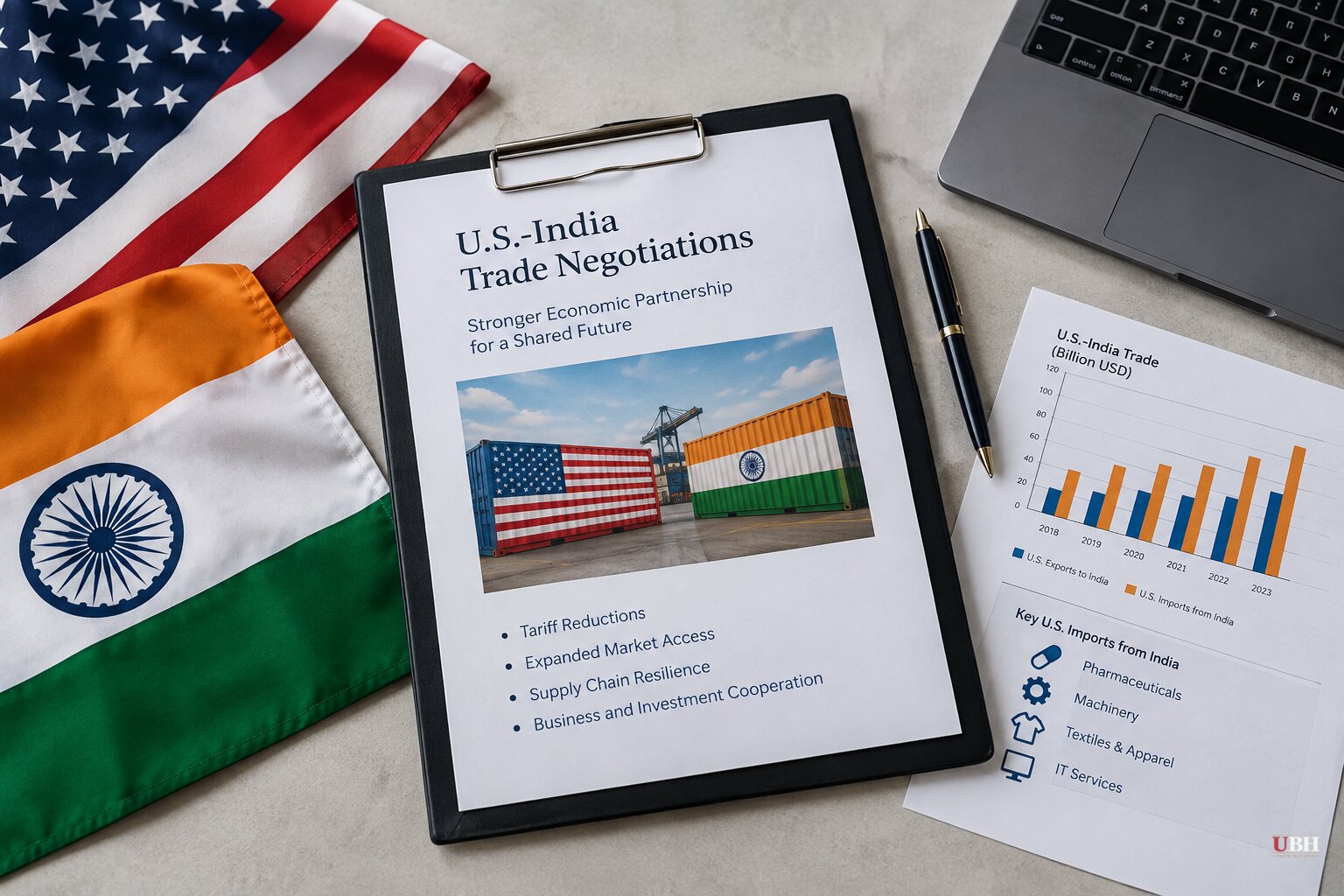
Since Trump announced a deal framework with India in February, the pact has stalled, hit an October impasse, and drawn a fresh round of talks. Eight days after Democrats took both the House and Senate in the Nov. 3 midterms, negotiators are still at the table.
What happened last week
A two-member U.S. team was in New Delhi on Nov. 2-3 for detailed talks on the customs and trade facilitation chapters of the proposed Bilateral Trade Agreement, according to Indian government sources. Commerce ministry officials said negotiations are on track, with work under way to finalize a first tranche of the pact.
Those officials also said technical talks will continue regardless of the election outcome. On Tuesday, Nov. 10, a spokesperson for India's Ministry of External Affairs said the U.S.-India relationship "enjoys bipartisan support in the United States."
India's commerce and external affairs ministries and the U.S. Trade Representative's Office did not respond to CNBC's requests for comment.
The timeline so far
Trump said in February that India had agreed to "Buy American" at a much higher level after the U.S. agreed to cut tariffs on Indian goods to 18%. Final approval has been pending since, particularly after the Supreme Court struck down Trump's tariffs.
In October, officials described the talks as stuck. On Oct. 15, U.S. envoy Sergio Gor said the "big items are done." On Oct. 20, Trump said the two sides were "pretty close" and hinted the deal would be "much different" from previous pacts.
Sticking points still include tariff levels, access to India's agriculture and dairy markets, the threat of U.S. Section 301 tariffs, and sanctions tied to India's Russian oil purchases.
Why analysts see a faster path
Mark Linscott, a former assistant U.S. trade representative now at the U.S.-India Strategic Partnership Forum, told CNBC the talks "are far along." He said there appears to be a "gentlemen's agreement" between Trump and Prime Minister Narendra Modi to conclude a deal when they meet at Mar-a-Lago in December.
Ronak Desai, a visiting fellow at Stanford's Hoover Institution, said the election "was a verdict on the cost of living, and tariffs are now a liability the President cannot defend on the numbers." He argued Congress "will not hand him an affordability win, but a trade deal is one he can announce on his own." Desai said an India announcement is "more likely than it was before the election."
Ajay Srivastava, founder of the Global Trade Research Initiative, told ANI on Nov. 5 that a weakened Trump "will have only trade to concentrate" on. He expects a deal within roughly two months.
The cost-of-living argument has numbers behind it. Tax Foundation estimates put the average U.S. household's added tax burden from tariffs at $820 in 2026 and $1,000 in 2025. Trump maintains Americans do not share the burden of his tariffs.
Why others say little changes
Not everyone sees a political shift. Indian sources cited by India Weekly say the interim pact does not require ratification by Congress, so the new Democratic majorities do not directly threaten it. That cuts both ways: it means the election does not block the deal, and it also means Congress has no formal vote on it.
GTRI's own latest report cautions that the midterm setback does not necessarily make U.S. trade policy less restrictive. The group says the framework asks India to cut tariffs while the U.S. keeps its regular Most Favoured Nation duties. It also flags India's proposed purchase and policy commitments and the continuing possibility of added U.S. tariffs.
The report warns the arrangement could breach India's World Trade Organization commitments and weaken its negotiating position.
Srivastava said Washington could keep the Russian oil threat as leverage, with additional tariffs of around 17-19% possible rather than the far higher level once discussed.
What to watch
The date that matters is the December leaders' meeting. No signing has been scheduled, and neither government has released a text. It is unclear whether negotiators can close the dairy and agriculture gap and the Russian oil dispute by then, or whether the "first tranche" Indian officials describe stays a partial deal.
Sources used for this briefing
7 links from 7 independent newsrooms (syndicated copies of the same report count once)
These are the sources it draws on, linked so you can verify.


