
Unbiased headlines. Facts, not spin.
Unbiased Headlines is an independently owned news organization. We bring you the facts, not opinions, written fresh from 110+ named sources. Sources linked so you can verify it yourself.
 economy
Notable (6/10)
Canada's Ambassador Tells B20 Summit That Tariff Uncertainty Is Raising Investment Costs
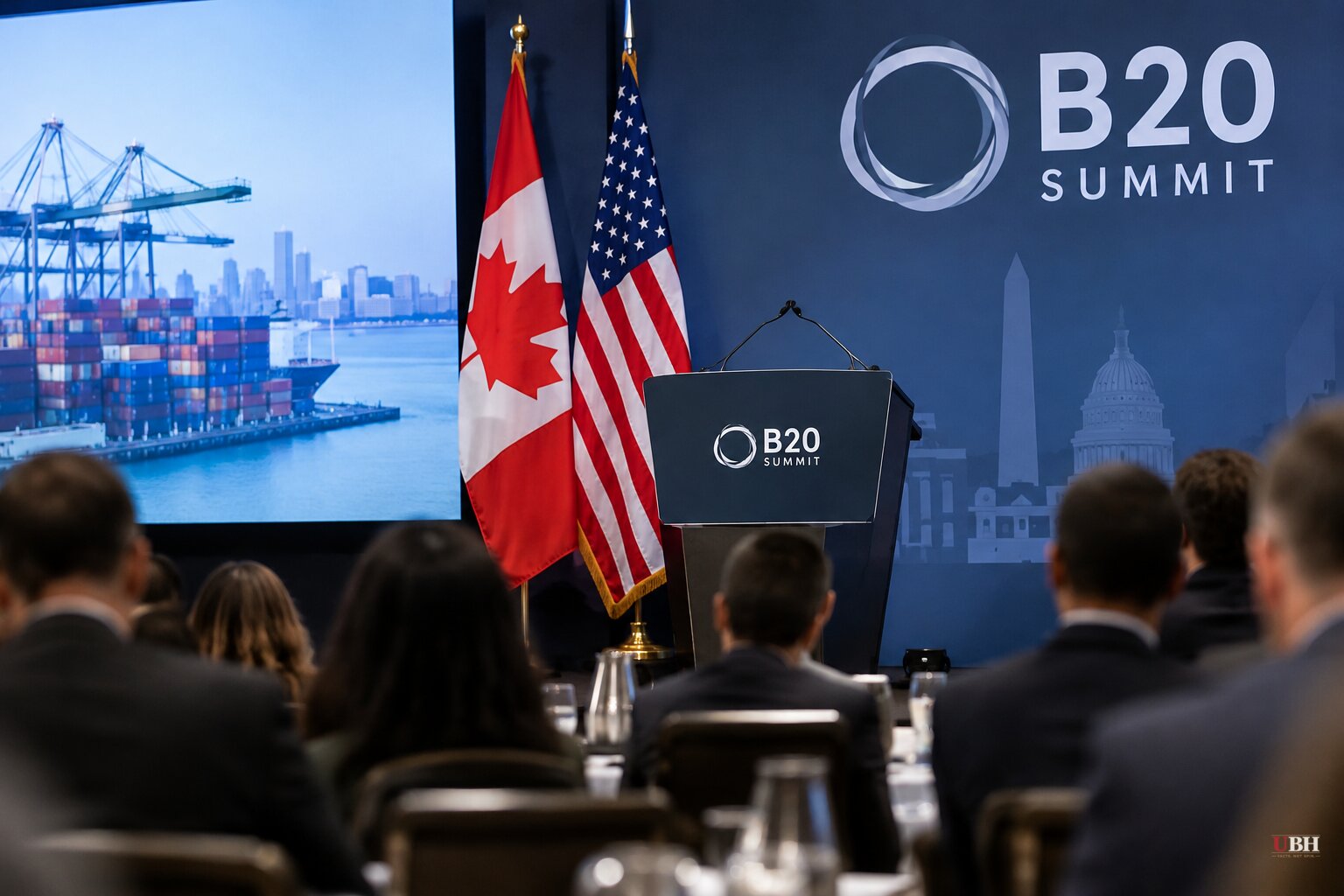
Canada's ambassador to the United States says President Donald Trump's tariffs are making it more expensive for American companies to invest.
"Uncertainty increases your cost of capital," Ambassador Mark Wiseman said today, Nov. 11, at the B20 summit in Washington, a gathering of global business leaders hosted by the U.S. Chamber of Commerce.
Wiseman is a former BlackRock executive who took the ambassador post in February. He is also an interested party, representing a government that wants the tariffs gone. His claims deserve to be read against the numbers.
What Wiseman said
His argument is about planning. "If you're going to build a new plant, add a new ship, spend money on R&D, the more certainty you have, the more likely you're going to do that," he said.
He called for removal of the tariffs imposed under Sections 232 and 338 of U.S. trade law. "The sooner, the better," he said.
Wiseman described Canada's goal as getting back "as close as we can to free trade." He pointed out that the two countries have had comprehensive free trade since 1988.
The numbers behind the dispute
The two countries traded roughly $570 billion in goods in the first nine months of 2026, according to U.S. Census Bureau data. That is up from the same period in 2025 but below the comparable nine months in each of the previous three years, when Joe Biden was president.
The Congressional Research Service puts U.S. customs duties calculated on Canadian imports at $10 billion in 2025. In 2024 the figure was $400 million.
Somebody pays that money. An October study by New York Fed researchers found that nearly 90% of tariff costs were passed on to U.S. importers. About a quarter of tariff increases eventually reach consumer goods prices, and the researchers expect further price pressure in 2027.
The Labor Department reported that consumer prices rose 0.4% in October, higher than expected. None of the data released so far assigns that monthly reading to tariffs alone.
Trump's position
Trump has defended the tariffs as necessary to protect U.S. manufacturers and workers. He accuses Canada of discriminatory trade practices that disadvantage U.S. exporters.
The administration has imposed duties of up to 50% on certain Canadian products. Canada has answered with retaliatory measures aimed at billions of dollars in U.S. exports.
The U.S. side has also accused Ottawa of playing politics. On Oct. 21, the U.S. Embassy in Canada published a list of statements by Canadian officials, arguing they undercut Prime Minister Mark Carney's denials of interference in American elections. "The Canadian government brushes off concerns about potential interference in U.S. elections, even as its ministers and premiers openly describe plans to influence American politics in official documents and public appearances," the embassy said.
The embassy cited Industry Minister Mélanie Joly. In March 2025, as foreign affairs minister, she said Canada was "doubling down on products that will have an impact politically in Republican states." In August she said Canada was targeting products from certain U.S. states with counter-tariffs "to put political pressure." The embassy also pointed to Ontario Premier Doug Ford, to contacts between Canadian officials and Democratic politicians, and to a federal anti-tariff billboard campaign.
Carney said on Oct. 16 that Ottawa's expectation is that "we don't get ourselves involved in their elections, they don't get themselves involved in our elections." Joly said on Oct. 14, "I would never do that, and we would never accept that also being done to us in Canada." Carney and other Canadian politicians reject the embassy's suggestion.
Talks and the political calendar
The two governments resumed negotiations after talks collapsed in August. The discussions focus on reducing U.S. tariffs on Canadian steel and automobiles.
Carney said Tuesday that the Trump administration remains Canada's principal negotiating partner.
The politics in Washington have shifted. Republicans suffered sweeping losses in the Nov. 3 midterms, and Democrats are preparing to challenge Trump's tariffs when they take control of Congress in January.
That sets up a clear test. Negotiators have not announced any agreement on steel or autos. Whether one arrives before Democrats take over Congress in January, and whether it removes the Section 232 and 338 tariffs Wiseman wants gone, is the open question.
Sources used for this briefing
7 links from 4 independent newsrooms (syndicated copies of the same report count once)
These are the sources it draws on, linked so you can verify.


