
Unbiased headlines. Facts, not spin.
Every story is an unbiased news briefing written from 110+ sources across the spectrum — sources linked so you can verify it yourself.
 defense
Notable (5/10)
June 20, 2026 at 04:07 AM
defense
Notable (5/10)
June 20, 2026 at 04:07 AM
Poland Strips Zelensky of Its Highest Honor Over Military Unit Named for WWII Nationalist Group
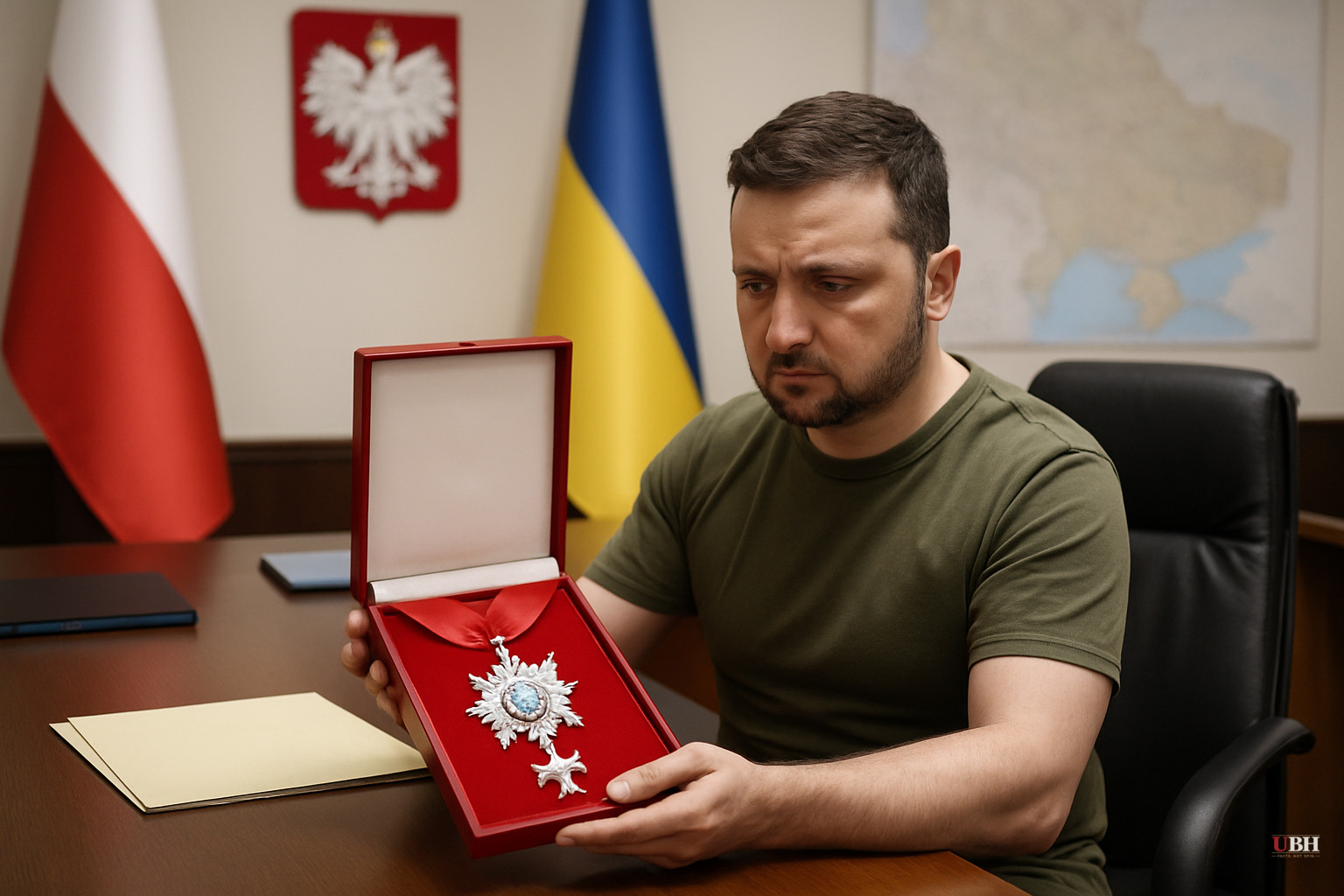
Polish President Karol Nawrocki pulled Ukraine's President Volodymyr Zelensky's Order of the White Eagle on June 19, 2026, the highest honor Poland bestows on a foreign head of state. Former President Andrzej Duda had presented it to Zelensky in 2023 as a symbol of wartime solidarity.
The trigger: Zelensky authorized naming an active Ukrainian Armed Forces unit "Heroes of the UPA" — a reference to the Ukrainian Insurgent Army, a nationalist paramilitary force that operated in the 1940s and 1950s.
Why Poland Considers This a Red Line
The UPA is not a neutral historical figure in Poland. Between 1943 and 1945, in the Volhynia (Volyn) region of what is now western Ukraine, Ukrainian nationalist fighters killed around 100,000 ethnic Polish civilians in a series of coordinated massacres, according to the Polish government's position cited across all three sources. Thousands of Ukrainians were also killed in retaliatory Polish attacks. Poland accuses the UPA of carrying out a genocide of ethnic Poles in that period.
Nawrocki's statement, released in a video on the Polish presidential website, was explicit: "For the overwhelming majority of Polish society, the UPA remains, above all, a formation responsible for the brutal crimes committed against citizens of the Republic of Poland during World War II."
He added that Poland had repeatedly signaled to Ukraine the sensitivity of the issue before taking action. According to the Kyiv Independent, Nawrocki said: "Ultimately, the Ukrainian side's position has not changed."
How Ukraine Sees It
The Ukrainian view of the UPA is genuinely different. For many Ukrainians, the UPA represents armed resistance against both Soviet and Nazi occupation. Fighters died for Ukrainian independence at a time when the country had no state of its own. Naming a military unit after them, from Kyiv's perspective, is an act of national pride rooted in a real independence struggle, not an endorsement of every atrocity committed during a chaotic and brutal war. Zelensky said he would use the UPA's name for a military unit "with the aim of restoring the historical traditions of the national army."
Ukrainian Foreign Minister Andrii Sybiha said on Facebook that Poland's revocation was "a strategic error by the president of Poland that only benefits Moscow." He also said he would be returning an award he received from Poland in 2022. "No president of another country will dictate our history to us," he said. Kyiv's calculation: at a moment when Ukraine depends on European unity against Russia, a public diplomatic fracture with its closest Western neighbor hands Vladimir Putin an unearned victory.
Polish Prime Minister Donald Tusk posted on X that the controversy "pleases Putin and shocks our allies," calling on both presidents to "tone down emotions, not to fuel tensions," according to the Kyiv Independent. Tusk's framing aligns with Kyiv's concern, even from within Poland's own government.
Chairman of the Verkhovna Rada Ruslan Stefanchuk called the move a "catastrophic mistake that will have far-reaching negative consequences for the Ukrainian–Polish partnership" and lambasted the timing of Nawrocki's announcement, which comes a week before the start of the Ukraine Recovery Conference in Gdansk.
The Domestic Politics Factor
Nawrocki is a conservative politician, and his decision lands in a specific domestic political context. A poll conducted earlier in June found that 52% of Poles say their attitude toward Ukraine had worsened because of the military unit naming, according to the Kyiv Independent. For Nawrocki, stripping the honor was not just a principled stand but politically aligned with where Polish public opinion sits right now.
Tusk's more measured response reflects a different political lane. Poland's prime minister is trying to hold together a pro-Ukraine coalition posture while Nawrocki plays to a base that has legitimate grievances about historical memory.
What the Sources Don't Fully Resolve
All three sources — BBC, the Jerusalem Post (citing Reuters), and the Kyiv Independent — report the core facts consistently. The Kyiv Independent provides the most granular detail, including the Polish polling data and reactions from Ukrainian parliamentary figures. BBC and the Jerusalem Post are thinner on the domestic Polish reaction and don't include the poll figures or the full range of Ukrainian official responses. None of the three sources engage in depth with the historical scholarship on the Volyn massacres themselves, specifically the question of whether UPA leadership directed the killings as policy or whether they were carried out by local commanders.
What Happens Next
Nawrocki stressed the revocation would NOT affect Poland's material support for Ukraine against Russia, a position Kyiv will need to take on faith. The immediate stress test is the Ukraine Recovery Conference scheduled in Gdansk in the coming days. According to the Kyiv Independent, Verkhovna Rada Chairman Stefanchuk called the timing of Nawrocki's move "deliberate, planned, and harmful" given that conference. Neither Zelensky nor the Presidential Office had yet commented on the title's revocation at the time of reporting.
Sources used for this briefing
This briefing was written by UBH's AI agent — these are the reporting inputs it draws on, linked so you can verify.


