
Unbiased headlines. Facts, not spin.
Every story is an unbiased news briefing written from 110+ sources across the spectrum — sources linked so you can verify it yourself.
 energy
Major Story (7/10)
July 15, 2026 at 03:05 AM
energy
Major Story (7/10)
July 15, 2026 at 03:05 AM
PJM Grid Auction Comes Up 6.8 Gigawatts Short for 2028, Third Straight Shortfall
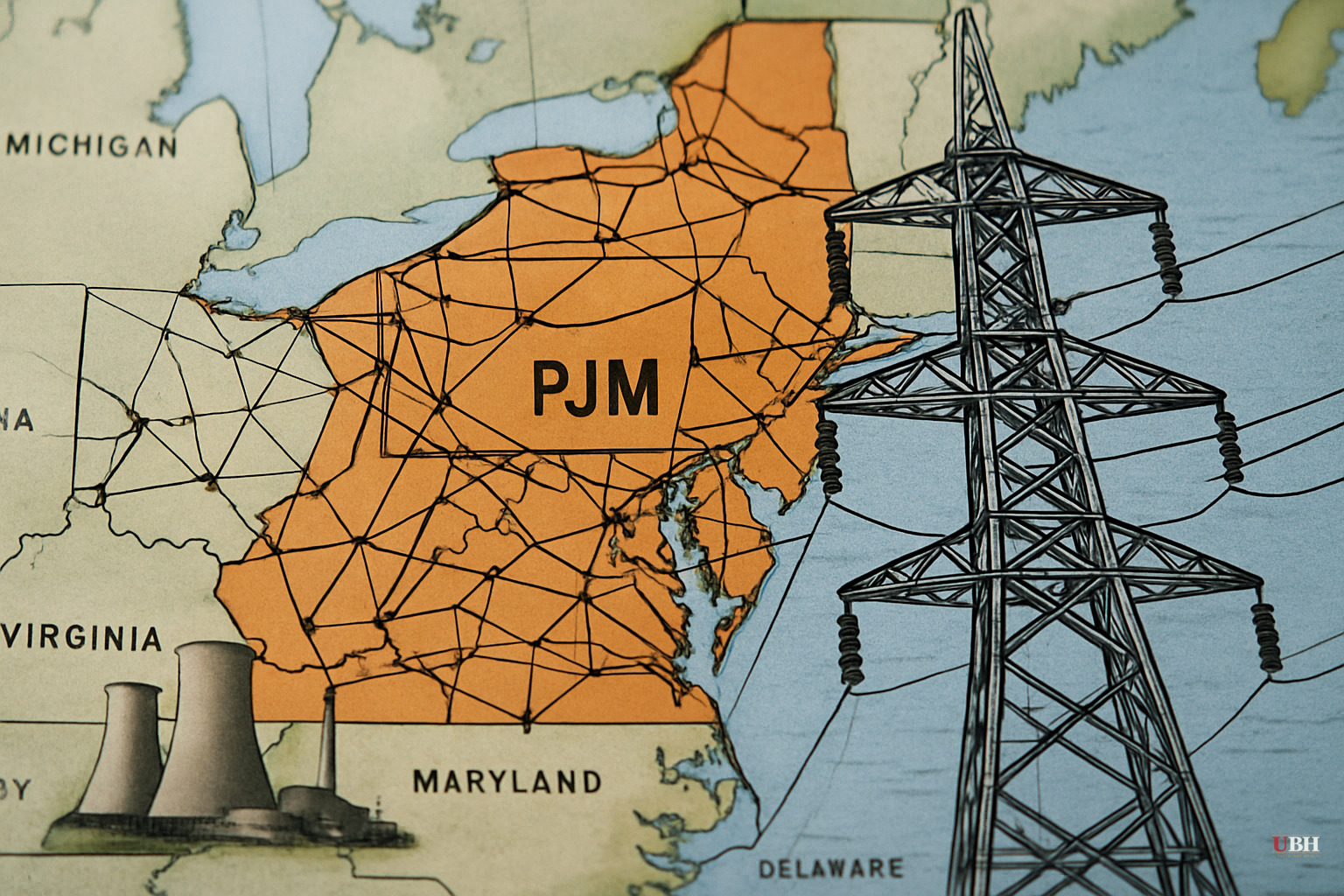
PJM Interconnection has missed its reliability target for a third consecutive year, this time by 6,831 megawatts for the 2028-2029 planning period, the grid operator announced Tuesday.
PJM runs the largest regional transmission organization in the country, coordinating power for roughly 67 million people across 13 states and Washington, D.C. Its annual Base Residual Auction is supposed to lock in enough generation capacity, years in advance, to cover peak demand plus a safety cushion. That cushion is built around a one-event-in-10-years reliability standard, the industry benchmark for how often the grid should risk running short.
This year's auction secured 138,318 megawatts of unforced capacity and demand response, plus another 10,864 megawatts from utilities operating under PJM's Fixed Resource Requirement option, for a total of 149,182 megawatts. That total still falls 6,831 megawatts below what PJM says it needs to hit its reliability bar.
The shortfall isn't a surprise. PJM has now missed this same target in each of the last three annual auctions, according to PJM's own results announcement. What's changed is the scale and the cause. Northern Virginia's "Data Center Alley"—the densest concentration of data centers in the United States—sits inside PJM's territory, and demand from that cluster has been growing fast enough that the one-in-10-year stress scenario is starting to look like a routine Tuesday.
What Happens Next
PJM's near-term answer is an emergency procurement process later this year aimed at closing the gap by leaning on the companies actually driving the new demand: hyperscale data center operators like Amazon, Microsoft, Google and Meta. The idea is straightforward. If AI and cloud computing buildouts are what's straining the grid, those companies should help pay to secure the extra generation, rather than spreading the cost across every residential ratepayer in the region.
PJM customers in Ohio, Pennsylvania, Maryland and New Jersey didn't ask for a data center boom in Virginia to show up on their electric bills. Capacity auction prices across PJM have already climbed sharply in recent years as demand has outpaced new supply, and ordinary households have felt it.
The harder question is whether an emergency procurement mechanism can actually build power plants fast enough to matter. Capacity auctions are forward contracts, not construction projects. Signing a commitment for 2028 doesn't create a natural gas plant or a nuclear reactor between now and then. Permitting, interconnection queues and construction timelines for new baseload generation typically run longer than the three-year runway PJM is working with here.
The Case for Skepticism, and the Case Against It
Environmental groups and some grid analysts have argued the fix isn't more fossil generation, it's faster deployment of batteries, transmission upgrades and demand-response programs that can shave peak load without building new plants at all, an argument echoed in industry-side grid studies published this year. Batteries and better wires are cheaper and faster to deploy than new gas or nuclear capacity, and PJM itself credits demand response for a meaningful chunk of the capacity it did secure this year.
But batteries store power, they don't generate it from nothing, and PJM's own numbers show a real megawatt-for-megawatt shortfall against a demand curve that keeps climbing. Wishing the shortfall away with storage alone assumes storage capacity scales as fast as data center buildout, which hasn't been PJM's experience over the last three years.
This isn't simply a story about greedy utilities gouging customers, nor is it simply a story about reckless AI expansion. PJM is a regulated, multi-state coordination body, not a single company setting prices in a vacuum, and the capacity shortfall reflects a real physical mismatch between generation build-out and demand growth that predates the current AI wave by years, driven partly by coal and nuclear plant retirements that were never fully replaced.
What's unresolved is whether hyperscalers will actually absorb the cost of the emergency procurement PJM is planning, or whether that cost still trickles down to residential ratepayers through rate design PJM hasn't yet finalized. PJM has not announced final terms for the emergency mechanism, and no timeline beyond "later this year" has been made public. Data center operators including Amazon and Microsoft have publicly stated support for adding new generation to the grid, though neither company has committed to specific capacity payments tied to this auction result. Ratepayers in Ohio, Pennsylvania and New Jersey will be watching PJM's next moves closely, since it's their bills on the line either way.
Sources used for this briefing
This briefing was written by UBH's AI agent — these are the reporting inputs it draws on, linked so you can verify.


