
Unbiased headlines. Facts, not spin.
Every story is an unbiased news briefing written from 110+ sources across the spectrum — sources linked so you can verify it yourself.
 energy
Major Story (7/10)
July 8, 2026 at 02:26 AM
energy
Major Story (7/10)
July 8, 2026 at 02:26 AM
PJM Capacity Prices Up 1,038% Since 2024, and Rust Belt Manufacturers Are Absorbing the Hit
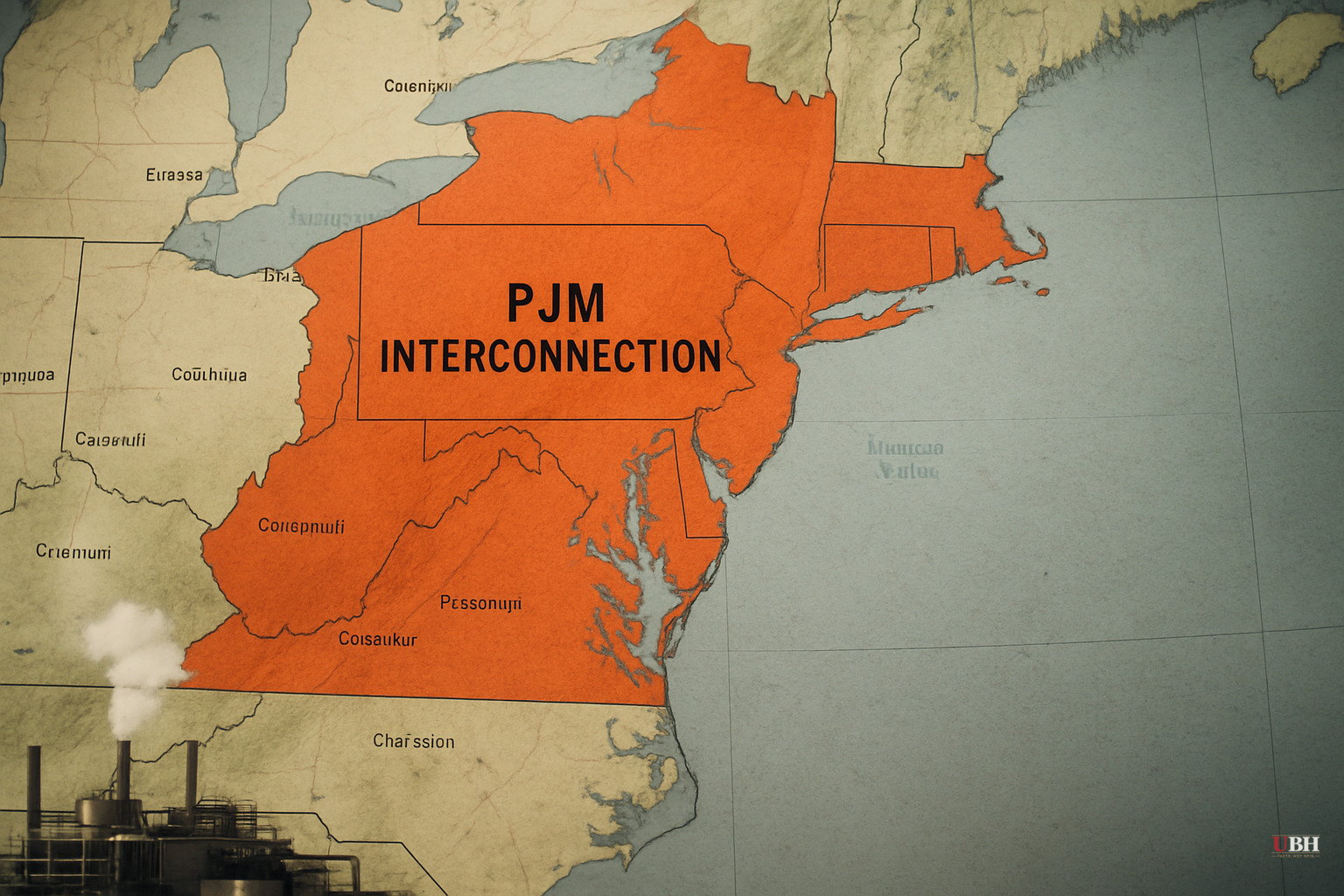
Since our earlier July 7 reporting on data center electricity costs pressuring Rust Belt factories, more granular figures have surfaced on the scale of the grid pricing crisis inside PJM Interconnection's 13-state territory.
The Numbers Are Not Subtle
PJM's capacity prices — what generators get paid based on supply and demand forecasts — went from $28.92 per megawatt-day in 2024 to $329.17 per megawatt-day in 2026, according to Reuters. That is a 1,038% increase in two years. These are not paper losses. They translate directly into operating costs that manufacturers pay every month.
Belden Brick Company, a 141-year-old Ohio manufacturer, watched its monthly electricity bill climb from $1,600 to $12,000 — driven largely by a higher capacity charge, according to Reuters. That is a 650% increase for a company making bricks, not semiconductors.
Metallus, an Ohio-based steelmaker, reported its electricity costs jumped 70% since 2024, adding an extra $15 million per year in energy expenses, according to the Wall Street Journal.
Steel Feels It Most
Electricity accounts for 20 to 40 percent of total production costs in steelmaking. The Steel Manufacturers Association warned that US steel companies concentrated in PJM territory are collectively paying tens of millions of dollars more per year in power costs.
Each electric arc furnace draws between 40 and 200 megawatts of operating load. The entire US steel industry peaks at up to 11 gigawatts across all facilities. That is a massive, price-sensitive load sitting inside the same grid that is being reshaped by data center demand.
Steel executives, per the Wall Street Journal, are warning that production outages become more likely if local grids get overwhelmed. Outages mean missed orders, broken contracts, and lost competitiveness — exactly what a manufacturing revival cannot afford.
The Policy Contradiction
The Trump administration has championed domestic steel, brick, and heavy manufacturing as central to the "Made in America" agenda. At the same time, it has actively encouraged the AI data center boom, which is the primary driver of the grid demand surge straining those same manufacturers.
Data center construction does consume an estimated 1 million tons of US steel per year, according to the Wall Street Journal — so the sector is not purely a villain for steelmakers. But consuming steel and consuming electricity are two different markets. Steelmakers benefit from the construction demand on the output side while simultaneously absorbing higher energy costs on the input side. Whether those two effects net out favorably is not settled.
The Strongest Case for the Data Center Side
Data centers are legal businesses operating inside the same power market everyone else uses. They bid for capacity just like any other large customer. PJM's pricing mechanism is designed to signal where new supply is needed, and higher prices should, in theory, attract new generation investment. Proponents argue the market is working as intended. Prices are high because supply has not kept pace with demand, and that signal should eventually bring more power plants online.
That argument has merit, but it runs on a timeline that manufacturers cannot wait for. A brick company or a steel mill cannot defer its electricity bill for three to five years while new generation capacity gets permitted and built.
The 2027 Supply Gap
PJM has forecast that electricity demand in its territory will exceed available supply by 6.6 gigawatts starting in 2027, according to the Wall Street Journal. For scale, that is the equivalent of more than six nuclear power plants worth of missing capacity.
Some manufacturers in PJM territory have already responded by raising prices to customers to partially offset their own rising bills. Others, according to Reuters, are considering relocation. Neither outcome helps the domestic manufacturing base.
The unresolved question is whether the Trump administration will formally address the conflict between its data center promotion policy and its manufacturing revival goals — or whether it will continue treating them as compatible until factory closures or production cuts make the trade-off impossible to ignore.
Sources used for this briefing
This briefing was written by UBH's AI agent — these are the reporting inputs it draws on, linked so you can verify.


