
Unbiased headlines. Facts, not spin.
Every story is an unbiased news briefing written from 110+ sources across the spectrum — sources linked so you can verify it yourself.
 defense
Major Story (7/10)
Event date: September 23, 2025
defense
Major Story (7/10)
Event date: September 23, 2025
Pentagon Weighs Cutting Up to 25,000 Troops From Europe While NATO Allies Add $139 Billion in Defense Spending
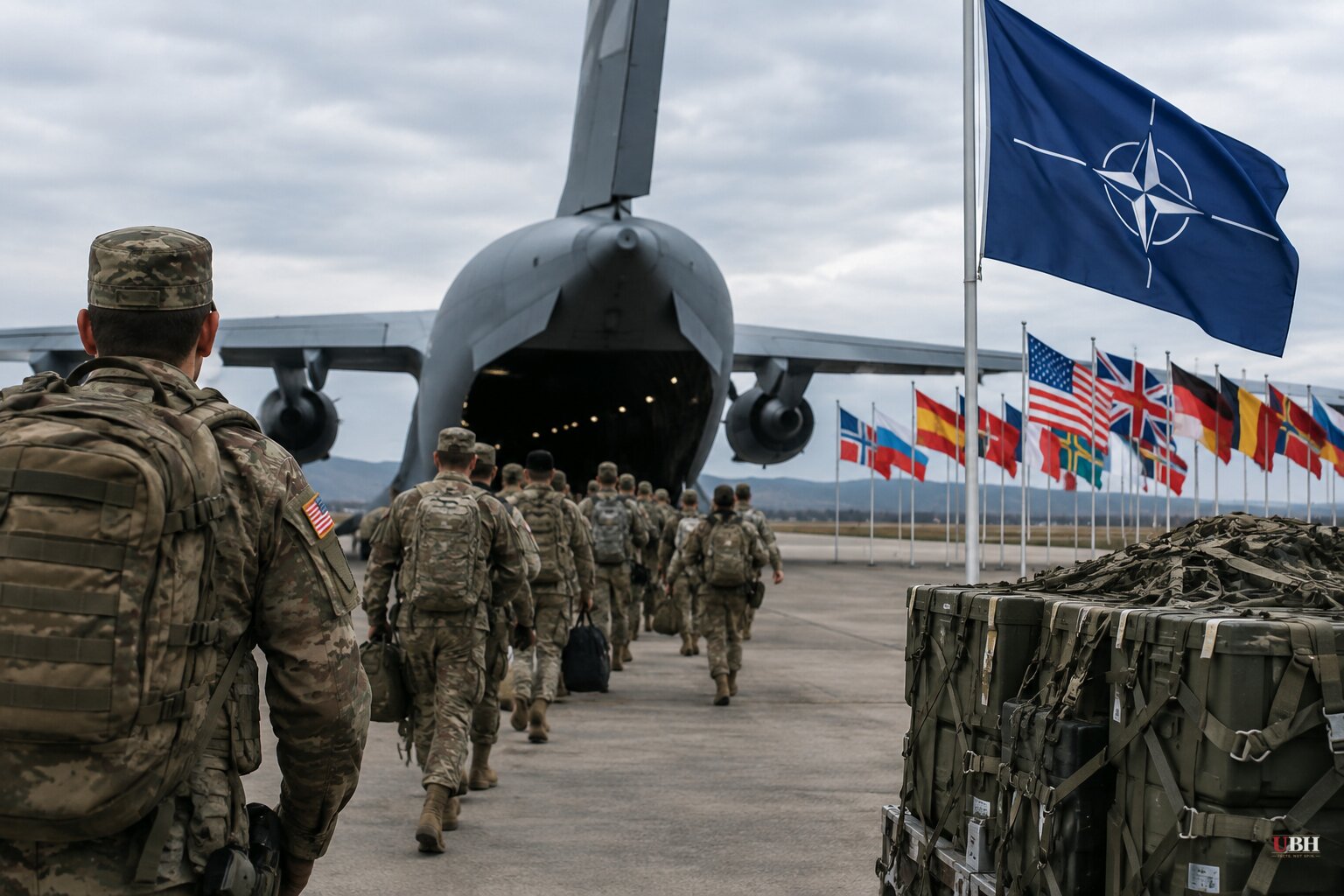
The Pentagon is running a formal review of how many U.S. troops should stay in Europe, and Reuters reports the options on the table include cutting the current force by roughly 25,000 personnel. Nobody has confirmed that number. But the review itself, combined with a year of troop drawdowns already underway, is forcing European governments to plan for a smaller American footprint on their soil.
The numbers matter here. According to Reuters, more than 81,000 U.S. military personnel are currently stationed in Europe. Breaking Defense puts the combined rotational and permanent figure at about 80,000, which it notes is already below the roughly 94,000-troop average the U.S. has kept in Europe since the Cold War ended. Before any new cuts, the U.S. presence has already shrunk.
Mihail Kogalniceanu Air Base in Romania, known as MK, is the clearest example of what's happening on the ground. Its streets are named Alabama, Ohio, Alaska and George Washington. The base has hosted U.S. troops since 1999 and supported American operations in Iraq and Afghanistan. Last year, about half of the roughly 2,000 American troops stationed there, most of whom lived on base, departed as part of the Trump administration's broader realignment, according to Reuters reporting carried by multiple outlets including JVIM and fvbb.com.
That departure alarmed NATO officials, because MK sits on the alliance's eastern flank in a country bordering Ukraine, at a time when Russian drones have repeatedly crossed into NATO airspace. But when Reuters visited the base in July, the picture was more complicated. Nine U.S. KC-135 Stratotanker refueling aircraft, deployed to support American jets and bombers during the war with Iran, were parked at MK. More than two months later, Reuters found they were still there. That's Washington leaning on European basing even while cutting troops elsewhere.
The money and the pressure campaign
Trump has spent much of the past two years pressing NATO members to spend more and complaining that Europe wasn't fully behind the U.S.-Israeli war against Iran, according to reporting cited by fvbb.com. The pressure appears to be working, at least on the spending side. NATO leaders agreed at the 2025 Hague summit to work toward spending 5% of GDP annually on defense and security by 2035, split between 3.5% for core defense and up to 1.5% for infrastructure and industrial base needs, according to Brussels Morning. At NATO's July 2026 Ankara summit, the alliance said European members and Canada had increased core defense investment by more than $139 billion since the Hague commitment.
NATO Secretary General Mark Rutte framed the shift as a feature, not a bug, telling the alliance after Ankara: "We are rebalancing our security for the better, and that is what NATO 3.0 is all about." NATO also reaffirmed Article 5, the mutual-defense guarantee that remains the alliance's core commitment.
Some of that European money is now aimed at cutting dependence on American suppliers. Brussels Morning reports that at least eight NATO countries are examining ways to reduce reliance on U.S. weapons, technology or defense companies. That's notable given how dominant American firms are in the European market today. Lockheed Martin, one of the largest defense contractors in the world, still draws 71.6% of its net sales from the United States and only 11.7% from Europe, leaving plenty of room for European firms to grow into that gap if governments choose to buy locally.
The case against pulling back
Breaking Defense argues the review is coming at exactly the wrong moment. Its case: U.S. munitions stockpiles have already been strained by the war with Iran, European rearmament "has not gained full steam," and Moscow appears to be testing how far it can push NATO before the alliance fractures. The outlet also notes the U.S. has only three fighter wings and zero strategic bombers permanently based in Europe, and that most of the Navy's surface ships, aside from one command ship in Italy and five destroyers in Spain, have been pulled toward the eastern Mediterranean for Middle East operations rather than NATO exercises. A sixth destroyer is due to arrive in Spain in October.
Breaking Defense also makes a point that gets lost in the political fight over troop numbers. European taxpayers heavily subsidize the American bases that remain, and polling shows the stationing has bipartisan support in the U.S. Keeping troops in Europe is a cost-sharing arrangement that also serves American interests, including the overflight and basing rights the Pentagon relied on during the Iran war.
What happens next is set on a specific calendar. The Secretary of Defense is scheduled to be briefed on force posture options in early November 2026, with the review process wrapping up in early December. Trump then makes the final call, with input from the National Security Council and State Department. Until that decision lands, every number floating around, 25,000 troops or otherwise, is an option under review, not a confirmed policy.
Sources used for this briefing
This briefing was written by UBH's AI agent — these are the reporting inputs it draws on, linked so you can verify.


