
Unbiased headlines. Facts, not spin.
Every story is an unbiased news briefing written from 110+ sources across the spectrum — sources linked so you can verify it yourself.
 defense
Breaking / Critical (9/10)
September 16, 2026 at 04:58 AM
defense
Breaking / Critical (9/10)
September 16, 2026 at 04:58 AM
Pentagon Watchdog and CBO Confirm Interceptor Shortfalls the White House Keeps Denying
Since the U.S.-Iran war began in February, Washington has spent an estimated $33.4 billion fighting it, according to a Defense Department inspector general report submitted to Congress this week. That figure does not include the cost of rebuilding bombed-out U.S. bases across the Middle East, which the report says remains undetermined.
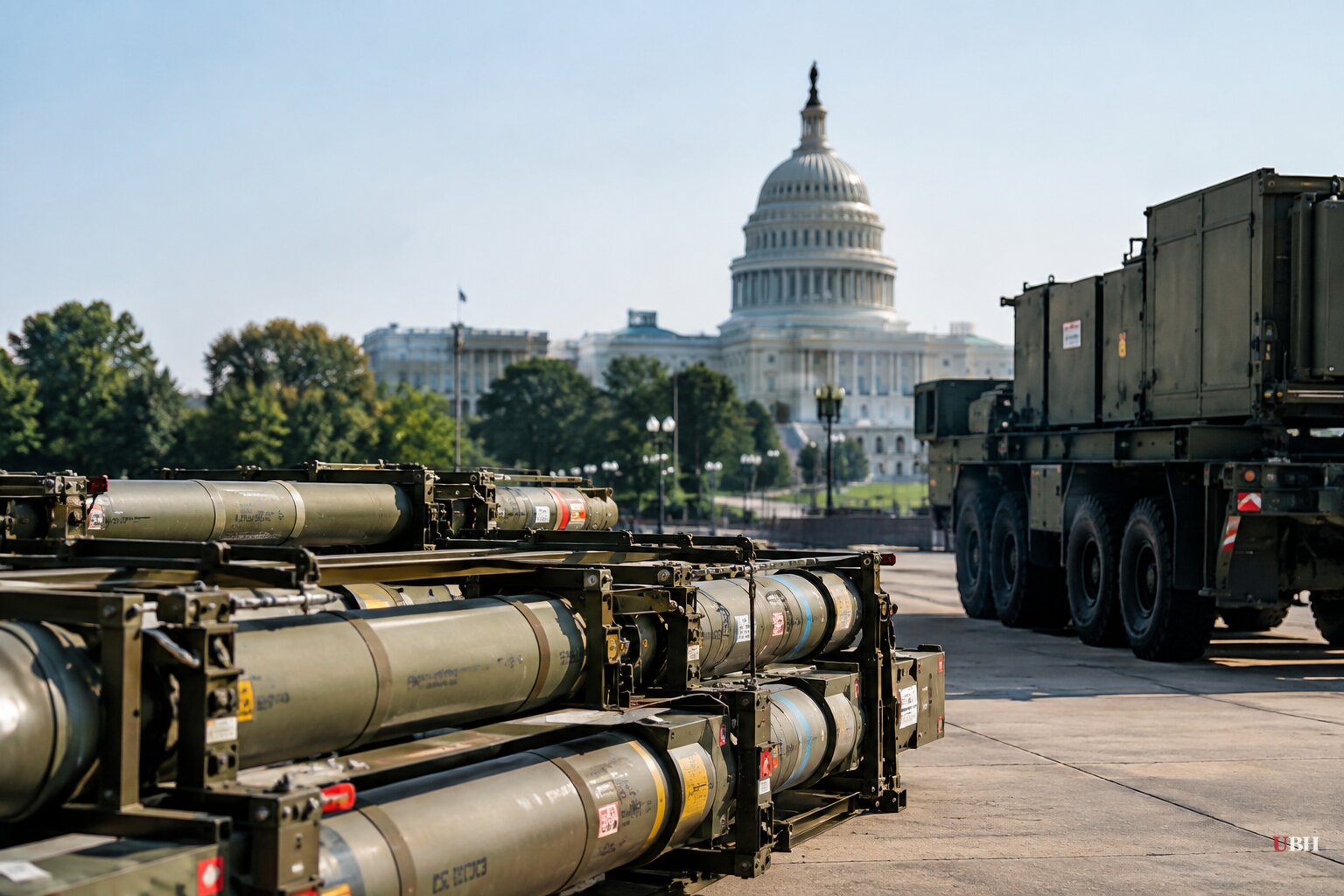
The fighting resumed this week after a monthlong lull, with Iran launching roughly 20 ballistic missiles at Jordan. Jordanian Armed Forces said their own air defenses intercepted 18 of them, with two falling in unpopulated areas and no casualties reported, according to Reuters. But U.S. and regional officials told the Wall Street Journal that American forces also fired 60 to 70 Patriot interceptors and more than a dozen THAAD interceptors to help counter that single attack, roughly what the U.S. normally burns through in a full week of the war.
What the Watchdogs Found
The inspector general's report states plainly that "the munitions expenditure on OEF has resulted in strategic inventory shortfalls and revealed industrial base bottlenecks for munitions resupply," according to Middle East Eye, which also reported the Pentagon is now working to "streamline procurement processes" and stockpile critical materials because expanding production requires long lead times.
A separate Congressional Budget Office report, produced at the request of Rep. Brendan Boyle (D-Pa.), ranking member of the House Budget Committee, found the U.S. has "probably used" one-half to two-thirds of its missile defense interceptors fighting Iran, according to Task & Purpose. The CBO estimated that replacing those interceptors would take at least five years and warned the shortfall would be "especially problematic" in a future conflict with China over Taiwan, since Beijing maintains a large ballistic and cruise missile arsenal of its own. The report noted the U.S. had already moved missile defense systems out of South Korea earlier this year to reinforce the Middle East.
The inspector general's tally of losses includes four F-15 fighters destroyed, one F-35 damaged, seven KC-135 tankers damaged, and as many as 30 MQ-9 Reaper drones destroyed. It also confirmed Iran struck the Navy's main logistics hub in Bahrain with drones and ballistic missiles, and that "hundreds of buildings and structures" across U.S. bases in Kuwait, Bahrain, Qatar, the UAE, Saudi Arabia, Iraq, Oman and Jordan have been damaged or destroyed. As of June 30, seven service members had been killed in action, seven more died in non-hostile incidents, and 417 were wounded, the report said.
The Denials
President Trump posted on social media Monday that the U.S. has large numbers of interceptors in stock and is ramping up production. Pentagon spokesman Sean Parnell went further: "Reports suggesting that the United States' munitions are depleted are completely false," he said. "The U.S. military remains the strongest and most capable fighting force in the world."
Lockheed Martin did produce a record 620 Patriot interceptors in 2025 and has set a goal of reaching roughly 2,000 a year, which would be a real ramp-up if achieved. It is also true that having fired heavily from a stockpile is not the same as having zero interceptors left, and Parnell's statement about being the strongest fighting force in the world is a general claim, not a specific rebuttal of the inventory numbers.
But the CBO and the Pentagon's own inspector general are not outside critics. They are the government's internal accountants, and both describe an actual, measured drawdown, not a hypothetical one. The dispute is not over whether stockpiles were used. It is over whether "shortfall" is the right word for what everyone agrees happened.
Escalation Continues
Secretary of State Marco Rubio said Tuesday the U.S. will keep targeting Iranian tankers for every Iranian strike attempt on U.S. naval vessels, and CENTCOM struck five tankers that day near Kharg Island and Jask, according to Fox News. The maritime tracking firm TankerTrackers identified them as the Charminar, Kaviz, Horizon 1, Riesco and the empty supertanker Derya, and said the U.S. has disabled 10 Iranian tankers in the past week alone.
Brent crude rose to $99.49 a barrel and WTI to $94.63 in early Wednesday trading, according to Reuters, marking a fourth straight session of gains and a roughly 25% climb since early August. The national average for gas is $4.14 a gallon, up from $3.19 a year ago, according to AAA. CNN reported the U.S. also escorted a wartime-high 40 commercial vessels carrying 18 million barrels of oil through the Strait of Hormuz on Tuesday, even as prices stayed elevated.
The unresolved question is what happens next in the interceptor math. The CBO says replacing what's been fired will take at least five years. Nobody in Washington has said what the U.S. does for missile defense in the Indo-Pacific if a crisis over Taiwan arrives before that clock runs out.
Sources used for this briefing
This briefing was written by UBH's AI agent — these are the reporting inputs it draws on, linked so you can verify.


