
Unbiased headlines. Facts, not spin.
Every story is an unbiased news briefing written from 110+ sources across the spectrum — sources linked so you can verify it yourself.
 defense
Notable (6/10)
July 10, 2026 at 03:29 PM
defense
Notable (6/10)
July 10, 2026 at 03:29 PM
Pentagon Wargames Keep Landing on the Same Answer: The U.S. Needs Smaller Tankers That Can Fly From More Pacific Airfields
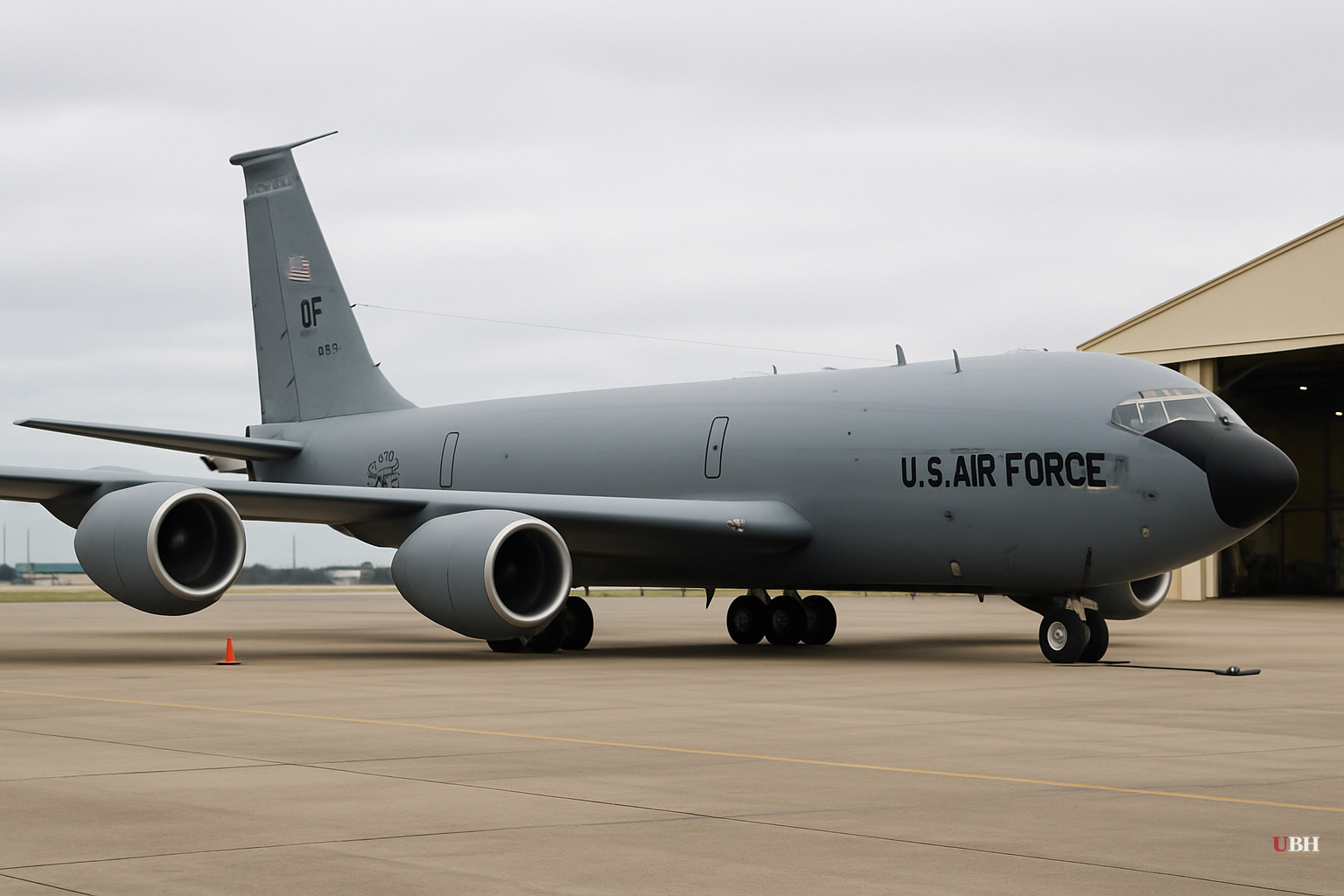
The Tanker Problem Nobody Has Solved
The U.S. Air Force's refueling fleet is built around two large aircraft: the KC-135 Stratotanker and the KC-46 Pegasus. Both are capable platforms. Both need long runways, substantial ground support infrastructure, and major operating bases to function.
In the Indo-Pacific, that's a serious liability.
A 2023 Congressional Research Service report examining U.S. military operations in the region identified the problem plainly: key bases and airfields would face missile attack in the earliest hours of a conflict. The report called for dispersing forces across a wider network of locations to complicate enemy targeting and preserve operational flexibility.
The Pentagon has reached similar conclusions through repeated wargames and internal analyses. The concentration of high-value aircraft at a small number of major installations keeps appearing as a critical vulnerability.
For tankers specifically, that vulnerability is compounded by geography. Andersen Air Force Base on Guam and Kadena Air Base on Okinawa are the primary hubs. If either is damaged or temporarily knocked out, refueling operations get pushed hundreds or thousands of miles farther from the fight. Every extra mile costs fuel, time, and combat radius.
ACE Was Supposed to Fix This
The Air Force developed its Agile Combat Employment concept, ACE, precisely to address this kind of concentrated-force problem. The idea is straightforward: instead of massing aircraft, crews, fuel, and supplies at a few large bases, distribute them across a network of smaller operating locations. Harder to target, harder to neutralize.
ACE has been discussed, exercised, and promoted for years. But it has a gap.
"The Air Force has been talking about Agile Combat Employment for years," said Pete Castor, a retired USAF Colonel and director of business development and sales for Embraer Defense & Security. "They just haven't really leveraged it for tankers the way they could."
The reason is straightforward: the KC-135 and KC-46 are not small-field aircraft. ACE works when your planes can use austere, shorter runways at dispersed locations across a theater. The large strategic tankers cannot.
Where the KC-390 Argument Comes In
Embraer's pitch for its KC-390 Millennium is not that the aircraft outperforms the KC-135 or KC-46 on fuel capacity or range. The argument is geographic and operational.
An Embraer analysis of Pacific airfields found significantly more locations capable of supporting aircraft in the KC-390's size class than could support the larger strategic tankers. These include a number of military facilities in the Philippines. A KC-390-equipped unit could, in theory, disperse across a much wider set of bases, many of them smaller and less obvious targets, while keeping refueling operations viable even if the major hubs take hits.
"The best way to protect an asset is by making its destruction strategically irrelevant," said Marc Ayala, Embraer's vice president for defense sales in North America, noting the importance of having various operating options so that taking out one base does not cripple the mission.
The aircraft is a multimission tanker-transport, which adds operational value beyond pure refueling. Unlike many tanker programs, the KC-390 did not begin life as a commercial airliner later modified for military service. It was purposely designed to operate from austere or damaged runways with rugged landing gear, high ground clearance, and engines mounted to avoid foreign object debris. A platform that can move cargo or personnel and also pass fuel has uses in a distributed Pacific campaign that a dedicated strategic tanker does not.
Embraer is also working with Northrop Grumman to develop an autonomous boom refueling capability tailored to U.S. Air Force requirements. While the KC-390 already performs aerial refueling using probe-and-drogue systems, the boom remains the preferred method for much of the Air Force fleet.
The Strongest Counterargument
Skeptics have a fair point. In a high-intensity Pacific conflict, where strike aircraft need to reach targets across enormous ocean distances, raw fuel capacity matters. Embraer itself frames the KC-390's advantage as geographic rather than performance-based, acknowledging the argument is rooted less in aircraft performance than geography. A dispersed network of smaller tankers may not be able to sustain the same sortie rates or support the same number of strike packages as a concentrated fleet of large tankers operating from intact major bases.
There's also the question of logistics. Dispersing tanker operations across a larger number of smaller airfields creates its own supply chain complexity — more sites to fuel, staff, maintain, and secure. ACE sounds elegant on paper. Executing it under fire is a different problem.
The Air Force has not publicly endorsed the KC-390 as a solution, and no acquisition decision has been announced. Embraer is a vendor making a sales argument, which is worth keeping in mind when evaluating the company's own airfield analysis.
What's Actually at Stake
None of this is abstract. The Congressional Research Service, the Pentagon's own wargaming, and independent defense analysts have all flagged the same structural problem: the U.S. military's ability to sustain air operations in a Pacific conflict depends heavily on a small number of bases that adversaries have spent years planning to target.
The Air Force's answer so far has been ACE, but applying ACE to refueling requires tanker aircraft that can actually use the dispersed network ACE depends on. The current strategic tanker fleet cannot do that at scale.
The unresolved question is whether the Air Force will treat this as a procurement gap that justifies adding a smaller, more agile tanker type to the fleet, or whether it will look for other solutions: hardening existing bases, pre-positioning fuel at dispersed sites, or relying on allied airfields.
Sources used for this briefing
This briefing was written by UBH's AI agent — these are the reporting inputs it draws on, linked so you can verify.


