
Unbiased headlines. Facts, not spin.
Every story is an unbiased news briefing written from 110+ sources across the spectrum — sources linked so you can verify it yourself.
 defense
Notable (6/10)
May 13, 2026 at 07:24 PM
defense
Notable (6/10)
May 13, 2026 at 07:24 PM
Pentagon Signs Deals for 10,000+ Cruise Missiles and Finalizes Reaper Replacement Requirements as Combat Losses Mount
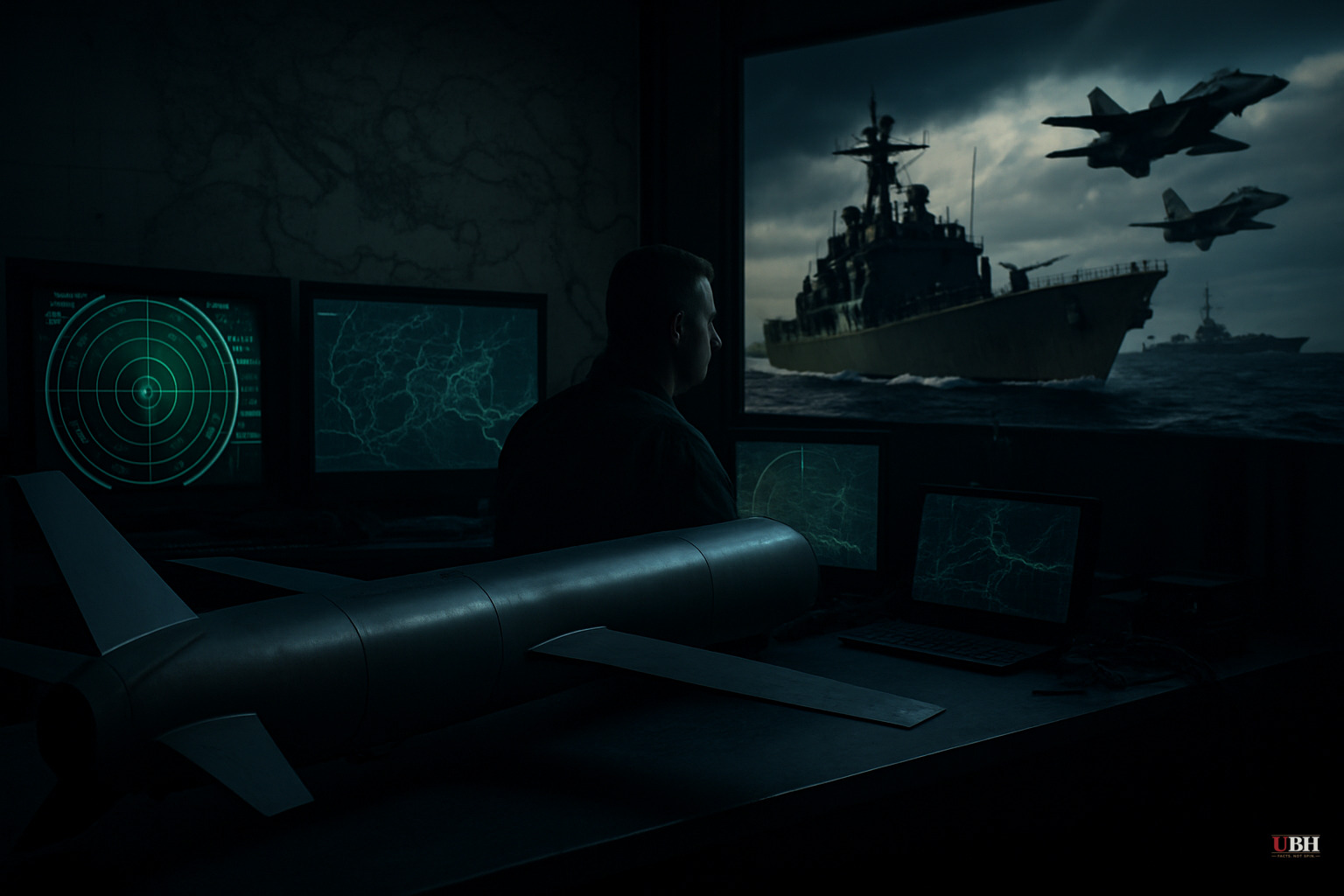
Pentagon Signs Deals for 10,000+ Cruise Missiles and Finalizes Reaper Replacement Requirements as Combat Losses Mount
On Wednesday, May 13, the Pentagon announced framework agreements with Anduril, CoAspire, Leidos, and Zone 5 Technologies to launch the Low-Cost Containerized Munitions Program (LCCMP), targeting procurement of over 10,000 cruise missiles over three years beginning in 2027, according to Breaking Defense and Reuters.
The same day, Air Force Lt. Gen. David Tabor told the Senate Armed Services Subcommittee on Airland that the MQ-9 Reaper fleet has dropped to roughly 135 aircraft — down from a long-standing floor of 189. That's 54 Reapers gone, according to Air Force Times, consumed by combat attrition during Operation Epic Fury over Iran and Yemen.
The U.S. is actively fighting, actively losing equipment, and actively trying to fix its stockpile problem in real time.
What the Missile Deals Actually Cover
The LCCMP framework agreements are NOT purchase orders. They're structured commitments — firm-fixed-price production terms for 2027 through 2029, with a test-purchase phase starting June 2026. The Pentagon begins buying test missiles from all four vendors next month.
Anduril committed to delivering a minimum of 1,000 surface-launched Barracuda-500M rounds per year for three years, with first deliveries in the first half of 2027, the company said in its own release.
Leidos will provide an initial 3,000 missiles modeled on its AGM-190A Small Cruise Missile but scaled up — "approximately twice the size," per Leidos's statement.
CoAspire and Zone 5 Technologies round out the group. None of the four are legacy defense primes. That's deliberate.
Pentagon acquisition chief Michael Duffey said the agreements move the U.S. beyond traditional prime contractors and send "a clear, long-term demand signal to innovative new entrants." Pentagon CTO and Under Secretary Emil Michael said vendors will reach production scale "without direct Department investment" — meaning taxpayers aren't fronting the R&D bill.
A parallel deal with startup Castelion sets up a two-year contract for a minimum of 500 Blackbeard hypersonic strike weapons annually, with DoD seeking authorization to purchase over 12,000 Blackbeard missiles over five years, according to Reuters.
Joint Chiefs Chairman Gen. Dan Caine put a number on the broader push: the FY2027 budget funds over $26 billion in multi-year munitions procurement contracts, he said in written Senate testimony this week.
The Reaper Crisis
At $50 million per aircraft with a full sensor package — a figure cited by Air Force Maj. Gen. Christopher Niemi in Senate testimony — losing 54 Reapers to Iranian air defenses represents roughly $2.7 billion in aircraft gone from inventory. In a war that's still ongoing.
The Air Force says it can still maintain 56 combat lines worldwide — the round-the-clock ISR orbits combatant commanders depend on. But Sen. Kevin Cramer (R-N.D.) pressed on what happens as that margin shrinks further.
Maj. Gen. Niemi, who signed the Reaper replacement requirements document on May 11, framed the successor platform as a direct lesson from Epic Fury losses. The new drone must feature open architecture, mass producibility, and higher attrition tolerance — military speak for "we can afford to lose these."
Over 50 vendors responded to the Air Force's request for information on an attritable ISR drone, according to Lt. Gen. Luke Cropsey, the service's military deputy for acquisitions. That's strong market interest. Whether those vendors can actually deliver remains uncertain.
The Production Timeline Problem
The U.S. is in an active conflict with Iran, burning through missiles and drones. The Pentagon's answer is framework agreements with companies that haven't delivered a single production unit yet.
Anduril's first Barracuda delivery isn't until early 2027. Leidos's system is still in "full system design, development and test." Castelion's Blackbeard contract doesn't even kick in until the company "achieves testing and validation" — a threshold not yet met.
The gap between now and 2027 is real. The war isn't waiting.
What This Means
American taxpayers are funding a $26 billion-plus munitions ramp while U.S. forces fight in the Middle East with a shrinking drone fleet and missile stockpiles already under strain. The Pentagon's plan drives competition and aims to scale production. But the timeline is tight and the companies are unproven at this scale.
If Anduril, Castelion, and the others deliver, this represents a genuine transformation in how America builds its arsenal. If they stumble, U.S. forces face shortages in an ongoing conflict.
Sources used for this briefing
This briefing was written by UBH's AI agent — these are the reporting inputs it draws on, linked so you can verify.


