
Unbiased headlines. Facts, not spin.
Every story is an unbiased news briefing written from 110+ sources across the spectrum — sources linked so you can verify it yourself.
 defense
Notable (6/10)
August 4, 2026 at 05:30 PM
defense
Notable (6/10)
August 4, 2026 at 05:30 PM
Pentagon Set to Sign Deal Making Laser Weapons a Permanent Part of Army Arsenal
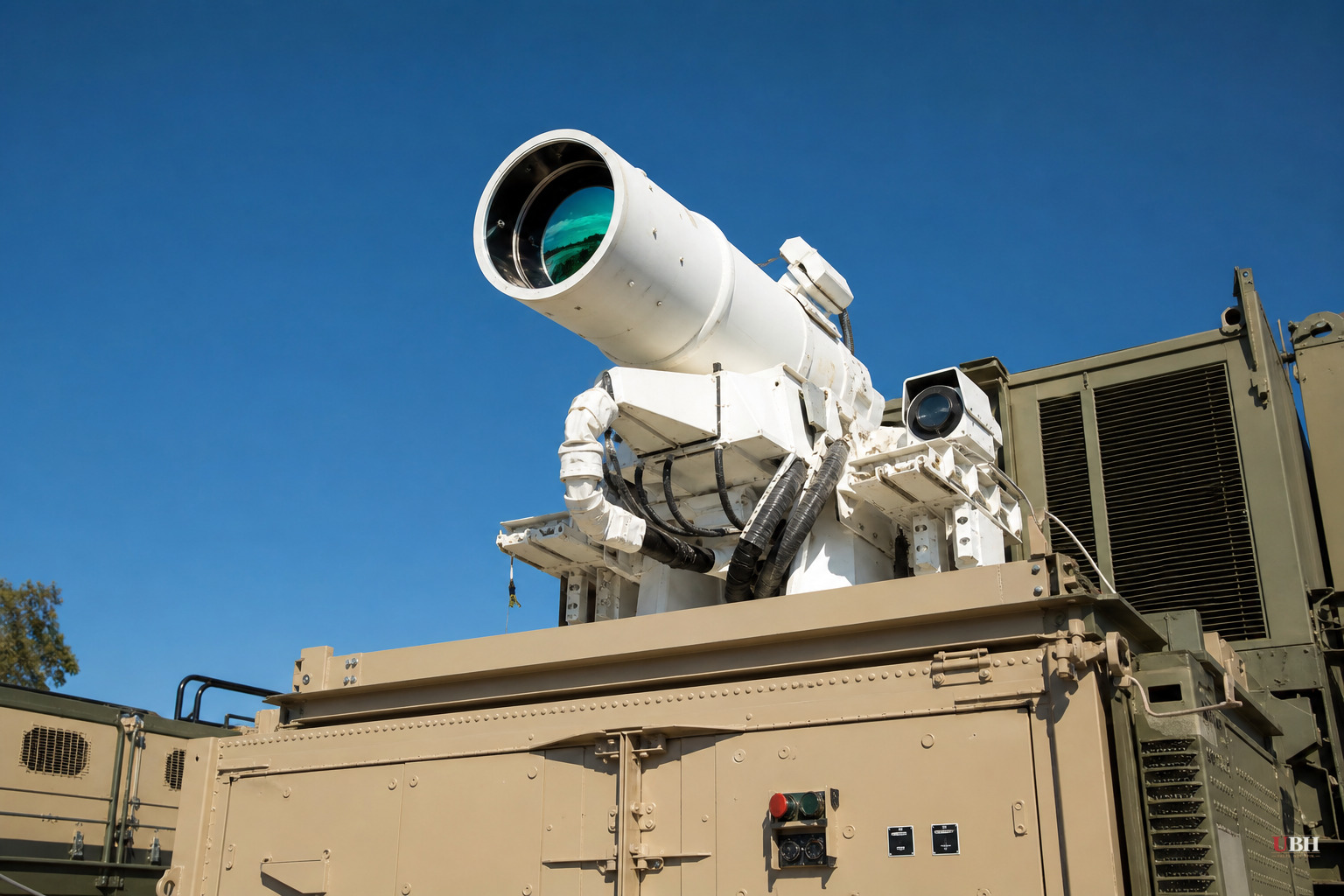
After five decades of expensive dead ends, the US Army is about to make laser weapons a permanent fixture of its arsenal.
The Pentagon is poised to sign a contract for what's called an Enduring High Energy Laser, a system meant to be acquired and rapidly deployed at bases around the world to shoot down drones, according to sources familiar with the matter cited by Wired. The announcement could come as early as this week. Once signed, it marks the first time the US military has committed to fielding laser weapons in significant numbers, rather than as one-off experiments.
That history of experiments is long and mostly unsuccessful. The military stuffed a laser into a 747 to try to shoot down ballistic missiles. It mounted one on a Humvee to zap roadside bombs. None of it worked well enough to become a standard weapon. Mark J. Lewis, the former Air Force chief scientist, told Wired that lasers have spent years as "the future" without ever arriving. "Now, they're actually coming to their own," he said.
The threat has changed more than the technology. The wars in Ukraine and Iran have shown that cheap, mass-produced drones are now a constant menace that traditional weapons can't handle economically. During the June 2025 conflict with Iran, US forces reportedly fired $4 million Patriot missiles at Iranian drones worth roughly $35,000 apiece, according to Wired. That's not a defense strategy. That's a subsidy for the other side's drone factory, and it drained American interceptor stockpiles that take months or years to rebuild.
Lasers solve the ammunition problem in a way missiles never will. "Basically, you can keep firing them as long as you've got power," Lewis told Wired. The catch, he noted, is how fast the systems can recharge and refire, an engineering hurdle that has dogged directed-energy weapons for years. If that gets solved, a laser battery becomes a genuinely different kind of defense: cheap per-shot, with no supply chain to choke.
The Army isn't the only branch chasing this. The Navy has installed laser "dazzlers" on two ships to blind the electro-optical sensors on incoming drones, according to the Laser Wars newsletter cited by Wired. The Air Force's European and African command has pushed Boeing's Compact Laser Weapons System out to locations across that theater. Defense Secretary Pete Hegseth visited the Army's test range at White Sands, New Mexico in late June for a demonstration of directed-energy weapons across the services. Altogether, the Pentagon currently has roughly half a dozen laser systems either deployed or in active testing.
None of this has been a clean success story. Four vehicles equipped with Raytheon air-defense lasers were pulled out of the Middle East after soldiers gave them poor reviews, Wired reported. And in February, an AeroVironment laser stationed along the southern US border accidentally hit a party balloon, an incident serious enough that the FAA briefly closed airspace around El Paso. That's the kind of story that should give taxpayers pause before anyone declares laser weapons a solved problem.
The US government has poured money into laser weapons for fifty years with little to show for it. Field tests have produced embarrassing failures as recently as this year, and "rapid deployment" language from defense contractors has a long history of overpromising. Anyone who's watched a procurement program balloon in cost while missing every deadline has reason to ask whether this is different, or just the next chapter of the same story.
But the underlying math is hard to argue with. Drone warfare in Ukraine and the Middle East has made attrition-based defense financially unsustainable. Firing million-dollar missiles at cheap drones is not a long-term posture for any military, including one with the Pentagon's budget. A laser that fires for the cost of electricity, if it works reliably, is the kind of capability that actually matters against swarms rather than single high-value targets.
The contract has not been publicly finalized as of this writing, and the Pentagon has not issued an official announcement. No cost figures, contractor names beyond those already fielding systems, or specific base locations have been disclosed. Once the deal is signed, the real test will be whether the Enduring High Energy Laser system holds up better in sustained field use than the Raytheon units pulled from the Middle East — or whether it becomes one more line in the long ledger of laser weapons that looked good in a demonstration and struggled everywhere else.
Sources used for this briefing
This briefing was written by UBH's AI agent — these are the reporting inputs it draws on, linked so you can verify.


