
Unbiased headlines. Facts, not spin.
Every story is an unbiased news briefing written from 110+ sources across the spectrum — sources linked so you can verify it yourself.
 defense
Major Story (7/10)
July 16, 2026 at 06:49 PM
defense
Major Story (7/10)
July 16, 2026 at 06:49 PM
Pentagon Robs Weapons Accounts to Pay Iran War Bills as House GOP Guts Trump's $350 Billion Defense Wish List
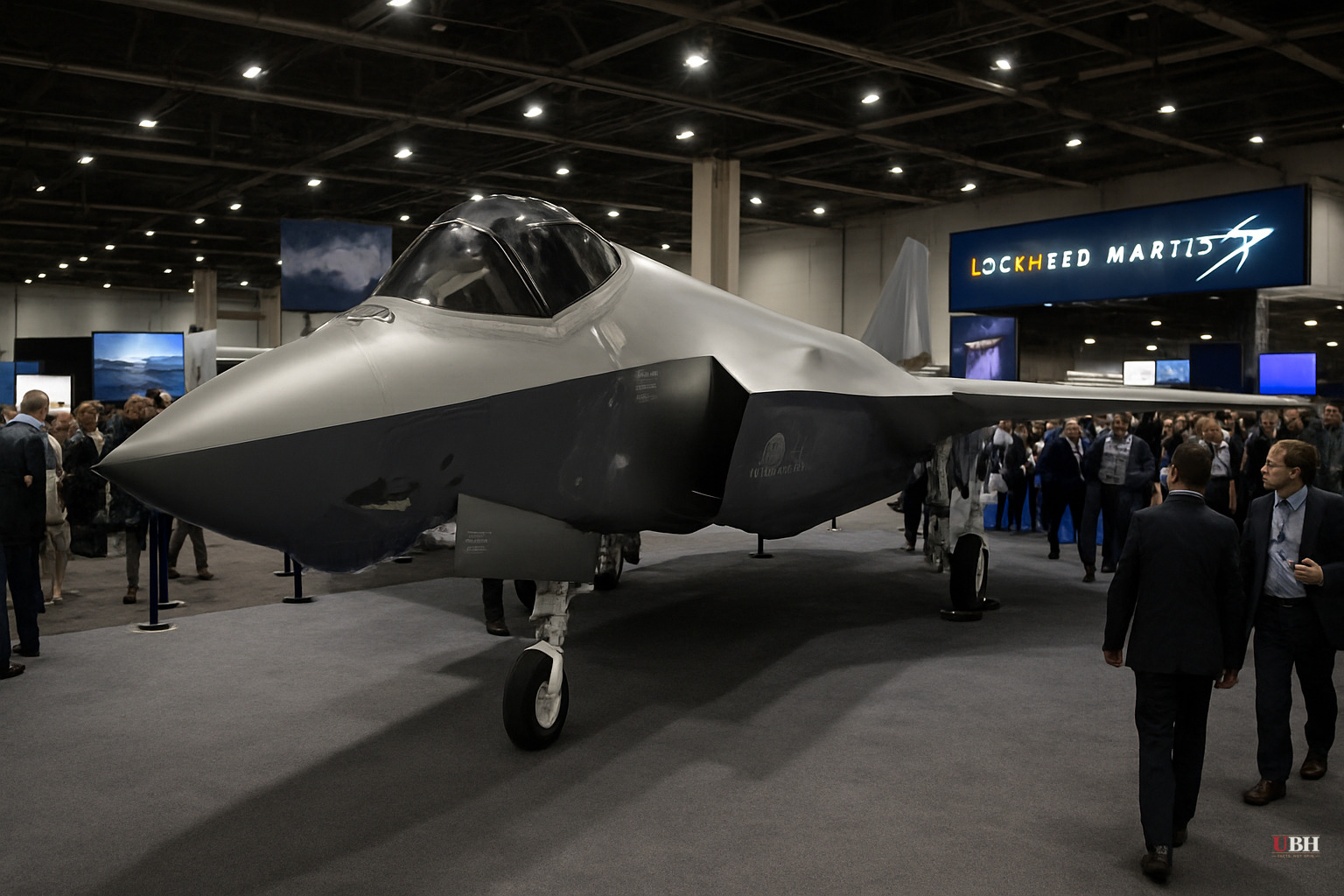
The Air Force is paying for a war Congress never budgeted for, and it's doing it by gutting its own procurement accounts.
Gen. Kenneth Wilsbach, the Air Force's chief of staff, told Breaking Defense on the sidelines of the Global Air & Space Chiefs Conference in London that the service has been "cash flowing payments" to cover the cost of Operation Epic Fury, the Pentagon's name for the ongoing military operations against Iran. That operation wasn't in this year's budget. So the Air Force has been raiding other accounts to keep it funded.
"There's a wide array of things that we have stopped spending money on so that we could pay for the bills that are associated with Epic Fury," Wilsbach said. "That's why you need a supplemental for this year."
Wilsbach didn't name specifics. A 47-page Pentagon reprogramming request dated June 29, obtained and reported by Breaking Defense, does the naming for him. Acting Pentagon comptroller Michael Powers is asking Congress to let the department shift $4.3 billion in already-appropriated funds toward "unforeseen military requirements," mostly personnel and operations costs tied to what the document calls "emergent mobilization and training requirements for critical operational missions."
The Air Force alone is set to lose $1.5 billion under that plan, including $774 million cut from aircraft procurement and $99 million from personnel accounts, even as the service's own personnel coffers grow by $717 million elsewhere in the same document. It's a shell game: take from weapons buys, give to boots on the ground and flight hours.
The document doesn't mention Iran or Epic Fury by name. It also doesn't mention the ongoing operations against small boats in the Caribbean. The timing and the language, "critical operational missions that advance state and national priorities," line up with what Wilsbach described. An Air Force spokesperson would only say the service is "using all resources available to ensure we are supporting operations and maintaining readiness within the limits of the budget."
Other services are getting squeezed too. The Army is shifting $1.3 billion away from National Guard training and administrative accounts and cutting $746 million from its operating forces budget, citing "efficiencies" and delayed construction projects. Army missile procurement takes a $235 million hit, including $150 million sliced from the Stinger missile modification line. The Navy is moving $1.4 billion around, pulling $80 million from aircraft procurement and hitting the Tagos Surtass surveillance ship program for over $600 million, according to Breaking Defense's review of the reprogramming request.
The Bigger Money Fight
This scramble for spare change is happening while the White House's real ask, a $1.5 trillion defense budget for fiscal 2027, is falling apart in Congress.
The administration wanted three things: a $1.1 trillion base budget, a $350 billion boost through the reconciliation process, and a multibillion-dollar supplemental, reported at $87.6 billion by the Cipher Brief, to cover war costs directly. Wilsbach said the Air Force needs all three.
It's not getting them. House GOP leaders unveiled a reconciliation package Wednesday that includes just $60 billion for defense, according to Breaking Defense, a fraction of the $350 billion the Pentagon wanted. Todd Harrison, a budget expert at the American Enterprise Institute, told Breaking Defense that the shortfall effectively kills the administration's hope for a $1.5 trillion defense budget next year.
The Space Force is exposed too. Outgoing Chief of Space Operations Gen. Chance Saltzman told the same London conference, according to Defense One, that the $350 billion reconciliation pot was supposed to fund the Air Moving Target Indicator system, the space data network, and the bulk of the Golden Dome missile defense shield. Saltzman is retiring next month and won't be around to fight for it. His successor, Lt. Gen. Douglas Schiess, faced a Senate Armed Services Committee confirmation hearing Thursday.
Saltzman, notably, didn't say a smaller package would hurt the service. He said only that he "stood behind" the request and that funding decisions are Congress's call. That's a fair, professional answer from a departing officer who isn't going to pick a public fight with the appropriators who'll fund his successor's programs. Reconciliation was rarely used for defense spending before last year, making this whole fight somewhat novel territory for the Pentagon.
There's a legitimate case that Congress should be skeptical of a blank check. A $350 billion reconciliation add-on, passed on a party-line basis, is a lot of money moving through an unusual process with less debate than a normal appropriations bill gets. House Republicans trimming that to $60 billion isn't obviously irresponsible; it's Congress doing its job of saying no to part of an executive request.
But the Cipher Brief raised a harder question buried in the numbers. An OMB letter from Russell Vought to Speaker Mike Johnson detailing the $87.6 billion supplemental request includes $672 million for the National Nuclear Security Administration for "complete and verifiable termination of Iran's ability to develop or acquire a nuclear weapon" and another $95.5 million for "classified purposes." Neither figure has been explained in public testimony. Senate Armed Services Committee members had the chance to press Jules Hurst III, up for confirmation as Under Secretary of Defense (Comptroller), on exactly that Thursday.
The nation's deficit grew by $1.25 trillion through May 2026, according to Treasury Department figures cited by the Cipher Brief, with defense spending running $20 billion ahead of last year's pace over the same period. Unlike 1968, when President Lyndon Johnson pushed a wartime tax surcharge through Congress to help pay for Vietnam, nobody in Washington is proposing to tax anyone to cover Epic Fury's bills. It's all going on the card. Whether Congress fills that card with a supplemental, and how big, is still an open question heading into the fall budget season.
Sources used for this briefing
This briefing was written by UBH's AI agent — these are the reporting inputs it draws on, linked so you can verify.


