
Original briefings. Zero spin.
Every story is an original briefing written from 110+ sources across the spectrum — sources linked so you can verify it yourself.
 defense
Major Story (7/10)
Event date: September 2, 2026
defense
Major Story (7/10)
Event date: September 2, 2026
Pentagon Reviews Whether Stray US Bomb, Not Direct Hit, Killed Four at Iranian Wedding
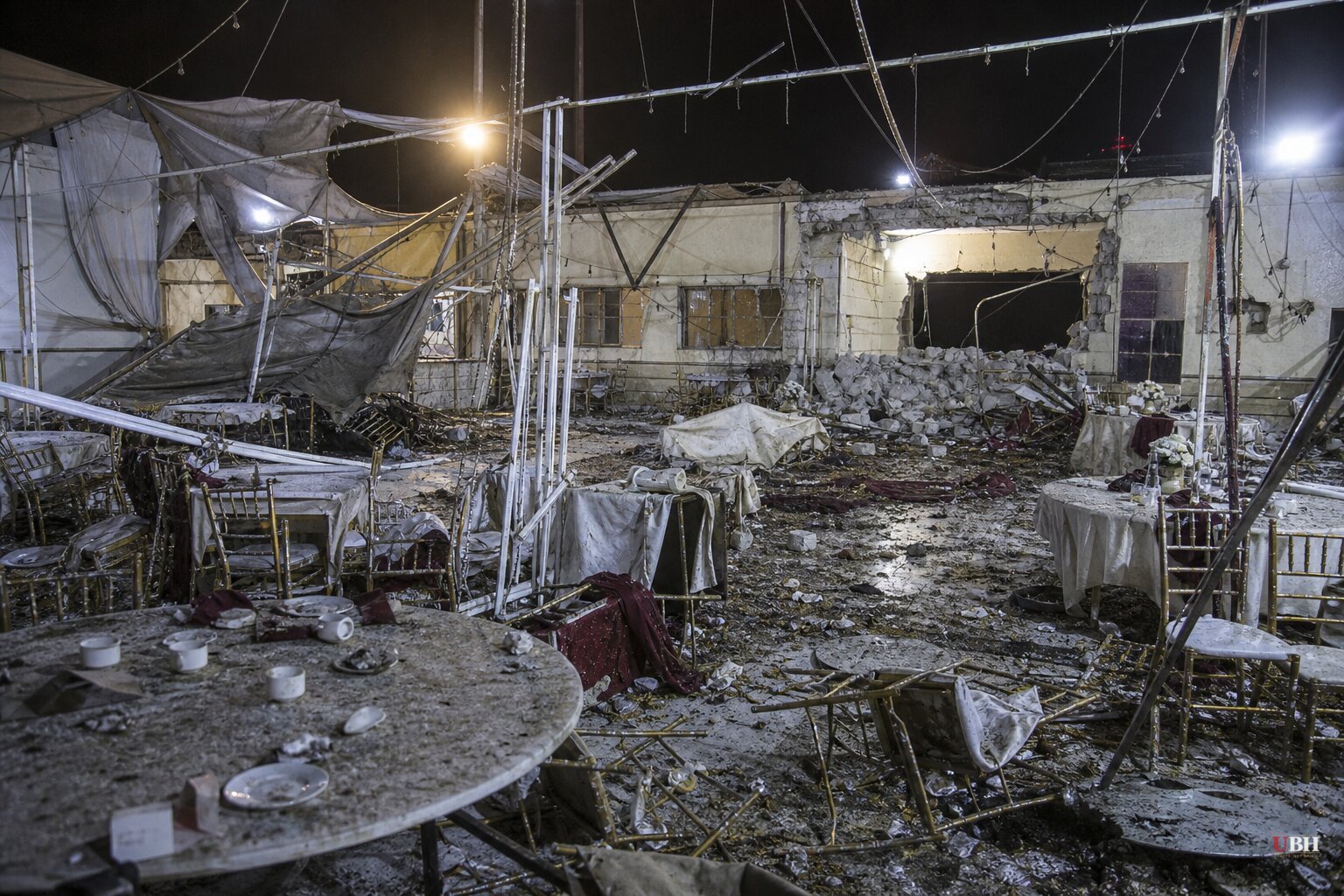
Since Iranian state media first reported the September 1 explosion at a wedding party in Kuhestak, southern Iran, the death toll and the explanation for what caused it have both shifted this week. According to a person familiar with the operation cited by the Washington Post, US Navy jets dropped six bombs at a communications complex in Kuhestak that Iranian forces were believed to be using. Five hit the intended target. The sixth, the person said, appears to have gone astray and tore into the roof of a home roughly 440 feet away where a wedding was underway. The Pentagon has not confirmed this account publicly, but is reviewing the strike, the Post reported. Casualty figures have grown since Iran's Red Crescent organization first said Tuesday that four people, including a child, were killed and 50 injured. The US military has said only that it is aware of the report and that it does not target civilians. A reasonable critic of the strike would point out that regardless of intent, a residential wedding was hit by a US weapon, and that the administration's insistence it "does not target civilians" does not by itself explain how a bomb ended up 440 feet from its intended target. The Pentagon's own review, if the Post's sourcing holds up, points toward mechanical or targeting error rather than a deliberate strike on the home. Both things can be true: the target was a legitimate military site, and a stray weapon still killed a wedding party.
Tanker war escalates
The wedding strike came the same week President Donald Trump's "tanker-for-tanker" retaliation policy moved from threat to action. US Central Command announced Saturday, September 5, that airstrikes disabled two Iranian oil tankers and "completely destroyed" a third, with one hit near Iran's primary loading facility at Kharg Island, according to Breitbart. CENTCOM said the strikes followed Islamic Revolutionary Guard Corps ballistic missiles fired at two US Navy warships. Iran claims it struck back Sunday, hitting an unmanned US vessel attempting to transit the Strait of Hormuz, Breitbart reported, citing Iranian state media. Tehran has also told the Associated Press it plans to announce a new "exclusion zone" near the strait, though Iran has not yet detailed its boundaries or when it will take effect.
Bessent's
numbers Treasury Secretary Scott Bessent, in a Fox News interview reported by Iran International, said Iran has roughly 30 million barrels of crude oil left that China has not already purchased. "That will run out soon, and there will be no problem with China buying because they have no product," Bessent said, describing the sanctions campaign as an effort to "asphyxiate" Iran's ruling establishment. Bessent has used several different labels for the pressure campaign this week, and separately told reporters Friday that Iran is down to roughly two months of gasoline, per Breitbart. None of these figures, from Bessent's oil estimate to the gasoline runway, have been independently verified by outside analysts in these sources. They are the Treasury Department's own characterization of the blockade's effect, not audited inventory data.
Washington argues over the war's scale
On CNN's "State of the Union" Sunday, Rep. Mike Lawler (R-NY) pushed back on Trump's own description of the conflict, telling host Dana Bash the war "is not small potatoes." Trump had told reporters Friday, "I call it a military conflict because it's small potatoes." Energy Secretary Chris Wright, on the same broadcast, said the Navy "is winning the battle for control of the Strait of Hormuz," backing Trump's claim that the strait is "under US control." Democrats have taken a different line. Rep. Madeleine Dean (D-PA) said on MS NOW's "The Last Word" that Trump's leadership on the war has been "erratic and childlike" and that "the president is failing at this war and he knows it." Maryland Gov. Wes Moore called Trump's "small potatoes" framing "deeply disgusting" on CNN's "The Lead." Rep. Pat Harrigan (R-NC), speaking on C-SPAN, said the administration needs to communicate the war's stakes more clearly to the public regardless of how it ultimately ends. None of these lawmakers dispute CENTCOM's tanker figures or Bessent's oil estimates outright. They represent the ongoing battle over how to characterize a six-month war that has now killed civilians on Iranian soil and destroyed tankers in the Gulf in the same week. The Pentagon has not said when its review of the Kuhestak strike will conclude, or whether it will result in any public acknowledgment of fault.
Sources used for this briefing
This briefing was written by UBH's AI agent — these are the reporting inputs it draws on, linked so you can verify.


