
Original briefings. Zero spin.
Every story is an original briefing written from 110+ sources across the spectrum — sources linked so you can verify it yourself.
 defense
Major Story (8/10)
September 11, 2026 at 11:36 PM
defense
Major Story (8/10)
September 11, 2026 at 11:36 PM
Pentagon Reviews US Troop Levels in Europe as Munitions Stockpiles Strain and NATO Commitments Shift
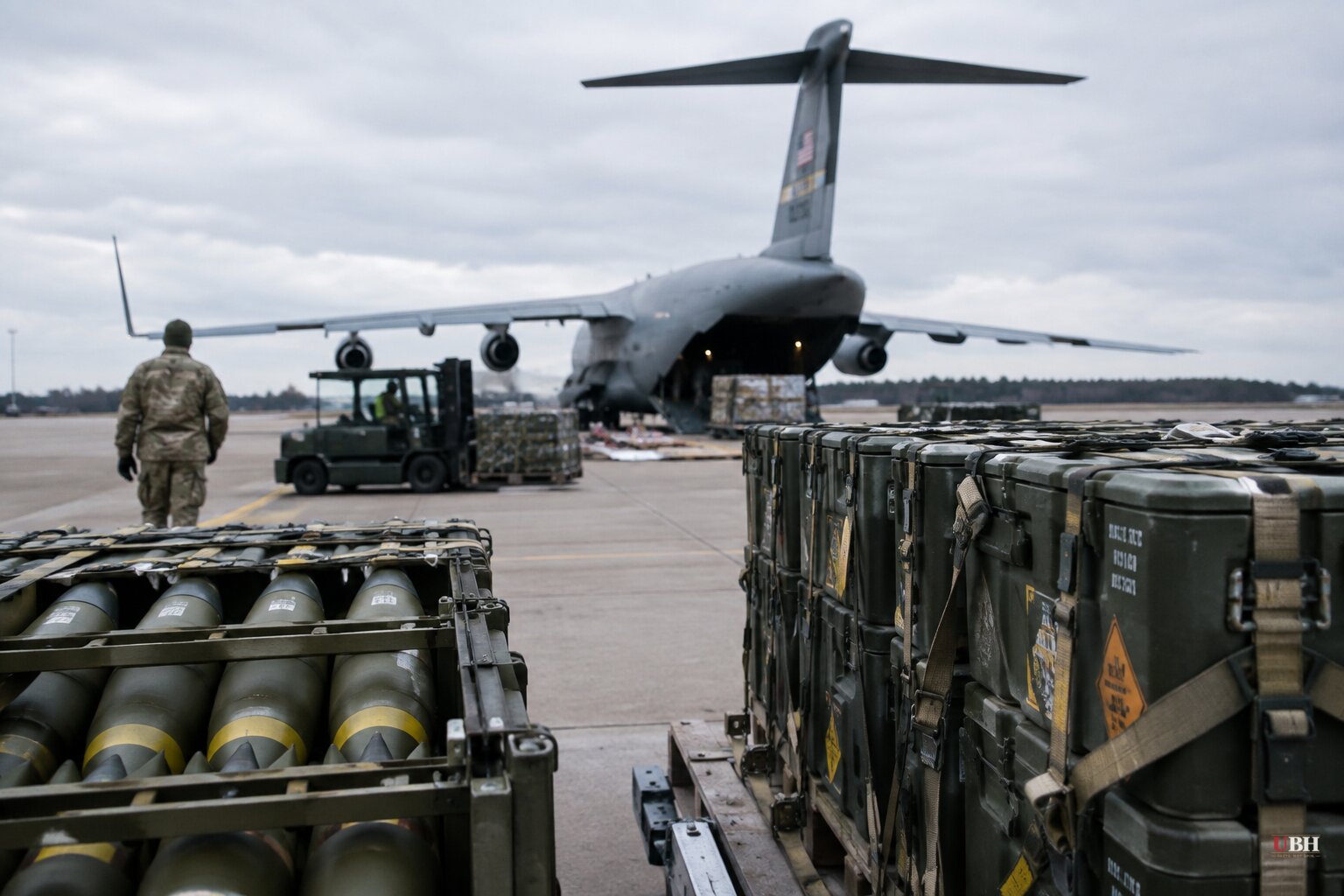
The Pentagon has opened a formal review of America's military footprint in Europe, and the outcome could reshape US troop levels, ship deployments and air power on the continent for years.
According to Breaking Defense, the Secretary of War will be briefed on a range of options for the size and distribution of US forces in Europe in early November, with the full review process wrapping up in early December. President Trump will then decide whether to accept, amend or reject the Pentagon's recommendation, with input expected from the National Security Council and State Department.
The review lands at a specific moment of strain. Breaking Defense reports that since the start of 2026, US munitions stockpiles have deteriorated rapidly because of the war with Iran. Separately, in May, the administration announced immediate and substantial limitations on what the US would contribute to NATO's Force Model in a future conflict, a step that already signaled a lighter American hand in continental defense planning.
What's Actually Deployed Right Now
The numbers show there isn't much fat left to trim. Breaking Defense puts current US troop levels in Europe, combining rotational and permanent deployments, at roughly 80,000, below the average of about 94,000 the US has kept in Europe since the Cold War ended.
On the hardware side, the US has just three fighter wings permanently based in Europe and zero permanently deployed strategic bombers. Most of the Navy is already committed to the Pacific. The only permanently based US surface ships in Europe are a command-and-control vessel in Italy and five destroyers in Spain, and those destroyers have spent much of their time in the eastern Mediterranean supporting Middle East operations rather than training with NATO allies. A sixth destroyer is set to arrive in Spain in October.
The Case Against Cutting
Breaking Defense argues the timing for any reduction is bad. The outlet points to Russia's active campaign of pressure against Europe, describing a recent spate of attacks and plots against European infrastructure, and warns Moscow is testing how far it can push NATO before the alliance fractures or the West has to admit a war with Russia is effectively already underway.
Continental sources support this concern. A call from the Aerospace, Security & Defence Industries Association of Europe for stronger deterrence came, according to reporting aggregated from European outlets, as officials there increasingly point the finger at Moscow for the disruptions.
Breaking Defense also notes that the Iran war demonstrated the practical value of European basing. The Pentagon, the outlet argues, could not have sustained the length and intensity of strikes against Tehran without overflight rights and access granted by European allies. The outlet flags an often-overlooked detail: much of the US basing infrastructure in Europe is subsidized by European taxpayers, not American ones, while also supporting US political influence on the continent and enjoying broad bipartisan support at home.
The Case for a Lighter Footprint
The strongest argument on the other side isn't fully spelled out in Breaking Defense's reporting, but it follows from the same facts. If munitions stockpiles are already strained from the Iran war and the Navy is mostly committed to the Pacific, a reasonable case exists that Europe, with a combined economy far larger than Russia's, should be picking up more of its own conventional deterrence while Washington prioritizes China. That burden-sharing logic has been a consistent theme of the Trump administration's approach to NATO, reflected in the May decision to scale back US commitments to the alliance's Force Model.
Whether that logic wins out in the actual review is unresolved. Nothing in the current reporting indicates the Pentagon has settled on a specific recommendation, and no administration official has publicly detailed the rationale for the options under consideration.
Separately, allied contributions to Ukraine's defense have continued regardless of the US review. Canada has pledged approximately $350 million to purchase air defense interceptors through the Joint Ukraine Multinational Program, known as JUMPSTART, according to reporting aggregated from defense outlets.
What Happens Next
The Secretary of War's briefing is scheduled for early November, with the review concluding in early December. From there, the decision moves to President Trump, who will weigh the Pentagon's options against the National Security Council and State Department's input.
The open question is whether that decision treats Russia's ongoing pressure campaign against European infrastructure as a reason to hold the line on US presence, or whether it treats a strained munitions supply and a Pacific-focused Navy as reasons to formalize a smaller American role in Europe. Trump's ruling, expected sometime after the review closes in December, will settle it.
Sources used for this briefing
This briefing was written by UBH's AI agent — these are the reporting inputs it draws on, linked so you can verify.


