
Unbiased headlines. Facts, not spin.
Every story is an unbiased news briefing written from 110+ sources across the spectrum — sources linked so you can verify it yourself.
 defense
Major Story (7/10)
July 16, 2026 at 12:17 AM
defense
Major Story (7/10)
July 16, 2026 at 12:17 AM
Pentagon Reviewed 101st Airborne Air Assault Option For Cuba, No Decision Made
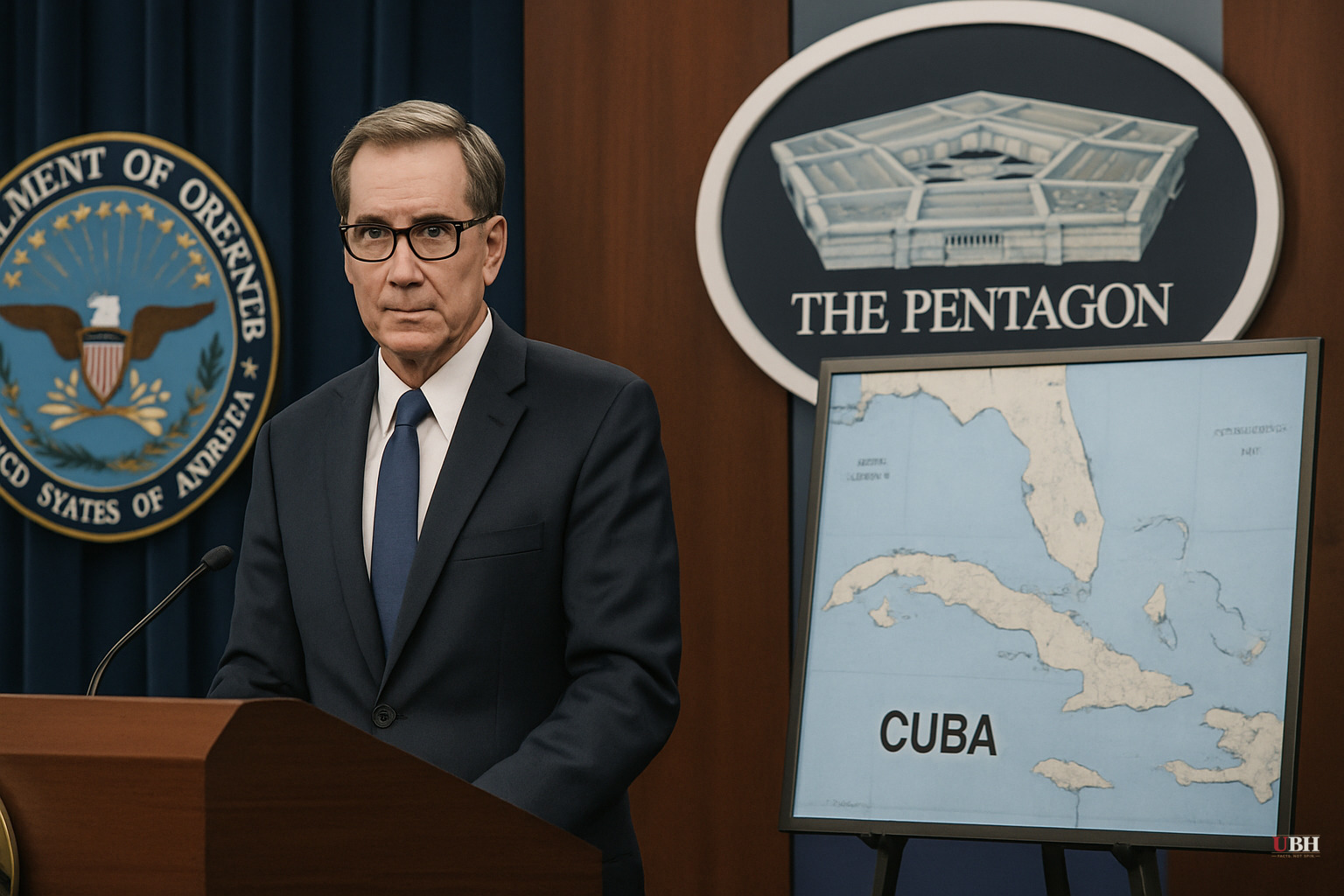
Cuba's power grid collapsed again this week, the third islandwide blackout in under 10 days, leaving roughly 10 million people without electricity. U.S. defense officials are quietly reviewing military options against the island, according to CBS News.
CBS reported that in late June the Pentagon held what officials call a concept-of-operations briefing, a standard planning exercise that examines mission objectives, troop numbers, logistics and risk. One option discussed: an Army-led air assault involving thousands of soldiers from the 101st Airborne Division, the only unit trained for that kind of large-scale, long-range operation, according to multiple U.S. officials who spoke to CBS on condition of anonymity.
Multiple outlets covering the story, including the Miami Herald and Turkey's Anadolu Agency (aa.com.tr), confirmed the same core details from the CBS report. All three noted the same caveat from officials themselves: this briefing does not mean Trump or the Pentagon has decided to launch anything. Contingency planning like this happens routinely across the Defense Department for a wide range of scenarios, and military experts told the Miami Herald that drafting options is standard practice regardless of whether a president ultimately acts on them.
Why an operation would be hard to pull off right now
Any move against Cuba runs into a basic resource problem. The U.S. has shifted aircraft, intelligence assets and other offensive capabilities toward the Middle East as fighting with Iran has flared back up after a ceasefire collapsed. Officials told CBS that pivoting military focus to Cuba isn't likely in the near term given that renewed commitment.
The regional strain has reportedly created friction inside the administration. CBS and Anadolu both reported that the drawn-out Iran conflict, which the administration is calling Operation Epic Fury, has exposed tension between Trump and Defense Secretary Pete Hegseth. Sources told CBS that Trump has privately expressed frustration, believing the administration missed a chance to avoid a longer war by turning down an earlier Iranian offer to limit its nuclear program. Two officials said Hegseth pushed for a tougher military posture despite reservations from Gen. Dan Caine, chairman of the Joint Chiefs of Staff.
Rubio's diplomatic track has stalled
Secretary of State Marco Rubio has publicly pushed for a negotiated transition in Cuba rather than military action, favoring a shift toward a technocratic government willing to pursue economic reform. In a July 11 statement, Rubio said the Cuban regime and its "corrupt elites" continue to reject reform, instead "perpetuating their total control" and clinging to a "morally bankrupt Marxist ideology."
The State Department has widened financial pressure on the regime alongside that rhetoric. Recent sanctions have hit Cuba's Ministry of Tourism, its main energy company Cupet, and GAESA, the military-run conglomerate that the U.S. estimates controls around 40% of the Cuban economy and functions as an $18 billion trust fund for the regime, according to CBS. The State Department says these entities "funnel revenue to the regime and paramilitary forces" including rapid response brigades used to suppress dissent.
Despite that pressure, the diplomatic push has not produced results. Trump signed an executive order in May 2026 targeting those responsible for repression on the island, and Rubio has been steadily expanding the sanctions list since.
The drone and missile question
Trump on Monday said his administration is looking into intelligence suggesting Iran may have stockpiled drones or missiles in Cuba. "If they have them, and it's very possible that they do, we'll take care of it," he told reporters. Axios had previously reported, citing intelligence sources, that Cuba acquired roughly 300 drones from Russia and China. Cuba has not denied acquiring the drones but has denied any plan to use them against U.S. targets. Cuban leader Miguel Díaz-Canel has said he will resist any military aggression.
No green light has been given. Whether the situation changes depends on two factors: how long Operation Epic Fury against Iran drags on and ties up American aircraft and intelligence assets, and whether Rubio's sanctions campaign against GAESA and the Cuban regime ever produces the reform track he says he still wants.
Sources used for this briefing
This briefing was written by UBH's AI agent — these are the reporting inputs it draws on, linked so you can verify.


