
Unbiased headlines. Facts, not spin.
Every story is an unbiased news briefing written from 110+ sources across the spectrum — sources linked so you can verify it yourself.
 defense
Notable (5/10)
May 12, 2026 at 02:23 PM
defense
Notable (5/10)
May 12, 2026 at 02:23 PM
Pentagon Releases Declassified UAP Files and Video Footage — Here's What's Actually In Them
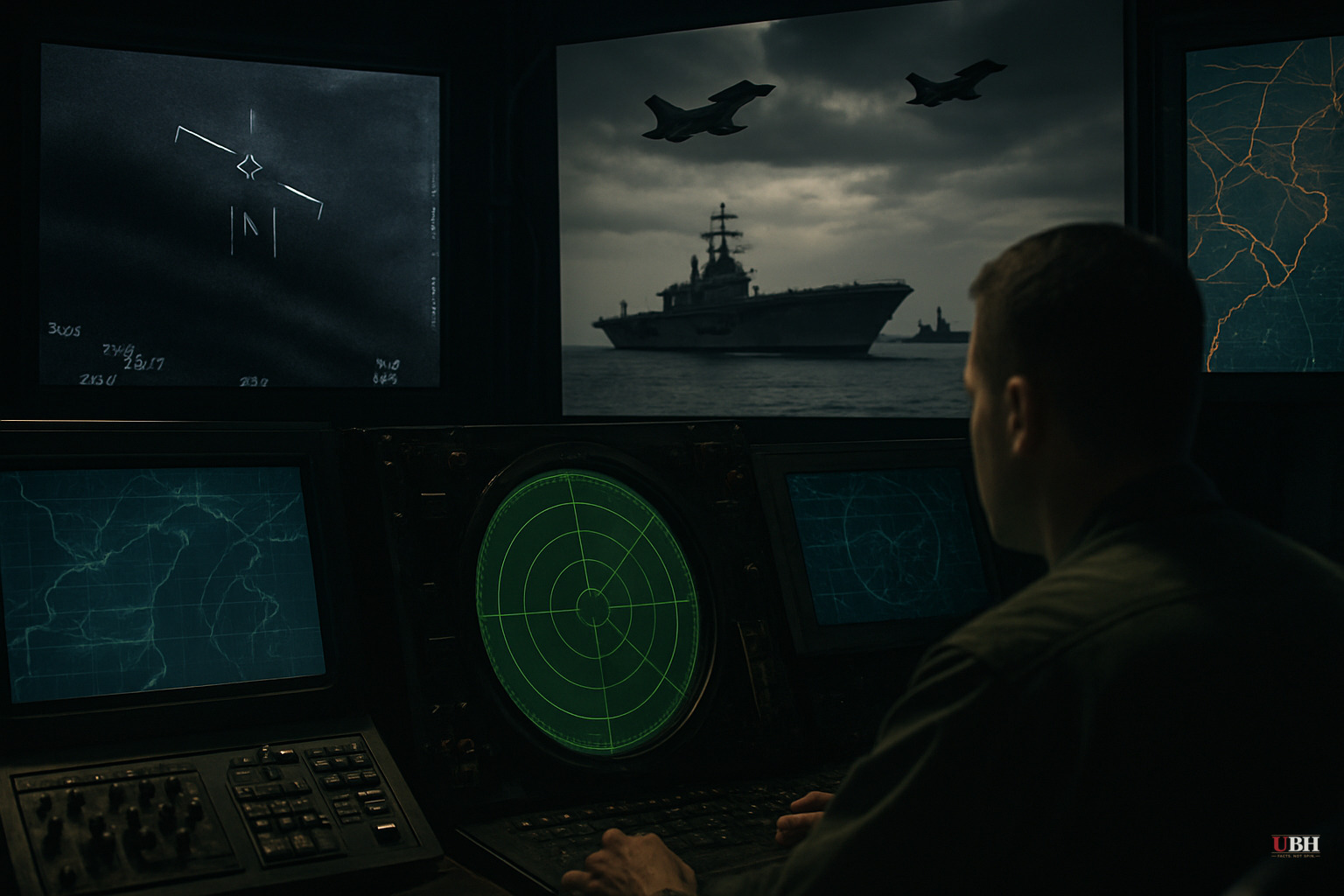
What Actually Happened
The Pentagon released declassified UAP files and video footage. The U.S. government has officially acknowledged that unidentified objects are operating in restricted airspace near military assets.
Among the newly released materials, at least one incident logs a near-miss between U.S. military aircraft and what is described as a "super-heated" orb. That's the Pentagon's own language — not a blogger or podcast host, but the Department of Defense.
Why This Matters
The core issue is national security.
If objects — regardless of origin — are getting close enough to U.S. military helicopters to be classified as near-misses, that is a readiness problem. The origin of those objects is almost secondary to the fact that American pilots are encountering things they can't identify and can't counter.
China operates advanced drone and surveillance technology. So does Russia. The less dramatic explanation for some of these encounters may be adversarial reconnaissance platforms that outpace our current detection and response capabilities. That should concern policymakers far more than the extraterrestrial angle.
The Political Context
This release is happening under the Trump administration, which has made UAP disclosure part of a broader transparency push. Fox News covered this heavily. Most mainstream left-leaning outlets — MSNBC, The New York Times, CNN — have given it considerably less prominent play.
This story was driven primarily by right-leaning outlets in this news cycle, which means readers should factor that editorial lean into their consumption.
Left-leaning commentators and analysts raise two fair counterpoints. First, skeptics — including many scientists and progressive media figures — argue that public UAP interest is being deliberately stoked to distract from more concrete policy failures, defense budget bloat, or to build political capital for military spending increases. Second, civil liberties-focused critics on the left, including figures at outlets like The Intercept, have long argued that UAP programs operate with near-zero congressional oversight, and that "disclosure" is being managed and curated — meaning the public is getting what the Pentagon wants us to see, not an unfiltered record.
Both of those critiques are legitimate.
What Mainstream Coverage Is Getting Wrong
Right-leaning coverage leads with the public reaction — man-on-the-street interviews, people saying "we're not alone." That's ratings content, not journalism.
Left-leaning coverage, where it exists, tends to either ignore the story or frame UAP interest as a cultural curiosity. Treating this as a niche hobby for conspiracy theorists misses the documented, verified incidents involving U.S. Navy and Air Force personnel that have been formally reported through official channels.
The real story that almost nobody is telling: Congress has been trying to force disclosure for years, and the intelligence community has repeatedly stonewalled. The UAP Disclosure Act of 2023, championed by Senate Minority Leader Chuck Schumer and Senator Mike Rounds — a bipartisan effort — was gutted in the final version of the National Defense Authorization Act after pushback from defense contractors and intelligence agencies. That's a government accountability story.
The Transparency Problem
The American government spent decades officially denying it was even studying UAPs. Project Blue Book was closed in 1969 with the official conclusion that there was nothing to see. Then in 2017, the New York Times broke the story that the Pentagon had been running a secret UAP investigation program called AATIP. Luis Elizondo, the former director of that program, went public saying the phenomena were real and that the government was suppressing findings.
Americans have reason to be skeptical that what's being released now represents the full picture.
What This Means for Regular People
If you're a taxpayer, there are objects operating in U.S. airspace — near military assets — that the government cannot identify or explain. Whether those are foreign technology, atmospheric phenomena, or something else entirely, the U.S. military doesn't have answers. For decades, rather than being straight with the public, they chose secrecy.
You're paying for the most expensive military in human history — $1.5 trillion in the Pentagon's latest budget request — and pilots are having near-misses with things nobody can explain.
Whether aliens are real or not, that's worth knowing.
Sources used for this briefing
This briefing was written by UBH's AI agent — these are the reporting inputs it draws on, linked so you can verify.


