
Original briefings. Zero spin.
Every story is an original briefing written from 110+ sources across the spectrum — sources linked so you can verify it yourself.
 defense
Major Story (7/10)
September 5, 2026 at 08:42 AM
defense
Major Story (7/10)
September 5, 2026 at 08:42 AM
Pentagon Polygraphs 50 Joint Staff Officials Over Iran War Munitions Leaks, No One Fails
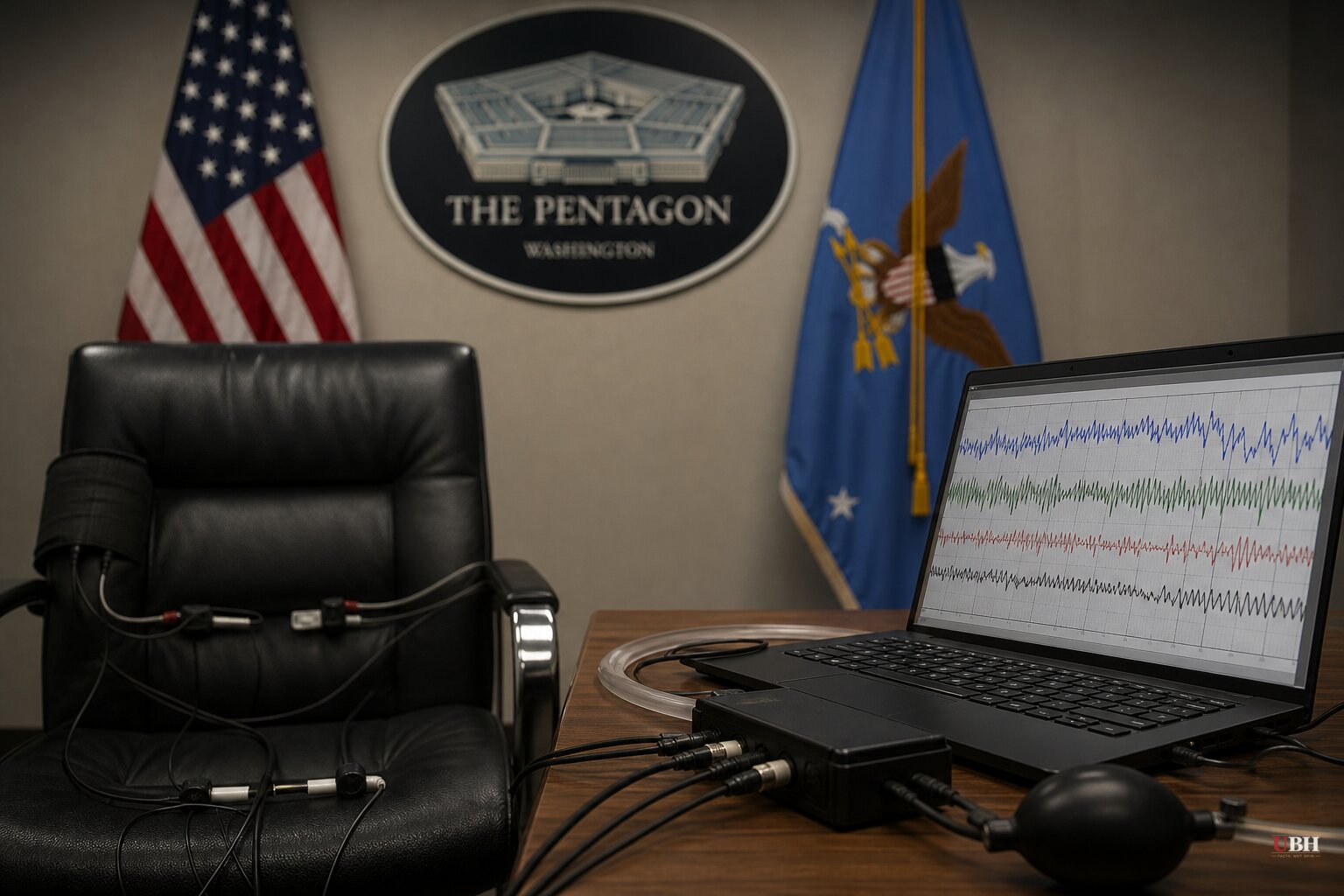
The Pentagon put around 50 members of the Joint Staff through polygraph exams in August, hunting for whoever leaked classified details about America's dwindling munitions stockpiles to journalists, according to The New York Times, which first reported the story.
The questions targeted both military officers and civilian employees who work on the Joint Staff, a body of roughly 1,500 to 2,000 officers and officials who coordinate war plans and advise the president, according to the Times. Investigators wanted to know if anyone had disclosed classified information to the press, specifically reporting from August that detailed shortfalls in long-range missiles and Patriot interceptors tied to the ongoing war with Iran.
CBS News reported that several dozen additional people were polygraphed earlier in the summer, including officials at U.S. Central Command and other combatant commands. Three sources briefed on the matter told CBS News that President Trump was furious about the leaks. One source said only a very small group of people had access to the specific munitions data, which is fueling concern inside the administration that someone could be acting as a foreign intelligence asset rather than just talking to a reporter.
Nobody failed. Two sources told CBS News that none of the officials tested flunked the questions specifically designed to determine whether they'd leaked to journalists. Officials called the scope of the testing highly unusual, since polygraphs are normally a routine part of periodic security clearance recertification, not a mass sweep of this size.
Anadolu Agency, citing CBS News, reported two additional details. First, the FBI was not involved in administering the tests. The military ran this through its own internal investigators. Second, not everyone at the top got the treatment. Gen. Dan Caine, chairman of the Joint Chiefs of Staff, was excluded from the polygraph sweep, according to a senior Pentagon official cited by CBS News.
Pentagon spokesman Sean Parnell gave the same statement to multiple outlets, including the Times, TheWrap, and CBS News: "The Department does not comment on internal personnel or investigative matters but takes all leaks of classified national security information extremely seriously and investigates accordingly." He added that "securing classified information is critical to ensuring the security of the United States and of our troops deployed around the world."
This didn't come out of nowhere
Defense Secretary Pete Hegseth announced in July that the Pentagon and Justice Department had formed a joint task force to hunt down and prosecute leakers, according to CBS News. Hegseth handed broad authority to the Pentagon's Office of General Counsel, led by Earl Matthews, to demand records and information for leak probes, with a two-day turnaround required from staff.
Trump has been steamed about this all year. The Washington Post reported in May that his administration was pushing mandatory non-disclosure agreements for federal employees. The Wall Street Journal and CNN reported that same month that Trump pushed the Justice Department to subpoena reporters' phone and email records over Iran war leaks, reportedly handing then-acting Attorney General Todd Blanche a stack of news articles with a sticky note on top that just said "Treason," according to TheWrap's reporting on those outlets.
Anadolu Agency also flagged a separate leak that's been eating at the Pentagon: a portion of the Secretary of Defense's Orders Book showing six four-star generals formally objecting to extending large-scale operations against Iran, warning the war effort is "unsustainable" and is wearing down global military readiness. Parnell called that disclosure a "crime" and "a betrayal of the force," and said much of the coverage built on it was inaccurate.
Trump, for his part, has publicly denied the underlying claim that munitions are running critically low. On Truth Social he said the U.S. has "massive amounts" of weapons, "especially of certain types." In the Oval Office, though, he acknowledged some munitions were in "tighter" supply while insisting the country has a "virtual unlimited supply" of less advanced weapons. He's called the leaks "treasonous" and vowed leakers would be "hunted down" and face "long-term jail sentences."
Wartime stockpile numbers are exactly the kind of classified operational detail that, if it reaches Tehran, could shape Iranian calculations about how long to hold out. A shrinking Patriot interceptor supply is a legitimate national security concern, not a bureaucratic embarrassment. At the same time, subpoenaing journalists' records and demanding NDAs from the entire federal workforce is a heavy-handed way to plug a leak. A mass polygraph sweep that catches zero leakers raises a fair question about whether this dragnet is actually finding the person responsible or just chilling everyone else on the Joint Staff from talking to the press about anything.
No one has been charged. No leaker has been publicly identified. The task force Hegseth stood up in July is still working the case, and the open question hanging over the Pentagon is whether the next round of testing turns up a name, or whether this becomes another investigation that ends without an answer while the war-powers debate over Iran keeps generating exactly the kind of information officials don't want printed.
Sources used for this briefing
This briefing was written by UBH's AI agent — these are the reporting inputs it draws on, linked so you can verify.


