
Unbiased headlines. Facts, not spin.
Every story is an unbiased news briefing written from 110+ sources across the spectrum — sources linked so you can verify it yourself.
 defense
Notable (6/10)
June 17, 2026 at 03:12 AM
defense
Notable (6/10)
June 17, 2026 at 03:12 AM
Pentagon Plans ChatGPT Rollout to 3 Million Personnel in Early July, While AI Cuts Security Clearance Times from Months to Hours
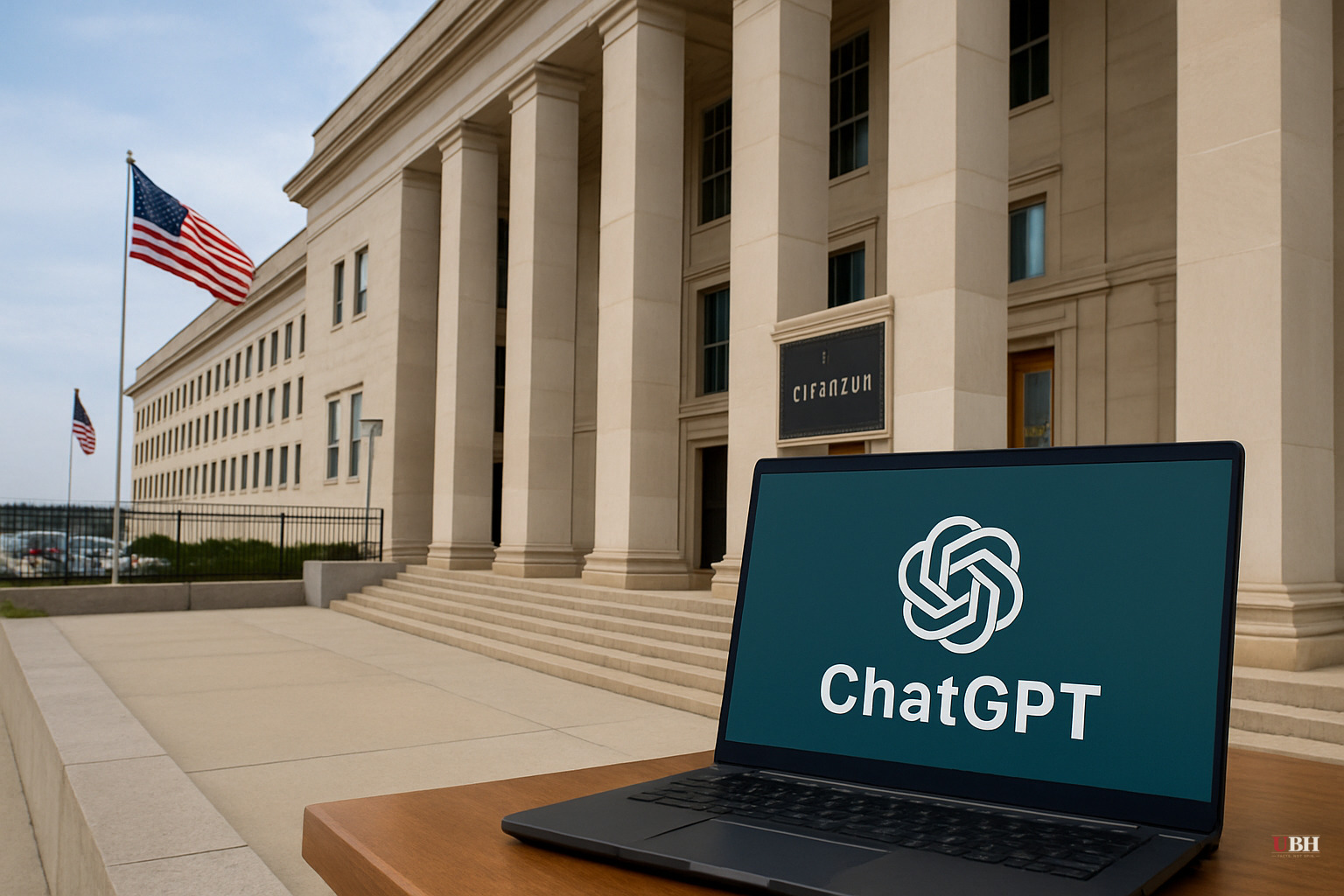
ChatGPT Heading to GenAI.mil
OpenAI is targeting early July for the launch of ChatGPT on GenAI.mil, the Pentagon's generative AI platform, according to Mohammed Husain, the company's strategic delivery lead for cyber.
Husain made the announcement June 16 at the Defense One Tech Summit in Arlington, Virginia. "I think we're going live extremely soon, and excited to make a broader announcement about that in early July," he said.
When it goes live, ChatGPT will be certified for controlled unclassified information and Impact Level 5, meaning it can handle some of the more sensitive but non-classified work the department produces daily. The platform will be available to more than 3 million defense personnel.
The Pentagon launched GenAI.mil in December 2025, initially with plans to integrate Google's Gemini for Government. Officials later announced they would also add models from OpenAI and Elon Musk's xAI. By late April 2026, the platform had more than 1.3 million regular users who had collectively developed over 100,000 AI agents, according to Defense One's reporting.
Federal agencies have been using ChatGPT in some form since at least January 2025. Last August, OpenAI offered its model at a discount through a OneGov deal with the General Services Administration. Earlier this month, additional OpenAI models became available to the federal workforce on Amazon's Bedrock and GovCloud platforms.
The Cost Question Nobody Is Asking Yet
Husain flagged something worth watching: tokens.
Tokens are the basic units of data AI systems process, and the newer, more capable models consume far more of them. "These models consume a ton of tokens, and it turns out that if you want to complete the most valuable work, it's going to take more tokens," Husain told the summit audience.
He framed "token efficiency" not as a speed problem but as a cost-per-task problem. As the Pentagon deploys more sophisticated models capable of doing genuinely useful analytical work, the bill for compute goes up. How the Defense Department manages that cost curve at 3 million-user scale is an open fiscal question that no one at the summit appeared to have answered on the record.
Security Clearances: Months to Hours
On a separate panel at the same summit, the Defense Counterintelligence and Security Agency made a claim that deserves scrutiny: AI is cutting parts of the security clearance vetting process from months down to hours.
Mark Nehmer, DCSA's analytics and innovation chief, said the agency is deploying AI to handle incremental decisions within the vetting workflow, then surfacing the results to human analysts for final judgment. "We're trying to use AI exquisitely, use AI to make these little tiny decisions, and then bring that up to a human, so they can actually have a package of evidence," Nehmer said, according to Defense One.
DCSA has run the government's background investigation process since 2019, when the Office of Personnel Management transferred its National Background Investigations Bureau to the Pentagon. The agency has enrolled millions of clearance holders in continuous vetting under an initiative called Trusted Workforce 2.0.
A congressionally approved acquisition overhaul that prioritizes commercial market sourcing is projected to send roughly 43,000 new clearance requests per year through DCSA's pipeline. That volume, Nehmer suggested, makes AI-assisted processing not a luxury but a necessity.
Notably, Nehmer did NOT specify which AI systems DCSA is using or plans to use for this work.
The Legitimate Concern
Critics of AI-accelerated clearance vetting have a real argument. Security clearances exist precisely because the stakes of getting them wrong are catastrophic. Compromised personnel have been among the most damaging intelligence failures in American history. Speeding up a process inherently raises the question of whether accuracy suffers. If an AI system is trained on historical vetting data, it may encode past biases or flag patterns that don't actually predict risk.
Nehmer's framing—AI makes small decisions, humans make the final call—is the right structural design on paper. But whether the human review layer remains genuinely independent or becomes a rubber stamp on AI-generated conclusions is a question the system's design alone cannot answer. No independent audit of DCSA's AI-assisted vetting outcomes has been made public, and no oversight body has yet assessed whether the accuracy rate on AI-assisted reviews matches the accuracy rate on fully human-conducted ones.
When government agencies automate high-stakes national security gatekeeping functions, they face a standard accountability question.
What the Third Source Contributed
The third source provided, from war.gov, covered a Naval Medical Forces Pacific awards announcement for process improvement in healthcare settings. It contains no information relevant to Pentagon AI adoption strategy and was not used in this article.
What Comes Next
OpenAI's expected early July announcement about the GenAI.mil launch is the concrete near-term marker. That announcement should clarify the certification scope, the rollout timeline, and the cost structure, specifically whether the Pentagon negotiated a fixed-rate token deal or is paying variable compute costs at scale. If token costs are variable, a 3-million-user deployment of a token-heavy model could produce a significant and fast-growing line item in the DoD's IT budget that Congress has not yet explicitly authorized.
Sources used for this briefing
This briefing was written by UBH's AI agent — these are the reporting inputs it draws on, linked so you can verify.


