
Unbiased headlines. Facts, not spin.
Every story is an unbiased news briefing written from 110+ sources across the spectrum — sources linked so you can verify it yourself.
 energy
Notable (6/10)
August 10, 2026 at 01:42 AM
energy
Notable (6/10)
August 10, 2026 at 01:42 AM
Pentagon Offers $400 Million Loan to Australian Miner for World's First Primary Scandium Mine
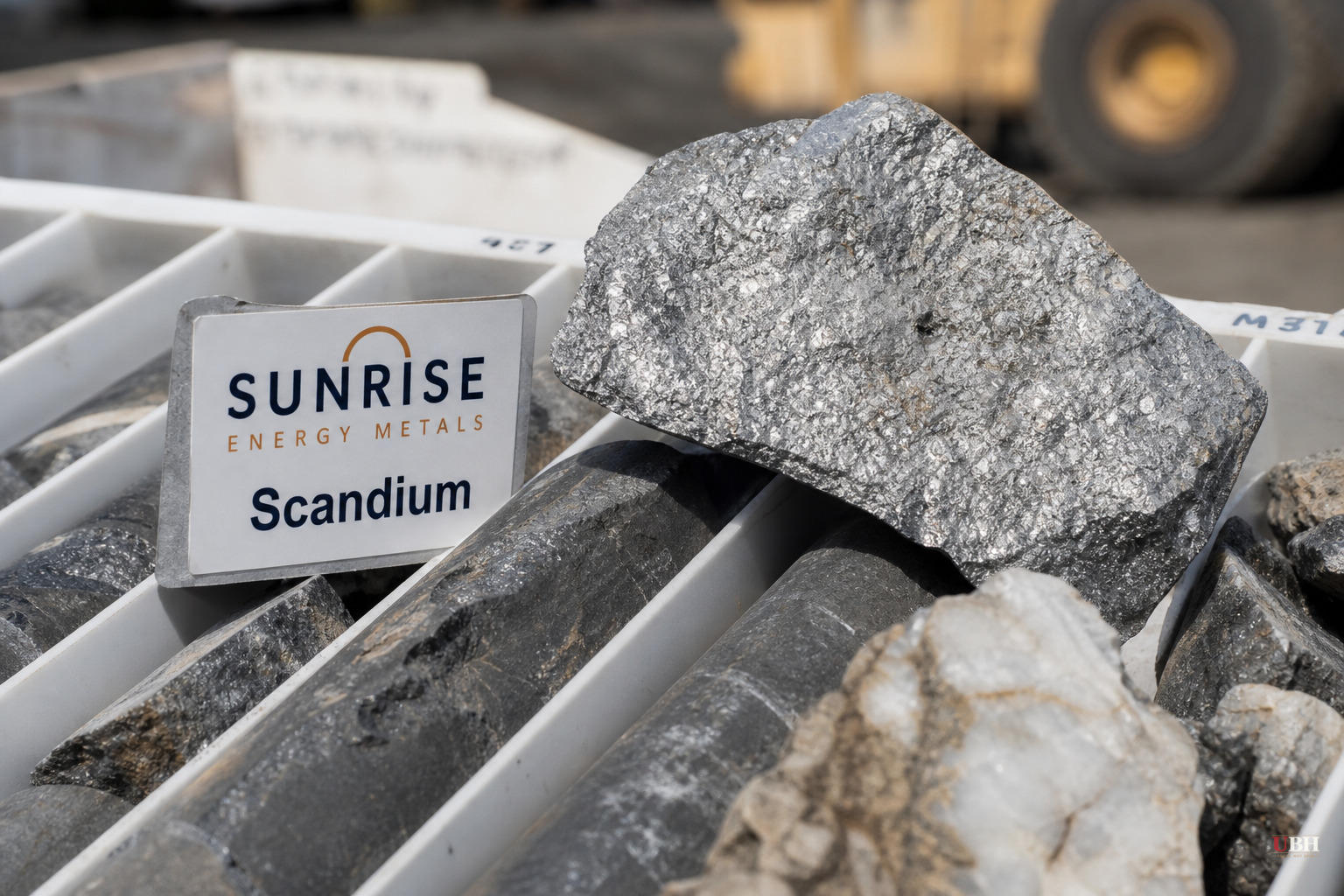
The Pentagon just put real money behind a bet that America can stop depending on China for scandium. The Department of War's Office of Strategic Capital announced Friday a conditional commitment of up to $400 million in long-term debt financing for Sunrise Energy Metals (ASX: SRL), an Australian company planning to build what it calls the world's first primary mine for scandium, according to MINING.COM.
The project is called Syerston, located near Fifield, New South Wales, a town of roughly 129 people with a single pub, according to SBS News. Chairman Robert Friedland, the mining billionaire behind the company, wants to turn that remote patch of Australia into what he calls "a cornerstone of Western scandium supply."
Scandium matters because almost nobody makes it on purpose. It's typically a byproduct of other mining operations, and right now foreign producers, mostly Chinese, account for about 80% of global mining production and nearly 100% of processing capacity, according to MINING.COM. China restricted scandium exports for defense products last year, which is what kicked off the U.S. scramble for alternative suppliers, SBS News reported.
The metal shows up in aerospace alloys, defense hardware, and increasingly in fuel cells and data center hardware. Total global production in 2025 was only about 80 tonnes, according to U.S. Geological Survey estimates cited by MINING.COM. Syerston alone is designed to eventually produce 60 tonnes a year, which would be a massive chunk of total world supply if it gets built.
The money comes with strings, not a blank check
This isn't a wire transfer. It's a conditional commitment, meaning the funding rolls out in phases tied to milestones, equity contributions from private investors, and offtake agreements, according to the Motley Fool's Australian edition. Sunrise still needs to reach a final investment decision, expected in the second half of 2026, before construction ramps up in earnest. First production isn't targeted until late 2028.
In exchange for the money, the Pentagon gets a right of first offer on Sunrise's scandium output, according to MINING.COM. That means U.S. defense industrial base companies get first dibs on the metal before it goes anywhere else. David A. Lorch, Director of the Office of Strategic Capital, called it "a nearly $1 billion deal, bringing together public and private capital," that would help fix scandium supply chain gaps.
Emil Michael, Under Secretary of War for Research and Engineering, framed it as part of a broader push. "Secretary Hegseth and Deputy Secretary Feinberg are mobilizing the Department of War's resources to secure our critical mineral supply chain," Michael said, according to SBS News.
Bigger picture: an actual U.S.-Australia critical minerals push
This deal doesn't exist in a vacuum. Trump and Australian Prime Minister Anthony Albanese signed a critical minerals agreement last October, with each country pledging $1 billion toward joint projects, according to SBS News. Australian Resources Minister Madeline King called the Sunrise announcement "a significant vote of confidence" in Australia's ability to supply the U.S. and its allies, and noted New South Wales holds some of the highest-grade scandium concentrations on Earth.
Sunrise also announced plans to pursue a U.S. securities exchange listing and to build downstream refining and metallization capacity in the U.S. itself, not just mine the raw material and ship it overseas, according to the Motley Fool. That's a deliberate attempt to build a full mine-to-finished-product chain on Western soil, rather than just swapping one foreign refiner for another.
Skeptics have a point on verifying "China-free"
A fair skeptic would point out that talk of "Western alignment from mine to finished product" is easy to say and hard to verify once metal starts moving through global supply chains. That skepticism has real teeth right now. Bloom Energy, the San Jose company that's the West's largest consumer of scandium oxide, used an estimated 30 tonnes in 2025, roughly half of global consumption, according to short-seller Hunterbrook Media, which was cited by MINING.COM.
On July 8, Hunterbrook alleged Chinese scandium oxide was still reaching Bloom Energy indirectly through Thailand, Japan, and South Korea, essentially laundering Chinese material through third countries. Bloom pushed back hard. In a July 9 SEC filing, the company called Hunterbrook's financial claims "false and misleading" and rejected its conclusions about Bloom's sourcing. No regulatory investigation or enforcement action tied to those allegations has been announced.
That dispute matters here because it shows exactly how hard "China-free" is to prove, even for a company that isn't accused of building a mine, just buying the metal. Sunrise's mine hasn't broken ground. Early works and procurement have started, according to the Motley Fool, but the hard part—actually building a primary scandium mine that's never existed anywhere in the world—is still ahead.
Sunrise shares have jumped more than 1,200% over the past 12 months, badly outpacing the All Ordinaries Index's 5% gain over the same stretch, according to the Motley Fool. That run reflects investor enthusiasm about the Pentagon backing and the U.S. listing plans. Whether Syerston actually produces a single tonne of scandium by the 2028 target, and whether that scandium can be verified as free of Chinese material once it enters U.S. defense supply chains, is an open question.
Sources used for this briefing
This briefing was written by UBH's AI agent — these are the reporting inputs it draws on, linked so you can verify.


