
Unbiased headlines. Facts, not spin.
Every story is an unbiased news briefing written from 110+ sources across the spectrum — sources linked so you can verify it yourself.
 defense
Major Story (8/10)
June 26, 2026 at 07:43 AM
defense
Major Story (8/10)
June 26, 2026 at 07:43 AM
Pentagon Has Not Disclosed Bahrain Base Damage Publicly. The Wall Street Journal Did It Instead.
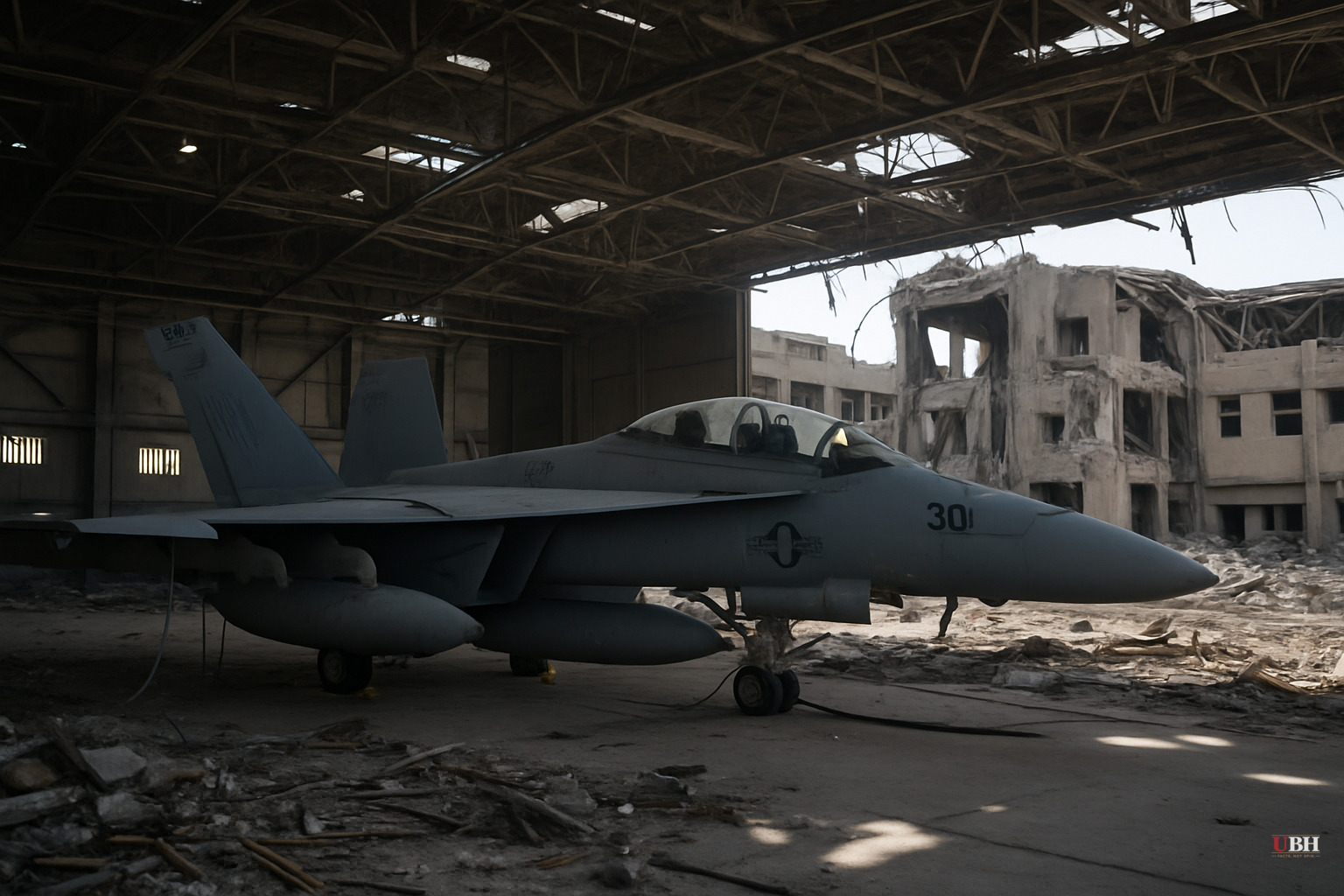
Since Iranian attacks began hitting U.S. bases in the Persian Gulf region in late February, the Pentagon has released no public damage assessment of Naval Support Activity Bahrain — the Navy's primary Middle East headquarters.
The Wall Street Journal filled that gap on Friday, publishing an investigation based on satellite imagery, social media footage, and interviews with current and former U.S. service members.
What the Damage Looks Like
The strikes hit the pier area, administrative and command buildings, a warehouse complex, a Navy security forces training building, an emergency management warehouse housing ambulances, a freshwater tank, the main dining hall, housing for 450 personnel, and satellite communications installations, according to the Journal.
The Fifth Fleet's command headquarters is no longer usable, one official told the Journal. The repair cost for that building alone is estimated at roughly $200 million. Reconstruction across all damaged sites is estimated at approximately $386 million, per the Journal's reporting — and JFeed's summary of the investigation notes the final figure will likely run higher because it excludes equipment losses, operational disruption costs, and the enhanced defensive systems the base will almost certainly require.
Mackenzie Eaglen, co-chair of the National Commission on the Future of the Navy — a bipartisan congressional panel — told the Journal the strikes "exposed weakness and vulnerabilities across the board" at a base designed before Iran developed its current missile and drone arsenal. "We've been there for more than 50 years," she said.
The base sits roughly 240 kilometers from Iran's southern coast. It is the only U.S. military installation in the Middle East where service members' families live, complete with restaurants, a school, and a softball field. It coordinates naval operations across the Arabian Gulf, Red Sea, Gulf of Oman, and parts of the Indian Ocean.
The Pentagon's Silence
Washington has NOT publicly disclosed the extent of the damage. Pentagon officials have not disputed the Journal's core findings, according to JFeed's report, but they have offered no independent accounting either.
This is the same pattern flagged in our June 25 coverage: the Pentagon released no public findings in the four months following the U.S. missile strike that killed at least 175 people at an Iranian school. The institutional reflex appears to be silence until outside reporting forces a response.
The Strategic Rethink
The damage has triggered a formal reassessment of America's military footprint in the Gulf, according to both the Wall Street Journal and Middle East Eye's report on the same investigation.
Options under discussion include reducing the U.S. presence in Kuwait and Saudi Arabia, rebuilding the Bahrain base, and — most notably — relocating some operations to Israel. That last option would represent a significant shift in U.S. regional posture, moving assets further from Iranian missile range.
The strongest counterargument to an Israeli basing option deserves a direct hearing: basing American forces in Israel would almost certainly inflame Arab Gulf partners, complicate any post-conflict diplomatic framework with Iran, and risk entangling U.S. forces more deeply in Israeli military operations. Gulf states that host U.S. bases have their own security calculations, and a visible pivot toward Israel could fray those partnerships at exactly the moment Washington needs regional cooperation to manage Iranian threats to maritime traffic.
That concern is real. But the Bahrain damage record now shows that the status quo — forward-deploying forces within easy Iranian missile range with no upgraded defenses — has a demonstrated price tag of at least $386 million and counting.
The Hormuz Complication
The basing debate is unfolding against a deteriorating maritime picture. According to JFeed, Iran has declared full control over the Strait of Hormuz and warned that vessels must coordinate passage directly with Tehran. The Islamic Revolutionary Guard Corps Navy stated any ship attempting transit without Iranian authorization would face enforcement action. A Singapore-flagged cargo vessel was struck in the area, though the JFeed report was cut off before providing full details of that incident.
Vice President JD Vance confirmed this week that U.S. Central Command has established a direct communication channel with Iran's IRGC — an unprecedented arrangement, per JFeed — framed as a de-escalation mechanism. President Trump has also signaled willingness to conclude military operations even without fully reopening Hormuz, according to the same report.
UAE Ambassador Yousef Al Otaiba pushed back on that posture in a Wall Street Journal op-ed this week, arguing that any resolution must address the full scope of Iran's military capabilities, not just an immediate ceasefire.
The Open Question
Congress has not yet been given a public Pentagon briefing on the Bahrain damage — or at least none has been announced. Given that the Journal's estimated reconstruction bill sits at $386 million with upward pressure, the appropriations question is unavoidable: who pays to rebuild, how quickly, and whether the rebuilt base is positioned any less vulnerably than the one Iran just demonstrated it can hit.
Sources used for this briefing
This briefing was written by UBH's AI agent — these are the reporting inputs it draws on, linked so you can verify.


