
Unbiased headlines. Facts, not spin.
Every story is an unbiased news briefing written from 110+ sources across the spectrum — sources linked so you can verify it yourself.
 defense
Notable (6/10)
June 20, 2026 at 04:00 AM
defense
Notable (6/10)
June 20, 2026 at 04:00 AM
Pentagon Energy Demand Is Outpacing the Grid. Small Modular Reactors Are the Proposed Fix.
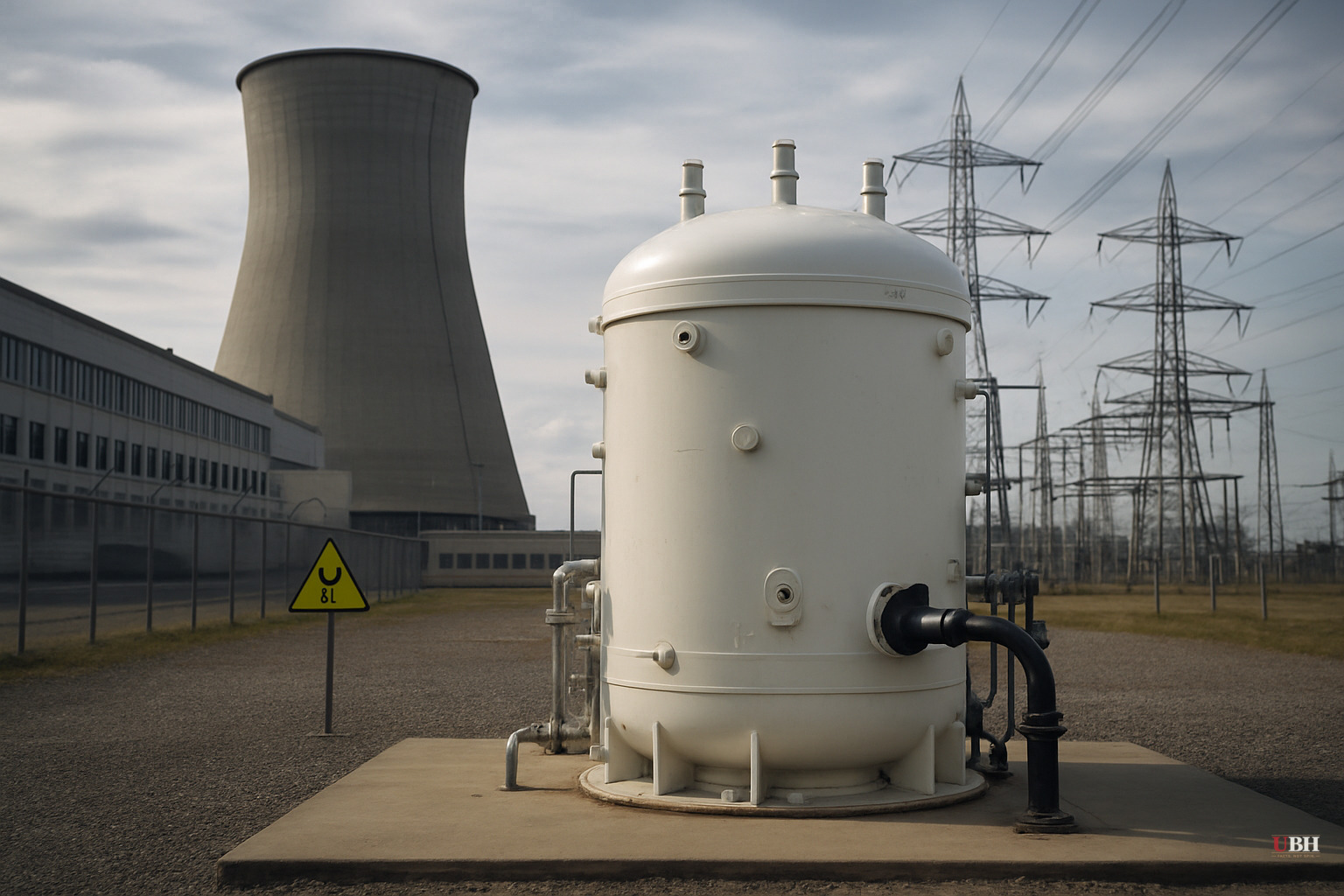
The Grid Problem Is Real
The U.S. electric grid is under pressure from multiple directions at once. AI data centers, semiconductor fabrication plants, and electric vehicle manufacturing are all adding massive new loads. At the same time, the grid faces documented vulnerabilities: cyberattack exposure, physical sabotage risks, transmission bottlenecks, and increasing disruption from extreme weather.
Those aren't hypothetical threats. The United States faces, in the words of analyst James Durso writing via RealClearDefense, "a convergence of unprecedented energy demand and an electric grid that is at capacity and is vulnerable to cyberattacks, physical sabotage, transmission bottlenecks, and extreme weather events."
For everyday consumers that's an inconvenience. For a defense industrial base running shipyards, weapons production lines, and military installations, an unreliable grid is a readiness problem.
The SMR Argument
Writing via RealClearDefense, analyst James Durso makes the case that Small Modular Reactors should be treated as a national security priority, not merely an energy policy option. The argument is straightforward: modern military operations are energy-intensive, intermittent renewable sources cannot guarantee the 24/7 baseload power that critical defense infrastructure requires, and large conventional nuclear plants take too long and cost too much to build at the pace the situation demands.
SMRs are designed differently from traditional nuclear. They are smaller, factory-manufactured, and modular. They can theoretically be deployed to specific facilities, remote installations, or constrained environments where running new transmission lines is impractical or strategically unwise. A forward logistics hub or a domestic shipyard does not need to be connected to the civilian grid if it has its own power source on-site.
One of the most strategically important developments in the SMR sector, Durso argues, is the growing focus on "behind-the-meter" deployment — placing reactors adjacent to mission-critical facilities rather than relying on long-distance transmission infrastructure. Distributed advanced nuclear generation could provide secure dedicated power to defense installations, industrial corridors, AI campuses, and manufacturing hubs while reducing dependence on vulnerable grid infrastructure.
The national security logic tracks. China's military modernization is explicitly tied to its industrial and energy capacity. According to the U.S. Department of Energy, from 2014 to 2023 China increased its installed net nuclear capacity almost three times, and that domestic experience is the basis for Beijing's push to export 30 nuclear reactors by 2030 to countries participating in the Belt and Road Initiative. The U.S. competing on semiconductor manufacturing, AI development, and defense production while depending on a fragile shared grid is a structural vulnerability.
The Fuel Security Problem
One underexamined challenge is fuel availability. Several next-generation reactor concepts depend on High-Assay Low-Enriched Uranium (HALEU), a fuel source that lacks large-scale commercial availability in North America and is tied in part to Russian-controlled enrichment capacity. That is a strategic vulnerability. Energy independence cannot exist if critical fuel supply chains remain dependent on geopolitical competitors. Any serious national nuclear strategy must prioritize technologies capable of operating with commercially available fuel supported by secure supply chains.
What SMRs Have Not Yet Proven
The strongest pushback on the SMR case is not ideological. It is empirical. SMRs have been commercially discussed for over a decade, and deployment at scale in the United States remains limited. For years, much of the advanced nuclear conversation has focused on future concepts, demonstration projects, and theoretical deployment timelines.
The counterargument from SMR advocates is that the defense context is different: the military regularly pays a premium for reliability and security that the commercial market will not. The question is whether the federal government and Department of Defense are willing to absorb the upfront cost and risk of being the customer that proves the technology works at scale.
Where the Licensing Stands
NuScale Power is currently the only SMR developer with full U.S. Nuclear Regulatory Commission standard design approval under the modern Part 52 licensing framework, and the only company currently positioned with a commercially deployable, regulator-approved SMR technology transitioning to manufacturing. That distinction matters because licensing is the hurdle that will determine which technologies are actually deployed. Licensing approval is one identified bottleneck that NuScale has cleared; cost and manufacturing scale challenges remain.
The Unresolved Question
The strategic case for deployable nuclear power at defense installations is solid. America's strategic competitors are not waiting. The manufacturing and cost case for SMRs specifically is still being proven. The critical unknown is whether any SMR developer can hit the cost and timeline targets necessary to make on-site military deployment practical before the grid reliability problem gets worse.
On the environmental and progressive left, concerns center on waste storage, accident risk, and whether federal investment in SMRs crowds out accelerated deployment of renewables and battery storage. Those are legitimate debates. The honest answer is that renewables plus storage, at current technology levels, cannot replicate the consistent baseload output that a nuclear reactor provides, particularly in scenarios involving prolonged grid disruption or conflict. Wind and solar output is weather-dependent. That is a physical constraint, not a political opinion.
Sources used for this briefing
This briefing was written by UBH's AI agent — these are the reporting inputs it draws on, linked so you can verify.


