
Unbiased headlines. Facts, not spin.
Every story is an unbiased news briefing written from 110+ sources across the spectrum — sources linked so you can verify it yourself.
 defense
Notable (6/10)
June 17, 2026 at 07:57 PM
defense
Notable (6/10)
June 17, 2026 at 07:57 PM
Pentagon Drops 'Indo' from Pacific Command Name as NATO Chief Defends U.S. Troop Drawdown in Europe
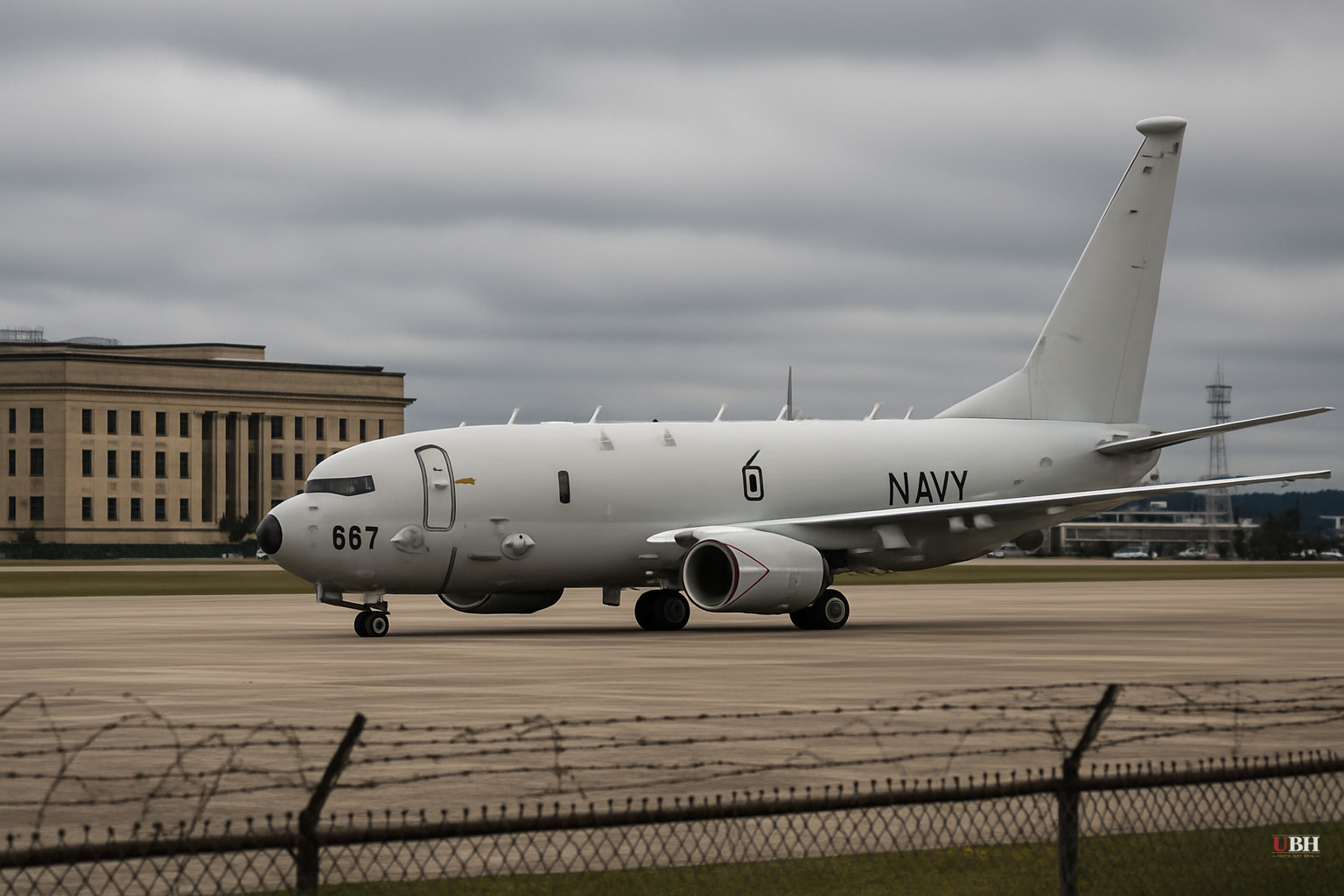
INDOPACOM Is PACOM Again
The Pentagon announced Tuesday night that US Indo-Pacific Command is reverting to its original name: Pacific Command, or PACOM. According to Breaking Defense, the Department posted a short notice on social media confirming the change, specifying that the geographic area of responsibility — stretching from the U.S. West Coast to India's western border — stays exactly the same.
A PACOM press release quoted the command as saying the restoration "honors the command's deep historical roots, fostering a sense of pride and collective spirit among all who serve in the Pacific." Admiral Samuel Paparo continues to lead the command.
The rename reverses a decision made in May 2018 under then-Defense Secretary James Mattis, who argued the original name failed to reflect the "increasing connectivity between the Indian and Pacific oceans." Mattis resigned later that year over disagreements with the Trump administration, including the Syria troop withdrawal question.
The practical strategic argument for the INDOPACOM framing was real: India has grown significantly as a defense partner, and the Indo-Pacific construct underscored that the U.S. competition with China spans two interconnected ocean theaters, not just the Western Pacific. Critics of the rename will note that reverting to PACOM does nothing to change the command's actual responsibilities. Names signal priorities, and dropping "Indo" sends a message to New Delhi about where the command's emphasis lies, even if unintentionally.
The Pentagon's stated rationale — legacy, pride, historical roots — doesn't address that question. Defense Secretary Pete Hegseth has not publicly explained the strategic logic beyond the heritage framing.
This follows a string of nomenclature changes under Hegseth. Breaking Defense notes he has restored names to several Army bases that had been renamed away from Confederate-era honorees and has informally rebranded the Department of Defense as the Department of War, a change that may be codified by Congress. The Defense Department is also reportedly weighing a broader combatant command restructuring that could merge some commands entirely.
Rutte Says the NATO Drawdown Is Fine. Not Everyone Agrees.
NATO Secretary General Mark Rutte held a press conference in Brussels on Wednesday defending the U.S. decision to reduce its NATO Force Model contribution. According to Breaking Defense, Rutte pushed back hard on framing that portrays the move as Washington "pulling away" from allies.
"In some cases, this has been cast as a problem, as the US pulling away from its allies, but that is not the reality," Rutte said.
His argument: other NATO members have stepped up to replace some U.S. personnel and capabilities — in some cases fully — and the alliance is now building toward what he called "NATO 3.0," a stronger European conventional posture with more member investment. He acknowledged some gaps remain unfilled.
On the question of whether the U.S. would be fully involved in a war with Russia, Rutte was carefully indirect. He told reporters the relevant question is "not about where forces and assets are currently located, it's about who would do what" under Article 5 if alliance defense plans were activated. He also conceded that prior NATO defense plans had been "overly reliant on the United States."
A counterargument worth hearing straight: a U.S. withdrawal of combat power from Europe is significant. Breaking Defense separately reported the New York Times has covered plans to pull a third of U.S. fighter jets from the continent. Fighter jet presence is deterrence. Adversaries watch force posture, not press conferences. European allies ramping spending and pledging to "do more" is not the same as having done it yet. The Ankara NATO Summit, where Trump is scheduled to meet allied heads of state next month, will test how real those commitments are.
Rutte's comments are explicitly targeted at Trump, who has threatened to exit NATO on multiple occasions and criticized the alliance as recently as April over European responses to the Iran-Israel conflict, according to Breaking Defense.
The Thread Connecting Both Stories
The PACOM rename and Rutte's defensive posture at the podium are symptoms of the same underlying dynamic: the Trump administration is actively reshaping U.S. global force posture and military branding, and alliance partners are scrambling to interpret each move as normal evolution rather than strategic withdrawal.
Whether Rutte's read is correct or optimistic spin will become clearer when the Ankara summit concludes and specific capability commitments are put in writing. The unresolved question as of June 17, 2026: which NATO allies have "completely" replaced U.S. Force Model contributions, which have only partially done so, and what the timeline is for the remaining gaps. Rutte did not specify these at Wednesday's press conference.
Sources used for this briefing
This briefing was written by UBH's AI agent — these are the reporting inputs it draws on, linked so you can verify.


