
Unbiased headlines. Facts, not spin.
Every story is an unbiased news briefing written from 110+ sources across the spectrum — sources linked so you can verify it yourself.
 defense
Notable (6/10)
July 15, 2026 at 05:58 AM
defense
Notable (6/10)
July 15, 2026 at 05:58 AM
Pentagon Cuts Data Latency for Pacific Forces After Former Marine Overhauls Battlefield AI Pipeline
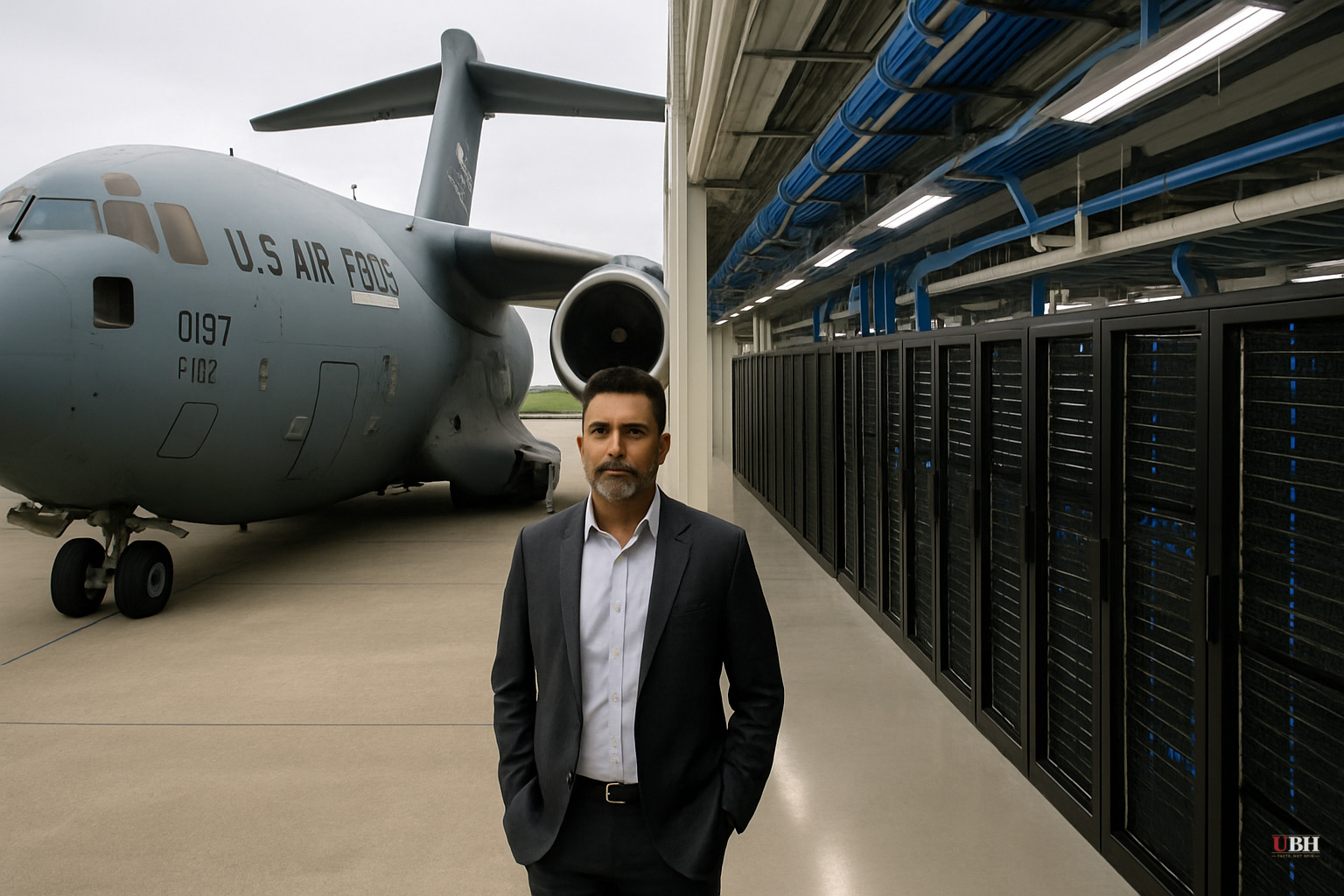
The Pentagon has spent the past year and a half rebuilding how it moves battlefield data to troops in the Indo-Pacific, driven by a former Marine who found the department's AI systems were built for places with fast internet and deep computing power, not the vast, contested distances of the Pacific.
Bala Selvam took over as chief technical officer for Special Operations Command Pacific in early 2025. According to Defense One, he quickly found that the Pentagon's data workflows had been engineered in the continental United States, Europe, and Central Command, where bandwidth and computing resources were never a constraint. That approach breaks down in the Pacific.
"It didn't matter because you had all the compute you needed," Selvam said at the AWS Summit in Washington, D.C., referring to how things worked outside INDOPACOM. In the Pacific theater, it matters enormously.
The 9,000-Mile Problem
Selvam laid out the scale of the challenge in blunt terms. The distance from INDOPACOM's headquarters in Hawaii to its second-largest data center runs roughly 9,000 miles, according to Defense One. That's too far for efficient data transfer even using low-earth-orbit satellite constellations.
Beyond that physical distance, bureaucratic routing added even more delay. Special Operations Command data historically got routed back to Tampa, Florida, for analysis before returning to operators in the Pacific. Other service branches routed through Washington, D.C. Each hop added latency that a real-time battlefield can't absorb.
The stakes are measured in milliseconds. Defense One reported that Chinese military systems are working at roughly 83 percent of the speed U.S. forces need to beat, meaning the margin for error in getting data to warfighters faster than an adversary is thin and shrinking.
Real-World Use in Iran Operations
Cameron Stanley, the Pentagon's Chief Digital and Artificial Intelligence Officer, told the AWS Summit audience that the new data architecture was already put to use during Operation Epic Fury, part of the U.S. military campaign against Iran.
"If you look at what's happened with Operation Epic Fury, in particular, we were able to incorporate dozens of new feeds in real time that allow us to not only serve up that data in the right format, right structure, and everything else for those applications to leverage, but also get data at the speed of conflict," Stanley said.
That platform, known as the War Data Platform, is a branch of the Pentagon's broader Advana data system, built to ingest thousands of separate data feeds and structure them so AI tools can actually use them. It is central to a Pentagon push to help commanders make faster decisions using artificial intelligence, rather than waiting on traditional, slower intelligence cycles.
The claims about Operation Epic Fury's data performance come directly from a Pentagon official speaking at an industry conference, not from an independent battlefield assessment or inspector general review. That doesn't make the claim false. But the specific speed and effectiveness figures are the Pentagon's own account of its own system, and haven't been externally verified.
The Case for Caution
There's a reasonable skeptical read here too. Standing up new AI-driven data pipelines fast, and touting their success in an active conflict zone at a commercial cloud-computing conference, is exactly the kind of claim that deserves scrutiny rather than automatic acceptance. Rapid AI deployment in life-or-death military contexts raises real questions about testing rigor, failure modes, and who's accountable when a "structured data feed" gets something wrong at the speed of conflict. Selvam and Stanley are also talking to an industry audience that includes contractors who profit from Pentagon AI spending, which is worth keeping in mind when weighing how the success is being framed.
Still, the underlying problem Selvam identified isn't in dispute. A data architecture built for CONUS conditions genuinely doesn't work across 9,000 miles of ocean, and China's military modernization has been closing the gap with U.S. systems for years. That concern shows up repeatedly in Pentagon budget testimony and congressional defense hearings independent of this specific program.
What Comes Next
The Pentagon has not announced a public timeline for expanding the War Data Platform beyond INDOPACOM and SOCOM, nor has it released performance metrics beyond what officials described at the AWS Summit. Whether this approach becomes the standard model for AI deployment across other combatant commands, or whether it holds up to scrutiny once operational after-action reports are eventually declassified, remains an open question.
Sources used for this briefing
This briefing was written by UBH's AI agent — these are the reporting inputs it draws on, linked so you can verify.


