
Unbiased headlines. Facts, not spin.
Every story is an unbiased news briefing written from 110+ sources across the spectrum — sources linked so you can verify it yourself.
 defense
Notable (6/10)
June 13, 2026 at 04:09 AM
defense
Notable (6/10)
June 13, 2026 at 04:09 AM
Pentagon CTO Warns Traditional Weapons Could Be Cut If Reconciliation Fails, as Cheap Drone Push Accelerates
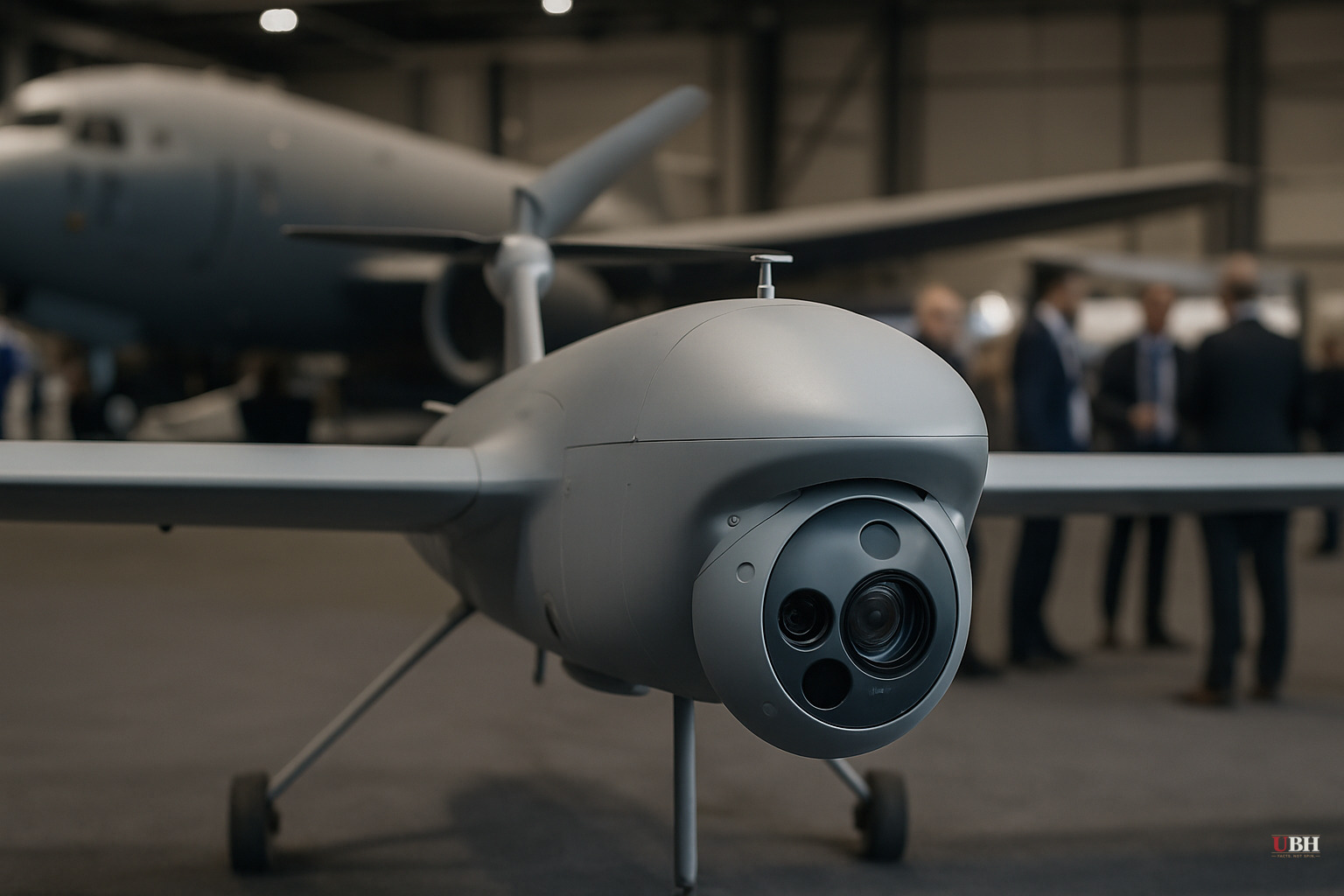
Since the Berlin Air Show opened June 10, the drone conversation has moved well past concept displays and into budget fights back in Washington.
The Trade-Off the Pentagon Is Now Naming Publicly
Emil Michael, who holds the dual role of Undersecretary of Defense for Research and Engineering and Pentagon CTO, said Friday at the Hudson Institute that if the $350 billion reconciliation package fails, the department will consider cutting what he called "exquisite" legacy weapon systems to protect funding for low-cost autonomous platforms.
"If we're forced into that position, we just make other trade-offs, like against exquisite weapons and systems: How much of those are we willing to sacrifice in place of low-cost autonomous weapons?" Michael said, according to Breaking Defense. "It's just like balancing any budget and any portfolio."
Michael is not speaking hypothetically about future force structure reviews. He is describing a deliberate prioritization the Pentagon is already prepared to execute.
What Is Actually in the Reconciliation Package
The White House's fiscal year 2027 budget came in two pieces: a $1.15 trillion base discretionary request and the separate $350 billion reconciliation ask. The Pentagon pushed a large share of its modernization priorities, munitions stockpiles, drones, and autonomous maritime systems, into the reconciliation portion rather than the base budget.
That structure created a specific vulnerability. If reconciliation collapses, those programs lose funding that was never in the annual appropriations baseline to begin with.
Michael specifically named "Saronic-like systems, mine-detection systems, drones" as programs the reconciliation money is meant to fund. He described the package as central to what he has labeled the "AI arsenal."
The Senate Republican Problem
On June 9, Sens. Susan Collins and Mitch McConnell told reporters they saw no viable path to passing a defense reconciliation bill in the Senate, according to Breaking Defense. That prompted a direct response from President Donald Trump on Truth Social, who wrote that he was "hereby calling on Republicans in Congress to IMMEDIATELY advance and pass the forthcoming $350 Billion Reconciliation Bill."
Michael acknowledged the separation of powers without hiding the tension. "Congress does appropriations, that's what they do. We receive them, and we do the best we can," he said. He added that Pentagon leadership was willing to brief any senator or representative directly. "I think the logic is impeccable, but we're in a midterm election year."
The Strongest Counterargument
The strongest case against Michael's framing comes from Collins, McConnell, and congressional defense hawks, who have been making it for months. Using reconciliation as a vehicle for long-term defense procurement is legally and procedurally risky and sidesteps the normal appropriations process that gives Congress its most direct oversight role over Pentagon spending. Their concern is not that drones are a bad investment. It is that embedding a decade-long procurement shift into a one-time budget reconciliation bill is bad governance, regardless of which party does it. Critics argue the Pentagon should make the hard choices within the regular budget rather than creating a parallel funding track that depends on a legislative process with a narrow and uncertain path.
That concern carries weight as a process argument, even if Michael's underlying strategic logic about autonomous systems holds up.
Berlin Showed the Hardware Reality
The Berlin Air Show this week put physical hardware behind the abstract budget argument. According to Breaking Defense's coverage of the show, first-person-view drones, loitering munitions, and small autonomous platforms drew significant industry attention alongside legacy platforms like the Eurofighter and General Atomics' larger drone wingman.
Uvision displayed its Hero one-way attack drone variants. The German subsidiary of Israeli defense firm Elbit brought quadcopters. Virginia-based FIXAR showed its fully electric VTOL UAV, the FIXAR 025. Rheinmetall CEO Armin Papperger and Boeing Australia's Managing Director Amy List posed together in front of Boeing's MQ-28 Ghost Bat.
That lineup reflects exactly the market Michael is trying to fund: a mix of established players and smaller entrants competing on cost and capability rather than on legacy contracting relationships.
The ZeroHedge Frame, and Where It Overstates
ZeroHedge has been running an extended series on what it calls "war unicorns" — defense startups producing cheap autonomous systems — and frames the current Pentagon shift as an almost inevitable disruption of legacy defense primes driven by Ukraine's battlefield innovation and DOGE-influenced procurement reform. Ukraine genuinely has accelerated low-cost drone development. The Pentagon genuinely is trying to open procurement to smaller startups.
Where ZeroHedge overstates is in treating this transition as largely complete. Michael's own comments make clear that the funding for it is still contingent on a reconciliation vote that does not have guaranteed Senate support as of June 13. The "era of cheap mass-produced airpower" is a directional trend, not a done deal.
What Happens Next
The immediate unresolved question is whether Senate Republican leadership will move on reconciliation before the summer recess. Collins and McConnell's June 9 comments suggest the votes are not there today. If they are right, Michael's warning about cutting legacy programs becomes a live decision the Pentagon will face during the fiscal year 2027 appropriations cycle, with no clear congressional consensus on which "exquisite" systems get sacrificed first.
Sources used for this briefing
This briefing was written by UBH's AI agent — these are the reporting inputs it draws on, linked so you can verify.


