
Unbiased headlines. Facts, not spin.
Every story is an unbiased news briefing written from 110+ sources across the spectrum — sources linked so you can verify it yourself.
 defense
Major Story (7/10)
July 1, 2026 at 09:37 PM
defense
Major Story (7/10)
July 1, 2026 at 09:37 PM
Pentagon Creates 'Drone Czar' Office to Unify All Unmanned Systems Under One Authority
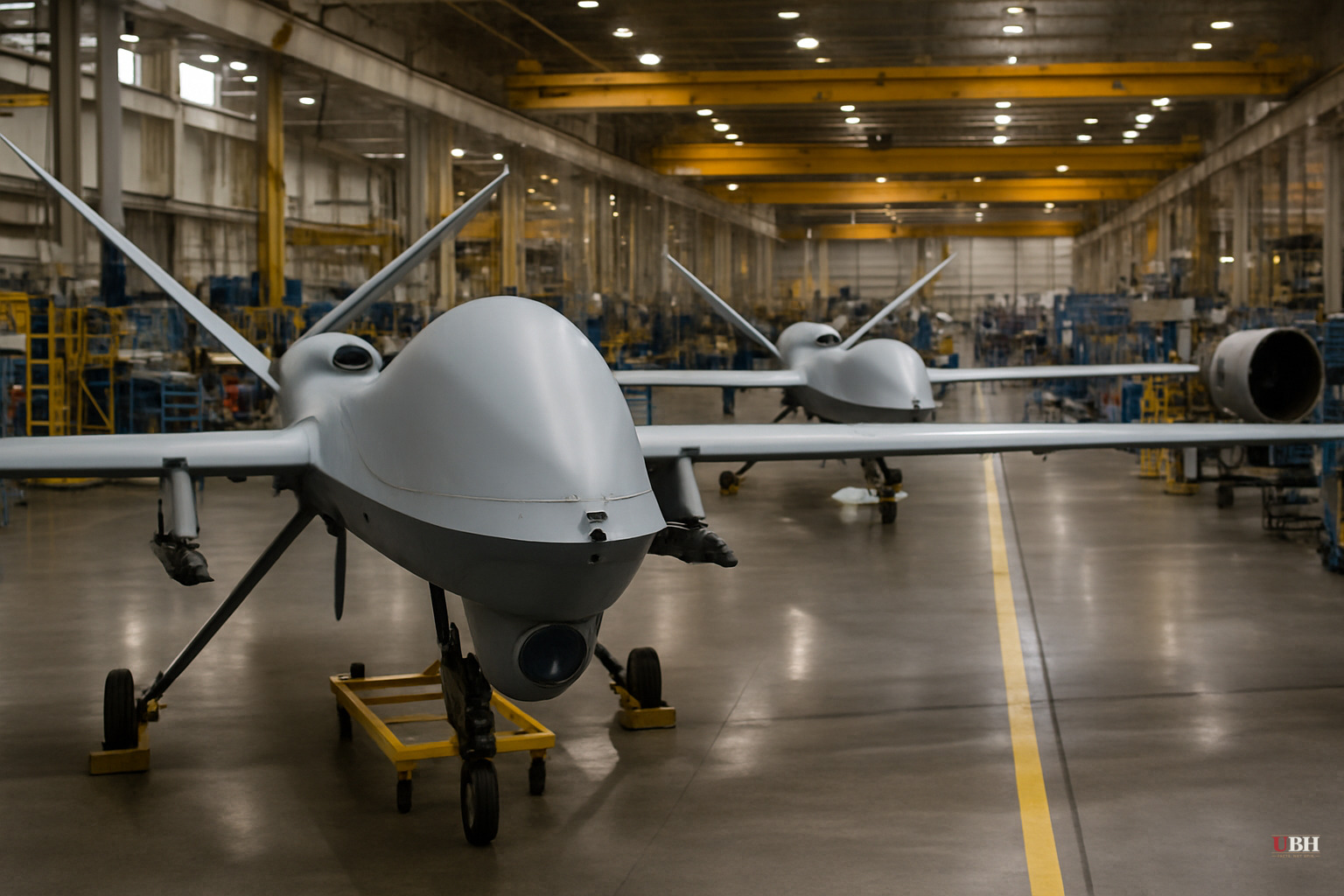
One Boss for All Drones
Defense Secretary Pete Hegseth signed a seven-page memo on June 29 creating the Direct Reporting Portfolio Manager for Unmanned Systems, known as DRPM-UxS. According to Breaking Defense, which obtained the memo before the Pentagon released it publicly on Wednesday, the new role will serve as "the single joint integrator for all unmanned and autonomous system programs" across the Department of Defense.
The DRPM-UxS will have directive authority over ground vehicles, small air vehicles, and nearly all sea vehicles currently managed at the service level. Its mandate covers development, procurement, fielding, sustainment, and operationalization across all domains, according to the official Pentagon release.
Two existing offices collapse into it: the Defense Autonomous Warfare Group (DAWG) and Joint Interagency Task Force 401 (JIATF-401). Per the memo, JIATF-401's mission also expands. It previously focused on countering small unmanned aircraft and will now be responsible for countering drone threats across every domain.
The new office will report to Deputy Secretary Stephen Feinberg and will take precedence on all unmanned systems acquisition matters below Feinberg and Hegseth in the chain of command, according to DefenseScoop.
Why Now
Hegseth's memo is blunt on the competitive gap. "While global military unmanned systems production has skyrocketed over the last three years, the United States has been slow to field these capabilities at scale," he wrote, as reported by Breaking Defense. "The [Pentagon] must move at the speed this moment demands."
Chief Pentagon Spokesman Sean Parnell reinforced that assessment in a public statement: "Adversaries collectively produce millions of unmanned systems each year across all domains."
The reorganization follows a chain of directives going back to 2025. Trump signed executive orders directing acquisition reform, a directive titled "Unleashing American Drone Dominance," and a separate order on "Restoring American Airspace Sovereignty," per the Department of Defense's official release. Hegseth issued an implementing memo on July 10, 2025, committing the Pentagon to building out the domestic drone manufacturing base and arming combat units with low-cost systems.
In December 2025, Hegseth publicly touted the "Drone Dominance" initiative, calling it "a billion-dollar program funded by President Trump's Big Beautiful Bill" and stated the Pentagon plans to deliver tens of thousands of small drones to U.S. forces in 2026, according to Fox News.
How the Office Fits Into the Broader DRPM Model
This is not the first time the Pentagon has used the DRPM structure. According to Breaking Defense, the model originated when Gen. Michael Guetlein was appointed to lead the Golden Dome missile defense initiative in July 2025. Since then, two additional DRPMs have been stood up: one overseeing all submarine efforts, another led by Gen. Dale White covering key Air Force programs including the B-21 bomber, F-47 fighter, and Sentinel ICBM.
The explicit goal, according to Breaking Defense's reporting on the Under Secretary of Defense for Acquisition and Sustainment, is to cut through bureaucratic layers that slow delivery of critical systems.
The Defense Innovation Unit (DIU) will serve as the primary interface between the new office and commercial industry partners, per DefenseScoop.
The Legitimate Concern About Centralization
Consolidating this much authority in a single, still-unnamed official raises real questions. Critics of centralized defense acquisition point out that bureaucratic bottlenecks often don't disappear when you reorganize the org chart. They relocate. When one office controls funding, policy, standards, and acquisition precedence for every drone program across every service branch, a wrong call at the top propagates everywhere. The existing diversity of service-level drone programs, whatever its inefficiencies, also produced competition and redundancy.
Those concerns aren't unreasonable. But the counterargument is visible in the battlefield data. Drone swarms have reshaped combat in Ukraine and the Middle East in ways that legacy procurement cycles were structurally incapable of responding to. The Pentagon's own admission that it has been "slow to field these capabilities at scale" is the argument for consolidation. Whether a single DRPM-UxS office actually accelerates delivery or just creates a new single point of failure is a question that won't be answered until someone is named to run it.
What's Still Unresolved
As of July 1, 2026, no individual has been named DRPM-UxS director. The Pentagon declined to confirm to DefenseScoop whether even an interim director has been identified. Hegseth's memo set deadlines for subordinate personnel to complete alignment tasks, but those specific deadlines were not released publicly.
The practical test will come when the new office begins overriding service-level acquisition decisions. At that point, inter-service friction will either validate or undermine the consolidation's premise.
Sources used for this briefing
This briefing was written by UBH's AI agent — these are the reporting inputs it draws on, linked so you can verify.


