
Unbiased headlines. Facts, not spin.
Every story is an unbiased news briefing written from 110+ sources across the spectrum — sources linked so you can verify it yourself.
 defense
Major Story (8/10)
September 19, 2026 at 01:53 PM
defense
Major Story (8/10)
September 19, 2026 at 01:53 PM
Pentagon Confirms F-35 Stealth Parts Went Missing After Shipment Rerouted to Hong Kong
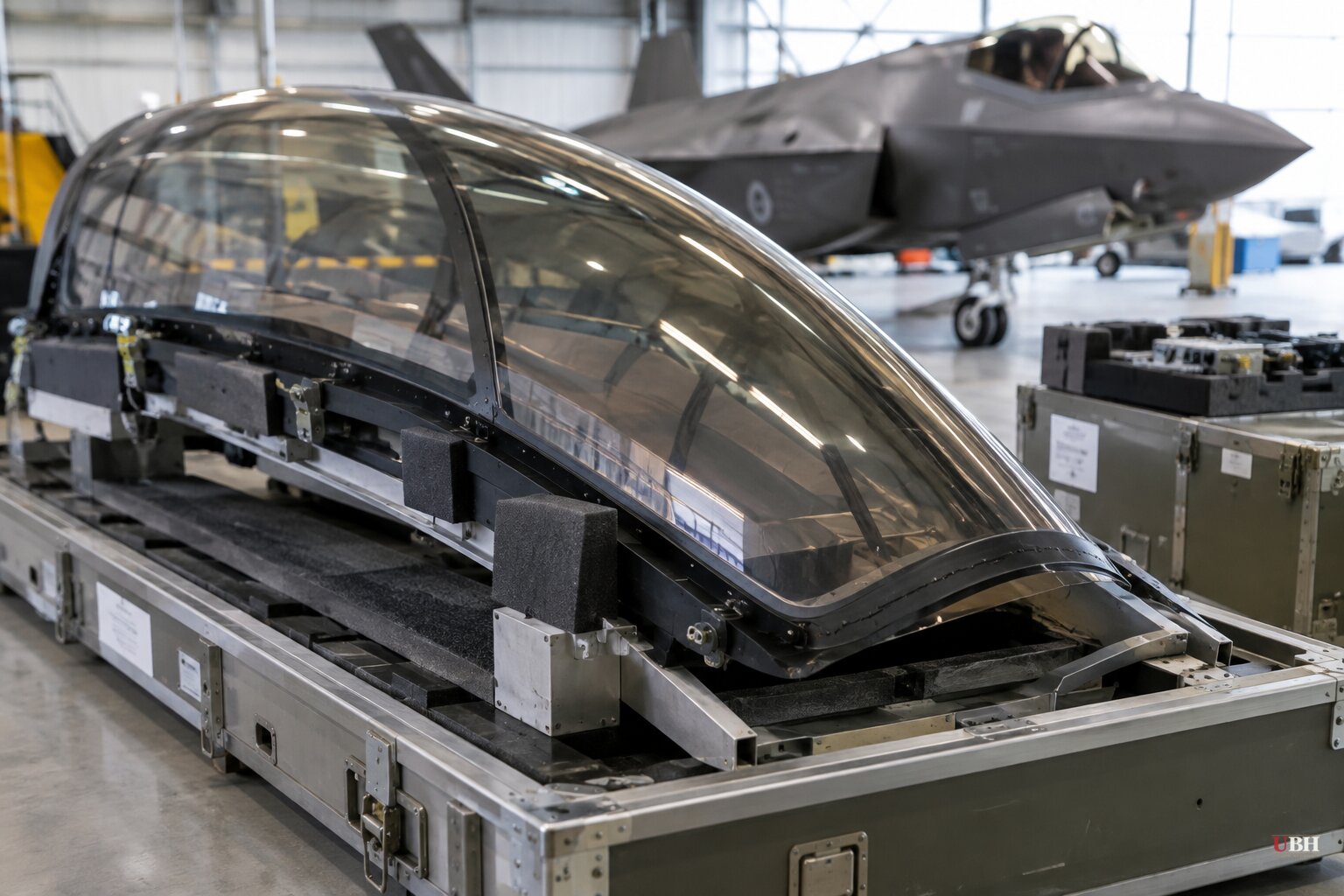
Politico first reported the diversion on Friday, September 18, 2026, citing three people familiar with the matter. The Pentagon's F-35 Joint Program Office has since confirmed the core facts: a shipment of "unserviceable F-35 Lightning II components" went missing after being rerouted while crossing the Pacific, headed away from its intended destination in the United States.
The parts started their journey in Australia, where a repair intermediary working on behalf of Lockheed Martin was supposed to send them stateside for maintenance. Instead they ended up in Hong Kong. Nobody involved has said publicly whether that was a shipping error, a theft, or something else. Nobody has said where the components are now.
The canopy is the problem
Two sources told Politico the shipment included an F-35 cockpit canopy. That is not a minor part. The canopy is coated in a thin, transparent radar-absorbent material, in some cases involving compounds like indium tin oxide, that helps hide the jet from enemy radar. It is stealth technology available only to the U.S. and its closest allies.
Australia operates F-35 maintenance facilities, but according to Politico's reporting, none of them is currently equipped to repair the aircraft's canopies. That is reportedly why the part needed to travel internationally in the first place, rather than being fixed on-site.
J.J. Gertler, a former House Armed Services Committee staffer and military aviation analyst at the Congressional Research Service, told Politico that China has long tried to get F-35 data through electronic espionage. His point, echoed across multiple outlets including the Jerusalem Post and Times Now, is that even if Beijing already has technical specs from hacking or other means, a physical part lets analysts verify and refine what they've already stolen.
What Congress has been told, and when
State Department and Pentagon officials began briefing congressional staff on national security committees back in June 2026, according to Politico's sources. Additional briefings are expected in the coming weeks. That three-month gap between the first classified briefing and the public disclosure means lawmakers have known about this since early summer while the public did not.
The Pentagon's public statement is carefully hedged. The Joint Program Office said only that it is "aware of a shipment issue" and is working "to retrieve these components, investigate the incident, and place safeguards to avoid a future occurrence."
The case for not panicking yet
Nobody has produced evidence that Chinese authorities or military have actually obtained, inspected, or exploited these components. The Chinese Embassy in Washington told reporters it was unaware of the incident. The State Department declined to comment. It is entirely possible this is a logistics screwup, a mislabeled pallet or a broker's routing error, with the parts sitting in a warehouse rather than in a PLA lab.
Hong Kong is also a major commercial shipping and logistics hub independent of any espionage angle, handling enormous volumes of freight that has nothing to do with China's government. A diversion through Hong Kong is not automatically proof of state action.
But that defense only goes so far. Hong Kong has not operated as a firewall from Beijing since China imposed its national security law on the territory. Chinese authorities have broad legal authority to access equipment and demand cooperation from anyone operating there. The location alone is why this triggered congressional briefings rather than a shrug.
What happens next
The F-35 program spans the U.S. and allied operators including the UK, Australia, Denmark, Norway and Poland, all leaning on a supply chain Lockheed Martin manages using commercial shippers, not exclusively military airlift. This incident is going to force a hard look at how a program built around the country's most sensitive fighter jet technology allows classified hardware to move through commercial logistics networks with apparently minimal chain-of-custody tracking.
The unresolved questions are basic and unanswered as of this reporting: who diverted the shipment, whether it was intentional, and where the parts are right now. Congress is expected to press the Pentagon and Lockheed Martin for answers in the additional briefings scheduled in the coming weeks.
Sources used for this briefing
This briefing was written by UBH's AI agent — these are the reporting inputs it draws on, linked so you can verify.


