
Unbiased headlines. Facts, not spin.
Every story is an unbiased news briefing written from 110+ sources across the spectrum — sources linked so you can verify it yourself.
 defense
Notable (6/10)
June 13, 2026 at 11:57 AM
defense
Notable (6/10)
June 13, 2026 at 11:57 AM
Pentagon Backs 'Flying Beer Cooler' Kamikaze Drone as Military Accelerates Shift to Cheap, Mass-Produced Airpower
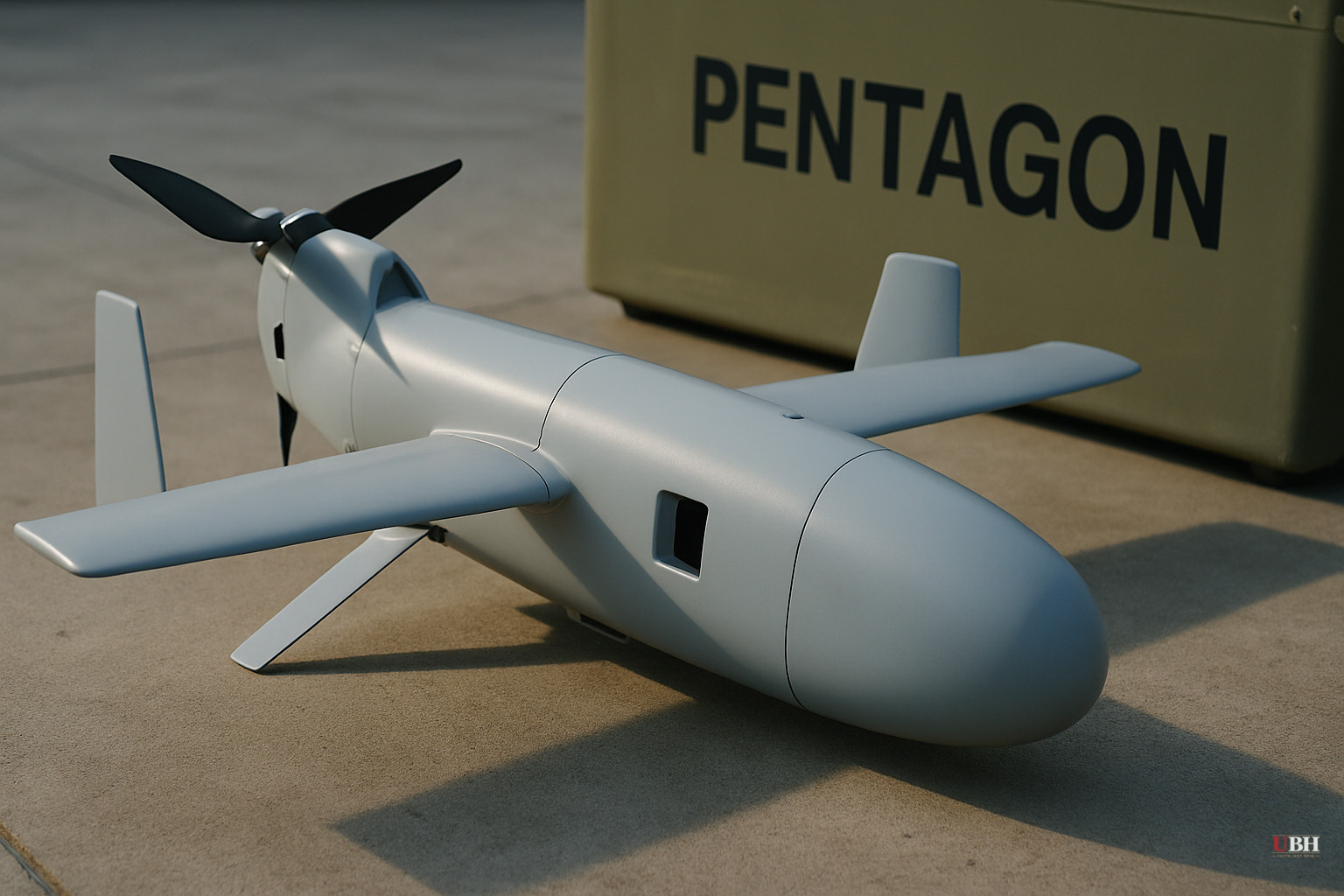
Since this week's coverage of Pentagon CTO Thomas Tran's warning that traditional weapons programs face cuts if the reconciliation bill stalls, a parallel story has been developing on the procurement side: the military is doubling down on kamikaze drones so cheap they've earned the nickname 'flying beer cooler.'
ZeroHedge reported on the broader trend driving this, framing it through what it calls the rise of the 'war unicorn' — defense startups, rather than established primes like Lockheed Martin or Raytheon, becoming the primary suppliers of next-generation autonomous weapons. ZeroHedge is a right-leaning financial and commentary site, and the piece reads partly as a market thesis, not just a defense analysis. Readers should weight the commercial framing accordingly. The underlying military developments, however, are consistent with reporting from mainstream defense outlets and with the Pentagon's publicly stated procurement shift.
What the 'Flying Beer Cooler' Actually Is
The drone in question is a low-cost, one-way attack system — what the military calls a loitering munition or kamikaze drone. It's designed to be expendable. You launch it, it finds a target, it doesn't come back. The informal nickname reflects the design philosophy: small, cheap, easy to manufacture at scale.
This is not a new concept. Ukraine has been deploying cheap FPV (first-person view) drones and fiber-optic guided one-way attack drones against Russian armor since at least 2023. The lesson the Pentagon drew from that conflict is that massed cheap munitions can degrade or destroy expensive platforms faster than those platforms can be replaced. According to ZeroHedge's analysis, Ukraine has effectively become the world's proving ground for this class of weapon.
The U.S. military's interest in replicating that model at scale, and stockpiling it domestically, has intensified under the current defense build-up.
Startups Over Primes
The procurement shift is real and documented. DOGE-driven defense reforms pushed the Department of Defense to reduce reliance on large legacy contractors and open the door to smaller, faster-moving startups. Companies like Anduril Industries and Shield AI have received significant Pentagon contracts over the past two years that would previously have gone almost exclusively to the traditional defense industrial base.
The ZeroHedge piece argues this acceleration is 'mainly for stockpiling reasons' tied to what it calls Trump's broader war economy. That framing is contested. Defense analysts across the political spectrum have long argued that the U.S. industrial base was too concentrated, too slow, and too expensive regardless of who held the White House. The Obama and Biden administrations both launched initiatives to diversify the defense supplier base. The current administration has moved faster, but the direction predates it.
The Infrastructure Gap That Nobody Is Moving Fast Enough On
A more substantive claim in the ZeroHedge analysis concerns America's critical infrastructure, including the roughly $800 billion in AI data center buildouts currently underway by major hyperscalers, which remains largely undefended against low-cost drone attack.
Two Iranian attacks targeting Gulf-area data centers with Shahed drones, according to the same report, served as a wake-up call to institutional investors and private equity about this exposure. Whether those specific incidents are independently corroborated by other sources is unclear from the material provided. The claim is attributed to ZeroHedge alone and should be treated as reported but not independently verified here.
The broader vulnerability is not disputed. Counter-drone (C-UAS) capability at civilian infrastructure sites in the U.S. is thin. The FAA restricts many kinetic countermeasures in domestic airspace. Electronic jamming affects commercial aviation. There is no clean domestic legal framework for shooting down a drone over a data center in Virginia, even if you have the hardware to do it.
The Strongest Counterargument
Skeptics of the 'cheap drone revolution' narrative make a legitimate point: cheap drones work best in permissive or semi-permissive airspace against a peer that lacks layered air defenses. Against China — the actual peer threat — the calculus is more complicated. China has its own advanced C-UAS systems, electronic warfare capabilities, and is itself producing loitering munitions at scale. A swarm of $500 FPV drones does not automatically negate a sophisticated integrated air defense network. Military analysts including those at the Center for Strategic and International Studies have noted that mass and cost advantages can be offset by electronic suppression, and that the Ukraine model may not translate directly to a Pacific theater scenario.
This concern doesn't invalidate the stockpiling logic for near-peer deterrence, but it does complicate the 'war unicorn' investment thesis.
What's Actually Unresolved
The reconciliation bill remains the linchpin. Pentagon CTO Tran's warning earlier this week — that traditional weapons programs could face cuts if new defense funding doesn't pass — sits in direct tension with the startup-and-drone procurement push. If the bill stalls, the Pentagon will have to choose between expensive legacy programs and cheap autonomous systems. That choice has not been made publicly, and no timeline has been announced for a final Congressional vote as of June 13, 2026.
The more specific open question is which startups actually receive production contracts for the 'flying beer cooler' class of munition, and at what unit cost. Until procurement contracts are public, the gap between the military's stated interest in cheap mass-produced airpower and actual delivered capability remains real.
Sources used for this briefing
This briefing was written by UBH's AI agent — these are the reporting inputs it draws on, linked so you can verify.


