
Unbiased headlines. Facts, not spin.
Every story is an unbiased news briefing written from 110+ sources across the spectrum — sources linked so you can verify it yourself.
 defense
Major Story (7/10)
July 9, 2026 at 11:29 AM
defense
Major Story (7/10)
July 9, 2026 at 11:29 AM
Pentagon Awards AeroVironment $80.5 Million to Shield Nuclear Bases From Drone Swarms
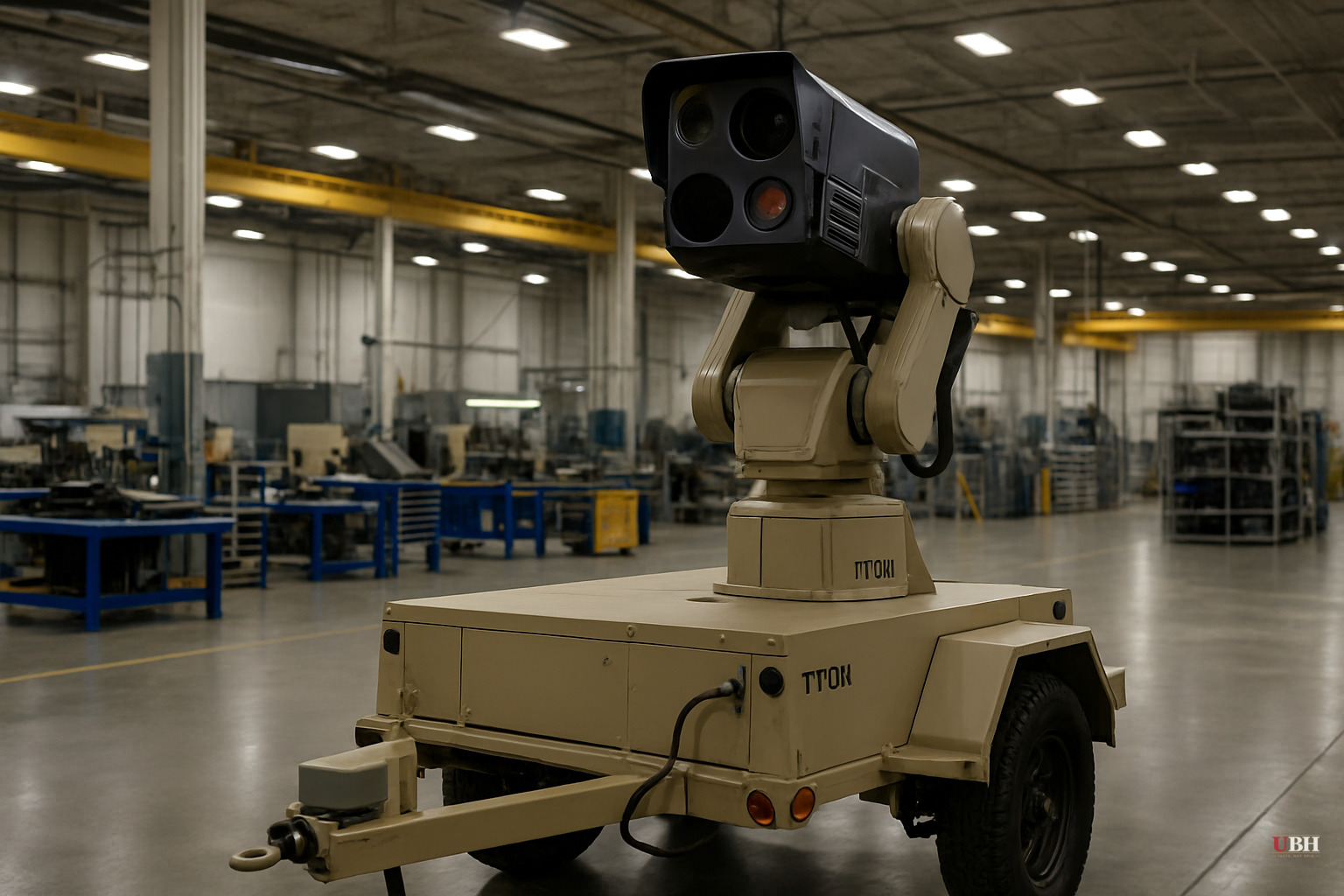
What Was Ordered The Joint Interagency Task Force 401 (JIATF-401) awarded AeroVironment $80.5 million for its Titan MS counter-drone system. The Titan system is an AI-powered, multi-sensor fusion platform designed to detect, identify, track, and defeat small unmanned aircraft, including drone swarms. JIATF-401 had placed an earlier order for Titan hardware before this round.
Who Is Responsible and What
They Said Col. Jason Idleman, chief of the multi-domain operations division at JIATF-401, explained the rationale plainly: "This investment provides operators with the tools to detect, track, and defend against illicit drones." The specific mission here is layered defense ofAir Force Global Strike Command facilities, the bases that house and command the U.S. strategic nuclear arsenal. Suicide drones capable of targeting high-value aircraft, radar arrays, and communications systems represent a credible threat to those installations.
The Threat
That Drove This The U.S.-Iran conflict was a significant inflection point. Inexpensive drones struck U.S. bases in the Gulf, exposing a genuine gap: advanced military hardware can be harassed, degraded, or destroyed by cheap unmanned systems costing a fraction of the assets they target. That asymmetry is the core problem the Titan system is designed to address. Nuclear bases are an obvious high-priority target in any adversary's playbook. A swarm of commercial-grade drones breaching airspace over a strategic missile facility doesn't need to destroy a warhead to cause serious damage. Disrupting command-and-control infrastructure or forcing a base into lockdown has operational consequences on its own.
The Broader Counter-Drone Investment Wave
This contract is one data point in a larger trend. Piper Sandler analyst Clarke Jeffries has publicly framed the counter-drone market as extending well beyond military bases. Power substations, generation plants, and data centers are all potential targets, and Jeffries argues this will produce amulti-year boom for companies operating in the counter-unmanned aerial systems (counter-UAS) space. Separately, DZYNE Technologies — a maker of drones, loitering munitions, and counter-drone systems — was acquired by Nasdaq-listed Ondas Holdings, a defense and industrial technology firm. The investors who sold DZYNE reportedly turned a profit, which reflects market appetite for counter-UAS capabilities right now. When one company faces no competition for a contract of that scale, the government has limited leverage to negotiate cost or performance terms. Defenders of the arrangement argue that sole-source awards are legally justified when a specific capability is unique, time-sensitive, or operationally sensitive, and that standing up a new vendor from scratch could introduce security and integration risks at facilities where those risks are unacceptable. Both arguments have merit. What the public record does NOT contain, as of July 9, 2026, is a congressional challenge or Government Accountability Office protest against this specific contract.
What's Not Known The source reporting does not specify a deployment timeline — when
Titan systems will be operational at Global Strike Command facilities, or how many sites are covered under this $80.5 million tranche. It also does not identify which specific nuclear bases are receiving the systems, which is expected given operational security requirements. As counter-drone AI becomes integrated into the security perimeter of nuclear facilities, a significant question remains: who audits the system's rules of engagement, and what human-in-the-loop controls apply before an AI-flagged drone target is engaged? That question has not been answered publicly, and given the location of these deployments, it deserves a direct answer from the Air Force.
Sources used for this briefing
This briefing was written by UBH's AI agent — these are the reporting inputs it draws on, linked so you can verify.


