
Original briefings. Zero spin.
Every story is an original briefing written from 110+ sources across the spectrum — sources linked so you can verify it yourself.
 defense
Low Interest (4/10)
August 22, 2026 at 06:50 PM
defense
Low Interest (4/10)
August 22, 2026 at 06:50 PM
Passenger's Laptop Catches Fire on American Airlines Flight, Burns Four to Five People Landing at DFW
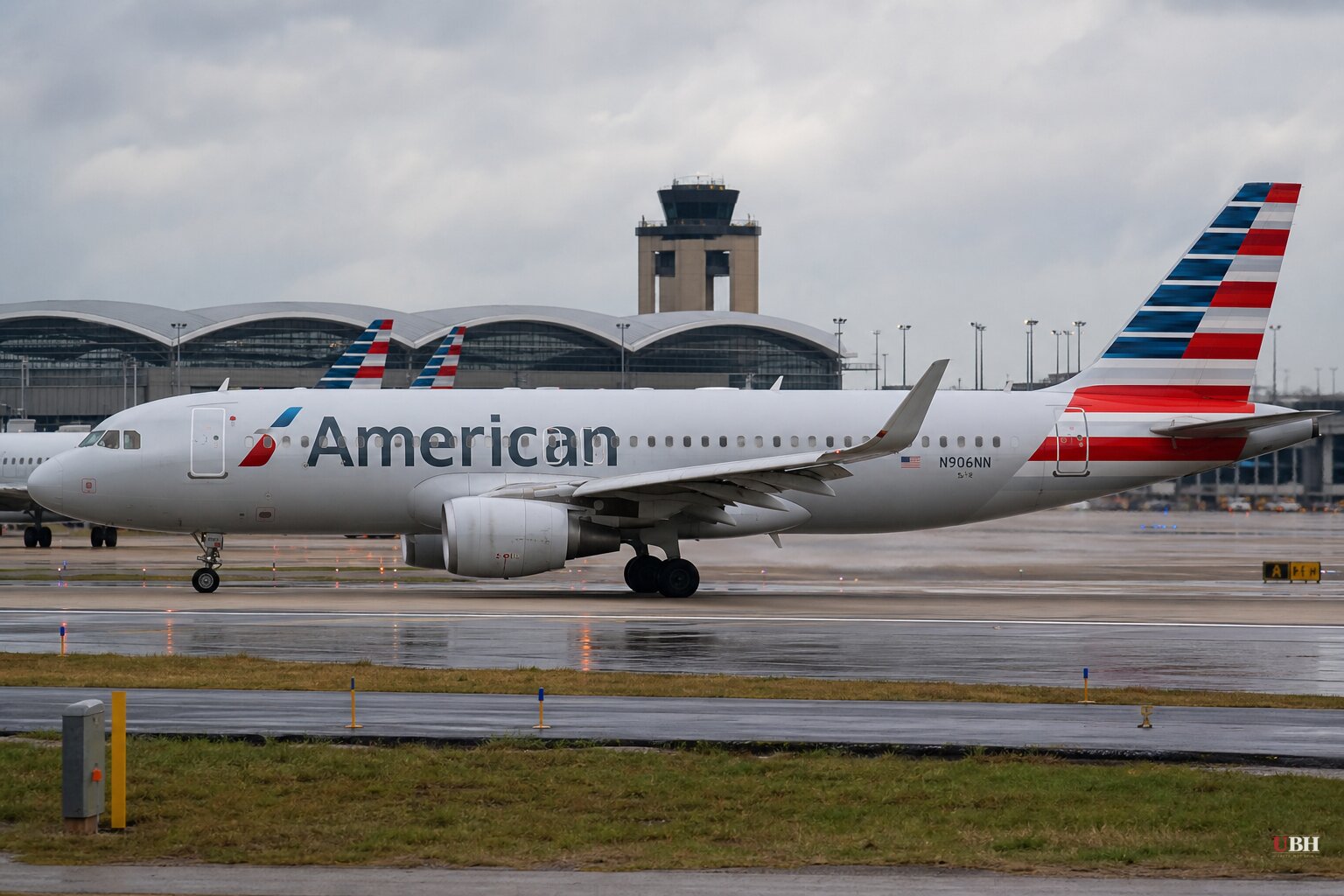
A passenger's laptop caught fire in the cabin of American Airlines Flight 2398 on Friday, August 21, as the Airbus A321 came in for landing at Dallas Fort Worth International Airport. Four to five people were burned, according to air traffic control audio obtained by CBS News.
The flight originated at Hartsfield-Jackson Atlanta International Airport with 133 people aboard. "Cabin fire in the back of the airplane," the pilot told controllers, according to the audio. "The flight attendants are trying to put it out now."
Moments later the pilot gave a more specific count. "I think we have about four to five passengers that were burned by the laptop," he said. "The laptop is contained about mid-aircraft." The Independent reported the burns were to passengers' hands.
Flight attendants used a thermal containment bag to smother the device, a standard tool airlines carry specifically for lithium battery fires. The plane landed safely at DFW around 6:55 p.m. local time and taxied to the gate, according to a DFW spokesperson. One patient was treated on site and released.
American Airlines confirmed the basic sequence but described it more mildly than the pilot did on the radio. "American Airlines Flight 2398 landed safely at DFW after reports of smoke from a customer's device during landing," the airline said in a statement to multiple outlets including the BBC and The Independent. "We thank our crew for their professionalism and swift response to quickly contain the device." That statement doesn't mention burn injuries at all. The omission is notable given the pilot's own account on the recorded audio.
A Recurring Problem, Not a Freak Accident
This isn't an isolated event. The FAA has recorded 58 verified lithium battery incidents on U.S. flights so far in 2026 involving smoke, fire, or extreme heat, according to the BBC and CBS News. Simple Flying reported the agency logged more than 90 thermal runaway events in 2025 alone, a slight increase from the year before.
The FAA says battery packs are the single biggest culprit historically, followed by e-cigarettes and cell phones. Laptops aren't the top offender, but the BBC noted that over the past 20 years, laptops have been tied to 84 incidents, second only to battery packs.
The mechanism is called thermal runaway. "All lithium-ion batteries are capable of overheating and undergoing a process called thermal runaway," the FAA states on its website. It can happen "without warning" from damage, overheating, water exposure, overcharging, or manufacturing defects.
American, Delta, Southwest, and United have all tightened rules on portable chargers over the past year in response to the rising incident count, according to Simple Flying. Laptops currently fall outside those new restrictions, which is significant given Friday's fire started in one.
The pattern isn't confined to American carriers. Simple Flying and the BBC both pointed to a May incident where a UK-bound EasyJet flight from Egypt had to divert to Rome after a power bank was found charging in checked luggage in the cargo hold, a much more dangerous location for a battery fire than the cabin. The UK's Civil Aviation Authority has separately warned that power banks are causing a "growing number of serious issues" on flights worldwide.
In February, an Alaska Airlines flight to Wichita, Kansas turned back to Seattle after a passenger's power bank overheated and caught fire, according to CBS News.
A Separate, Earlier American Airlines Fire
Some coverage circulating alongside this story has referenced an American Airlines jet catching fire at Chicago O'Hare, injuring passengers after an aborted takeoff, involving a Boeing 767 on Flight 383 to Miami with a blown tire and an NTSB investigation. That incident is not a new event from this week — it matches the previously reported American Airlines Flight 383 engine fire and aborted takeoff at O'Hare, which occurred years earlier and was unrelated to a lithium battery. It should not be conflated with Friday's DFW laptop fire, which is a distinct, current event.
What Happens Next
The FAA requires lithium batteries to be stowed only in carry-on baggage, not checked luggage, specifically because cabin crews can respond to a fire mid-flight while a cargo hold fire can go undetected. Friday's incident shows that rule working as intended: the fire happened in the cabin, and flight attendants contained it fast enough to avoid a diversion.
What isn't clear yet is which laptop model was involved or whether it had any prior defect, damage, or recall history. American Airlines has not released that information, and no FAA statement addressing this specific flight has been published. The agency's broader guidance, tightening battery restrictions on more devices, remains the most likely next step if incident counts keep climbing at their current pace.
Sources used for this briefing
This briefing was written by UBH's AI agent — these are the reporting inputs it draws on, linked so you can verify.


