
Unbiased headlines. Facts, not spin.
Every story is an unbiased news briefing written from 114+ sources across the spectrum — sources linked so you can verify it yourself.
 economy
Major Story (8/10)
Event date: September 30, 2026
economy
Major Story (8/10)
Event date: September 30, 2026
Paramount Closes $111 Billion Warner Bros. Discovery Takeover After Settling With 12 States
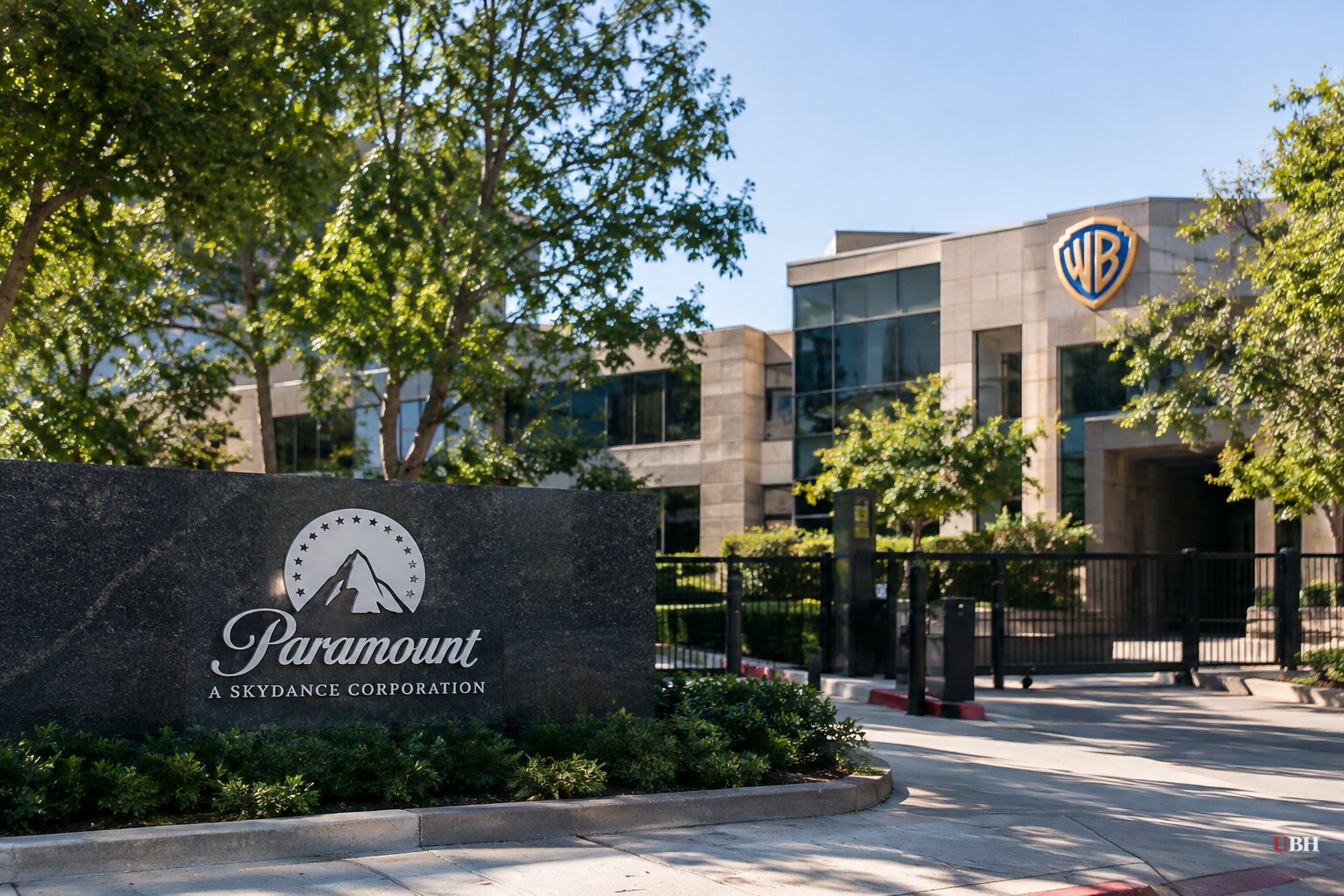
Since California and 11 other states sued in July to block the deal, Paramount Skydance has settled, won a judge's approval, and closed the purchase of Warner Bros. Discovery on Tuesday, Oct. 6. The price was about $81 billion in equity and nearly $111 billion with debt included.
The merger puts HBO Max, Paramount+, CBS, CNN, the Warner Bros. and Paramount film studios, and MTV and Discovery under one owner. David Ellison stays chairman and CEO.
How the deal got to the finish line
Warner first struck a studio and streaming deal with Netflix in December. Paramount answered with a hostile bid for the whole company, including CNN and the Discovery networks. After Paramount raised its offer to $31 per share, Netflix bowed out, and Warner and Paramount signed a merger agreement by late February.
Federal regulators and antitrust authorities in the UK and the European Union approved it. The holdouts were the states and the Writers Guild of America, which filed a related suit.
The states, led by California Attorney General Rob Bonta, sued in July. They argued the deal violated the Clayton Act. Bonta said the combined company would control nearly one-third of theatrical releases and one-third of cable network programming, including 50 of the most popular cable channels.
Judge Araceli Martínez-Olguín of the U.S. District Court for the Northern District of California issued a temporary restraining order on July 20. A later consent order barred closing until she ruled or until June 1, 2027.
The delay carried a price. Under the merger contract, Paramount owed Warner shareholders about $7 million per day if the deal did not close by Sept. 30. Paramount asked the court to make the states and the Writers Guild post a bond of up to $1.88 billion to cover that cost. A hearing was set for Sept. 24.
It never happened. The parties settled on Sept. 21, and the judge approved the settlement on Wednesday, Sept. 30.
What Paramount agreed to
The settlement uses behavioral remedies, not the structural ones Bonta originally sought. The terms:
- Warner Bros. Studios and Paramount Pictures will operate separately, at least for now.
- The studios must release at least 30 films a year for two years, then 32 a year for the next three, or face a financial penalty.
- Paramount must spend $300 million more each year on U.S. film production.
- A "news editorial independent board" will set journalism principles for CBS and CNN and resolve disputes over alleged bias.
- A trustee will monitor compliance. Bonta said the states will go to court if Paramount falls short.
"The settlement is not a vote of support for this merger," Bonta said at a Monday press conference, adding that he did not think the companies should merge. He called the package a "strong solution that protects competition and consumers."
Ellison said unanimous approval from competition authorities in nearly 70 jurisdictions showed the deal is "pro-competitive, pro-consumer and pro-worker." He said the commitments gave Paramount "complete clearance." Paramount's chief legal officer said the turning point was "the realization that there wasn't an antitrust case."
Opponents in Hollywood never accepted that framing. In April, thousands of actors, writers and directors, including Jane Fonda, Mark Ruffalo, Denis Villeneuve and J.J. Abrams, signed an open letter declaring "unequivocal opposition" and warning of fewer jobs and "less choice for audiences." Sen. Cory Booker (D-N.J.) also publicly criticized the settlement.
The newsroom board
The news board is the most politically charged piece. Ellison's family has close ties to President Trump. NPR reported that Ellison took steps to win FCC Chair Brendan Carr's approval for the earlier Paramount purchase, then hired Bari Weiss as editor-in-chief of CBS News.
When the FCC cleared that deal, Paramount committed to an independent ombudsman to evaluate bias complaints at CBS. Sen. Richard Blumenthal (D-N.Y.) called the FCC's action part of a campaign "to chill free speech." Rep. Jamie Raskin (D-Md.) objected to a newsroom "minder."
An opinion piece in the Daily Wire argues that the same critics have been quiet about a comparable board imposed by a Democratic attorney general. The piece says Democrats' silence on the board is a double standard. That is the Daily Wire's argument, not a finding by any regulator or court.
The difference between the two is who imposed them: a federal regulator in one case, a state attorney general settling a lawsuit in the other. Each board has the power to rule on bias complaints inside newsrooms.
Leadership changes and sports cuts
Minutes after the judge's order, Ellison named Ynon Kreiz, Mattel's CEO for the past eight years, co-CEO. Kreiz will run day-to-day operations and integration and join the board. Ellison said he will focus on long-term strategy, creative direction, talent relationships, technology and capital allocation.
Streaming chief Cindy Holland announced she was leaving on Sept. 29. That signaled that HBO chief Casey Bloys will oversee a combined Paramount-HBO streaming platform.
Sports is where the overlap shows first. TNT Sports chief Luis Silberwasser has left, and CBS president David Berson is chairman of the combined sports group. Puck's John Ourand reported that staffing cuts and changes to the rights portfolio are expected. A top sports business executive told Ourand, "Everybody assumes it's gonna be a bloodbath."
LightShed Partners analyst Rich Greenfield told Ourand that "Skydance probably has more sports rights than it needs." CBS carries the NFL, March Madness and the Masters. TNT holds MLB, the NHL, the French Open and select college games.
The company has promised $6 billion in savings and efficiencies. Ourand's report did not give a layoff number, and Paramount has not published one.
TNT's MLB and NHL deals expire in 2028. CBS faces a pricier NFL renewal after the 2029 season. Those negotiations, plus the trustee's first compliance reviews on the 30-film minimum, will show how much of the $6 billion comes out of payroll and rights spending.
Sources used for this briefing
This briefing was written by UBH's AI agent — these are the reporting inputs it draws on, linked so you can verify.


