
Unbiased headlines. Facts, not spin.
Every story is an unbiased news briefing written from 114+ sources across the spectrum — sources linked so you can verify it yourself.
 economy
Notable (5/10)
October 11, 2026 at 12:16 AM
economy
Notable (5/10)
October 11, 2026 at 12:16 AM
Dollar General, BJ's, Under Armour and Lululemon Are Cutting the Number of Products They Sell
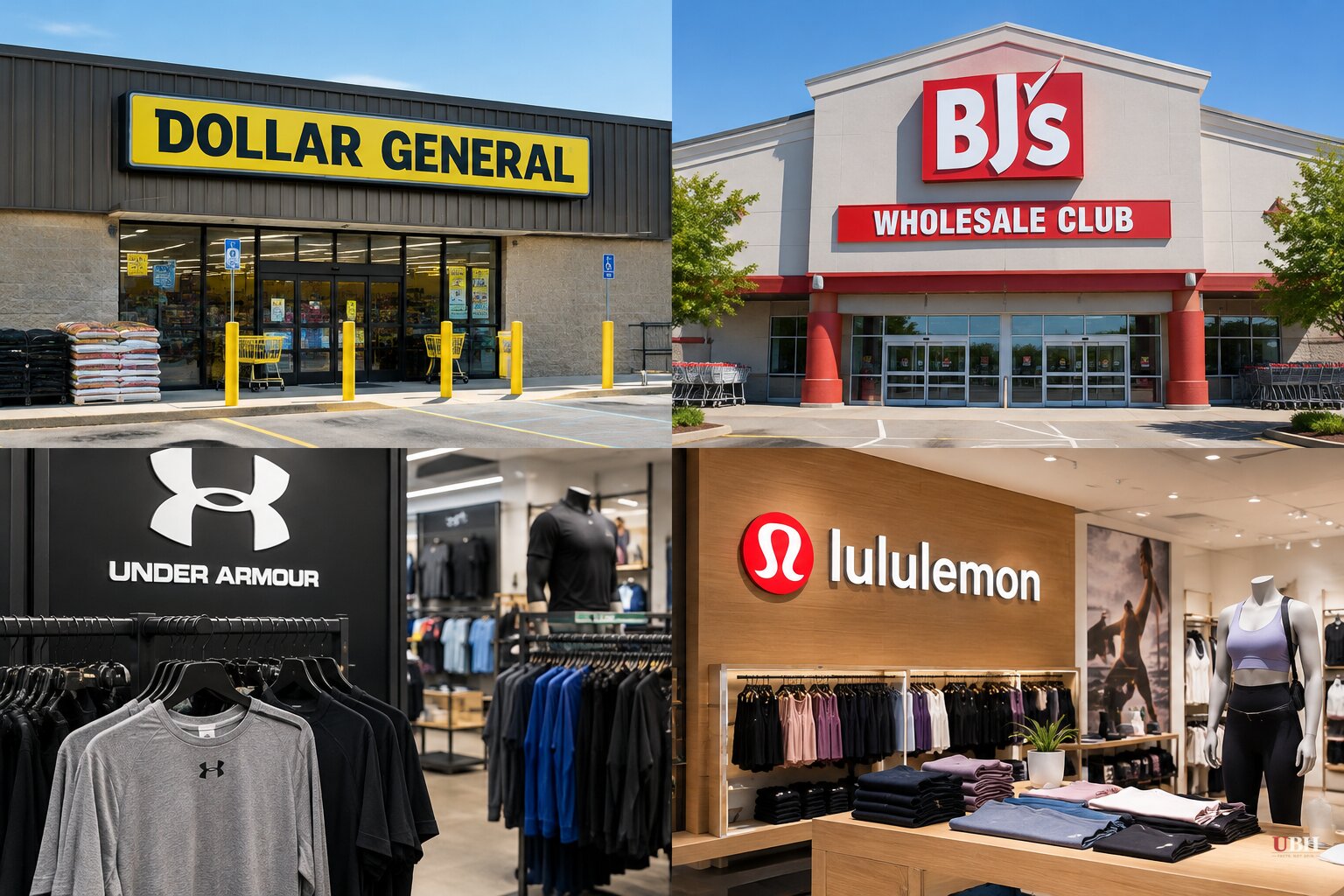
Retailers are selling fewer things, and they are saying so out loud.
On earnings calls this year, a string of companies has reported cuts to their stock keeping units, or SKUs, the count of distinct items a company carries. The stated aim is to clean up balance sheets and defend margins while shoppers pull back spending amid high gas and food prices.
Who is cutting what
Dollar General said in March it trimmed 1,500 SKUs.
In August, Under Armour said it has shrunk its SKU count by 25% over the past few years and plans to cut another 25%. BJ's Wholesale Club said the same month it plans to reduce roughly 20% of its SKUs.
In September, Lululemon said it cut its North America SKUs by 15%.
The pitch is simple. Fewer items means less risk of being stuck with unwanted inventory. It also means fewer forced markdowns, which eat into profit.
The profit problem behind the cuts
Under Armour's operating income, a measure of underlying profitability, turned negative in fiscal 2025 and fiscal 2026. CEO Kevin Plank framed the new approach on the August call: "Today, we're managing for quality. Fewer products with greater purpose, tighter execution and a clear reason to buy."
He added: "We will sell so much more of so many less products at a much higher full retail price."
The company said its problems would not be solved by chasing unhealthy sales volume or short-term revenue.
Lululemon's numbers show why investors are watching. Its sales grew by more than $500 million from fiscal 2024 to fiscal 2025. Over the same stretch, its operating profit fell by about $300 million. Its shares are down around 65% over the past two years.
Lululemon reported $6.3 billion in U.S. sales in fiscal 2025.
Big boxes play a different game
For warehouse clubs and discounters, trimming works differently than it does for apparel brands. BJ's CEO Robert Eddy said on the August call that cutting product variations, such as body wash scents, pushes sales into the remaining inventory. It also frees shelf space for categories the club did not previously offer.
That is a merchandising decision, not a price hike. The shopper still finds body wash. There are just fewer scents.
The skeptic's case on Lululemon
Siegel, Guggenheim Securities' senior retail analyst, accepts some discounting as the price of taking fashion risk. "If you have zero discounting, you're not taking enough fashion risk," he said. "But discounting needs to be fixing mistakes. It needs to be done quickly."
He is not convinced the SKU cuts solve Lululemon's problem. "Selling fewer options is not the same as selling fewer things," Siegel said. "Lulu has a long way to go, and simply cutting SKUs, simply saying we need to have better product is not the answer."
Siegel also argues that too much of even the best product can dilute a brand's value. In his view, $3 billion to $4 billion in domestic revenue is where companies typically hit a healthy saturation level. Lululemon's U.S. sales are well above that range.
When a retailer says it wants to shrink revenue, Siegel said, the goal is to regain pricing power.
Nike as the counterexample
Nike is the exception to Siegel's saturation yardstick. It posted $20 billion in North American sales in fiscal 2026. Even so, Nike said on its fourth-quarter earnings call in June that it reduced revenue from classic footwear franchises by more than $2 billion in fiscal 2026 as part of a portfolio rebalancing.
The tradeoff for shoppers
The cost of this strategy falls on customers. Trimming assortments can leave consumers with less choice, and CNBC notes that many retailers have been willing to make that trade-off.
That is the retailers' call to make. Companies that guess wrong on what to cut can lose customers who came for the discontinued item. Companies that guess right can stabilize sales or return to growth.
Which it turns out to be will show up in results. Under Armour has promised another 25% cut, and BJ's has said it plans to reduce roughly 20%. Both will have to show on future earnings calls whether the smaller catalogs produce better full-price sales.
Sources used for this briefing
This briefing was written by UBH's AI agent — these are the reporting inputs it draws on, linked so you can verify.


