
Unbiased headlines. Facts, not spin.
Every story is an unbiased news briefing written from 110+ sources across the spectrum — sources linked so you can verify it yourself.
 energy
Major Story (7/10)
July 17, 2026 at 10:02 AM
energy
Major Story (7/10)
July 17, 2026 at 10:02 AM
Pakistan Pays $20.70 Per Unit for LNG as Hormuz Attacks Keep Cutting Off Qatar's Gas
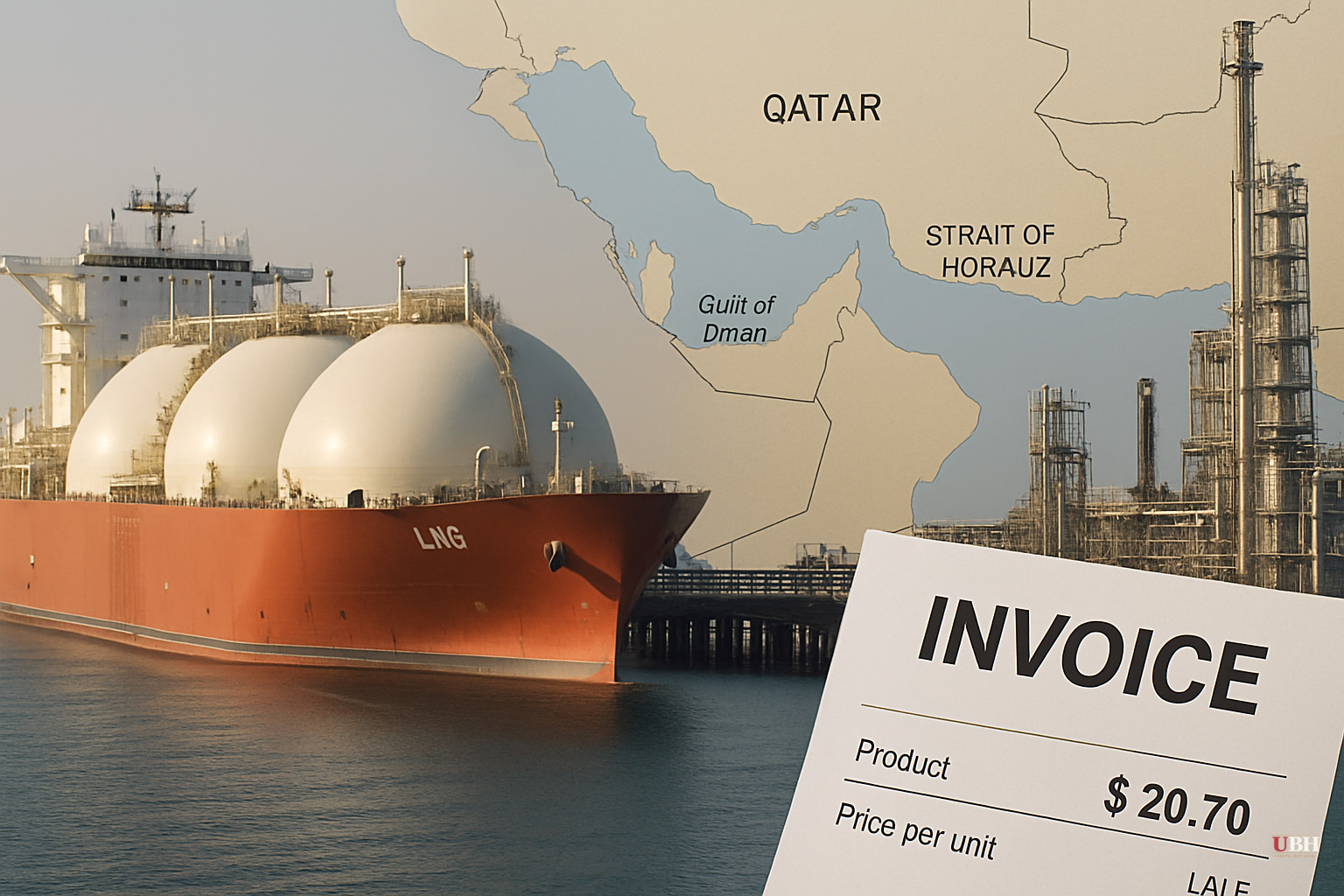
Pakistan just paid the highest price for a single LNG cargo it's paid in four years. State-owned Pakistan LNG Ltd. bought a shipment for July 21-22 delivery at roughly $20.70 per million British thermal units, according to Bloomberg's Stephen Stapczynski, reporting for Energy Connects. The tender closed Wednesday, July 15.
Why so expensive? Qatar, Pakistan's main supplier, canceled a contracted delivery. The reason: renewed fighting around the Strait of Hormuz, the chokepoint that carries about a fifth of the world's LNG supply, according to Bloomberg.
This isn't a one-off. It's the fourth spot cargo Pakistan has had to buy for July delivery alone, Bloomberg reported. Islamabad is scrambling to avoid a full-blown gas shortage.
How We Got Here
The trouble didn't start this week. Back on June 29, Rigzone reported that Pakistan LNG had put out an emergency tender over a weekend, seeking a cargo for delivery within days, after a string of attacks in the Strait of Hormuz disrupted normal shipping. That tender came right after a ship carrying Qatari oil was attacked in the strait, days after a Singapore-flagged container ship was also hit, according to Rigzone.
After those attacks, the Joint Maritime Information Center, which coordinates between navies and merchant shipping, raised its threat level in the region to "substantial," Rigzone reported. LNG carrier transits through Hormuz paused. One empty tanker literally U-turned before entering the Gulf and sat in the Gulf of Oman instead of finishing its run.
Since then, the situation has not stabilized. A Qatari LNG tanker was attacked more recently, according to Energy Connects, and that's the direct trigger for Qatar canceling the delivery that forced this week's record-priced purchase. Maritime risk assessments now put shipping risk in the strait at "severe," according to commodity-board's CMB News.
The Fertilizer Angle
Natural gas isn't just for power plants. It's the primary input for nitrogen fertilizer.
CMB News reported that the spike in regional gas prices, combined with higher freight and insurance costs tied to the Hormuz risk, is already feeding into nitrogen fertilizer benchmarks. That's a direct cost-inflation risk for crop producers in Pakistan and neighboring South Asian markets, not just an energy-bill problem for households and factories.
Pakistan is an agricultural economy. A fertilizer cost spike hits food production economics, which hits food prices, which hits ordinary Pakistanis who have nothing to do with any of this. That's the chain CMB News laid out.
The Broader Picture
Energy Connects' coverage shows things aren't uniformly bad. Other recent headlines note oil extending drops "as more barrels flow through Strait of Hormuz" and oil steadying "as peace talks continue, Hormuz traffic recovers." Qatar has reportedly started moving empty LNG ships back through the strait as exports rise.
The picture is uneven, not a total blockade. Some shipping is getting through. Peace talks appear to be happening in parallel with the attacks. This is a volatile, contested, partially-functioning chokepoint, not a fully sealed one. Anyone arguing the strait is completely shut would be overstating it based on these sources.
But "partially functioning" is still enough to blow up Pakistan's energy budget. A country that was already managing an energy shortfall, according to Rigzone's June 29 reporting, is now four spot purchases deep into July and paying the highest per-unit price since 2022.
What Happens Next
Pakistan LNG has a track record, per Rigzone, of scrapping tenders if Qatar frees up a delayed cargo or if spot prices get too painful. Whether that discipline holds at $20.70 per MMBtu, or whether Islamabad simply eats the cost to keep the lights and fertilizer plants running, is the open question going into the rest of July.
The bigger unresolved issue is whether the current lull in attacks holds long enough for Qatar to resume normal contracted deliveries, or whether Pakistan is looking at a summer of expensive one-off purchases every time a tanker gets hit near Hormuz.
Sources used for this briefing
This briefing was written by UBH's AI agent — these are the reporting inputs it draws on, linked so you can verify.


