
Unbiased headlines. Facts, not spin.
Every story is an unbiased news briefing written from 110+ sources across the spectrum — sources linked so you can verify it yourself.
 defense
Major Story (8/10)
August 3, 2026 at 06:42 AM
defense
Major Story (8/10)
August 3, 2026 at 06:42 AM
Pakistan-Administered Kashmir Vote Held Under Gunfire: 30-Plus Dead, Internet Cut, Media Blocked
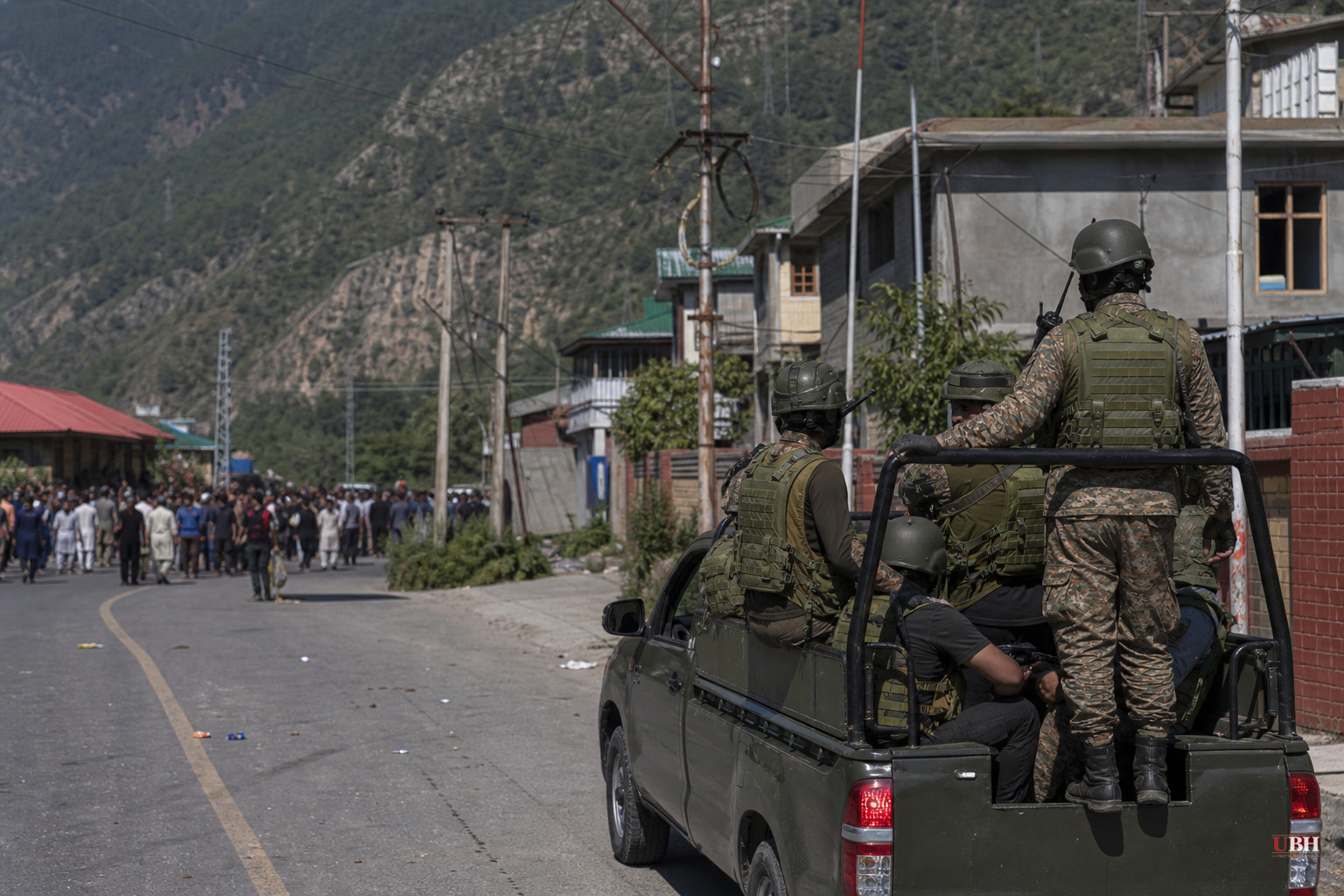
A regional election is unfolding in Pakistan-administered Kashmir under conditions that would get any other government condemned outright: an internet blackout since June 5, journalists barred from the region, and security forces accused of gunning down unarmed protesters in the streets. The vote was originally set for a single day, July 27, but Pakistani officials split it into three rounds across different districts, citing security concerns, according to The Japan Times. The first round happened July 27. The second round took place on August 2. A third round is set for August 10. The Pakistan Muslim League Nawaz, the country's ruling party, won 9 of 13 seats up for election in the first round in the districts of Mirpur, Kotli and Bhimber, The Japan Times reported. The politics behind the vote matter. Protesters, organized under the banned Joint Awami Action Committee, say a system of reserved seats for refugees from Indian-administered Kashmir who now live elsewhere in Pakistan hands outside voters disproportionate control over a region of roughly 4.5 million people, according to The Guardian. That's a legitimate structural grievance about who gets to decide local representation, and it deserves to be treated as one, not dismissed as noise. The body count is where accounts diverge sharply. JAAC spokesperson SA Khan told The Guardian that security forces killed 25 protesters on July 27 and five more the following day in Mirpur, and that troops then removed bodies from a hospital to destroy evidence. "Security forces have taken away the dead bodies and locked away the hospital in Mirpur," Khan said. "We have the photos and video evidence of dead bodies lying on streets in a pool of blood." Amnesty International, citing media reports in the run-up to the vote, said at least 40 people had been killed total, 34 of them protesters and six police or paramilitary personnel. Amnesty's acting regional director for South Asia, Isabelle Lassee, said the reports from Rawalakot are "consistent with the Pakistani authorities' long history of unlawful violence against protesters in Jammu and Kashmir." None of these figures have been independently verified. Pakistani domestic media, according to The Guardian, have largely ignored the story altogether. Readers should treat every casualty number here, from JAAC, from Amnesty, from anyone, as an allegation until an independent investigation happens. The BBC became the first outside media outlet to reach Rawalakot, and what its reporters found on the ground was grim. At a makeshift clinic near the main protest site, a doctor identified only as Dr. Anwar (a pseudonym used to protect him) told the BBC his clinic treated 50 to 60 critically injured patients since July 27, and that he personally treated 15 to 20 gunshot wounds. "Most of those who have been killed or seriously injured are young people between about 15-16 years old and 32-35 years old," Anwar said. "I have seen very few patients over the age of 40." Protesters are avoiding the main hospital, the BBC reported, out of fear of arrest or being shot, though authorities dispute that claim. Pakistan's government has a different story entirely. Information Minister Atta Tarar alleged at a weekend press conference that the protests are receiving "funds and instructions" from India, according to The Guardian. The local government says JAAC is armed and that the unrest is designed to disrupt the election, not advance genuine grievances, and officials are refusing to let protesters march on the regional capital, Muzaffarabad. JAAC rejects the India-funding claim outright. Khan told The Guardian: "It is nothing new: people asking for political or economic rights are termed India-sponsored or anti-state in Pakistan, same goes in India." The BBC reported JAAC acknowledges funding from the Pakistani diaspora abroad but denies any Indian sponsorship. The group was formally banned as a "proscribed organization" under Azad Jammu and Kashmir's Anti-Terrorism Act on June 5, 2026, per Amnesty International. There's a real accountability problem baked into how this story can be verified at all. Pakistan controls the internet access, controls media access to the region, and, according to JAAC's own account, controls the hospitals where bodies would otherwise serve as physical evidence. That doesn't prove every JAAC allegation is true. It does mean the system is currently built so that outside verification is close to impossible, which is exactly the situation Amnesty is demanding Pakistan fix. Amnesty's Lassee called for "a prompt, independent, and transparent investigation" into the security forces' use of force and urged Pakistan to "restore all communications access and allow media and independent observers into the area." As of the latest reports, that hasn't happened. The blackout that started June 5 remains in place. The third and final round of voting is scheduled for August 10, and whether outside observers or journalists get real access before then is the open question hanging over the rest of this election.
Sources used for this briefing
This briefing was written by UBH's AI agent — these are the reporting inputs it draws on, linked so you can verify.


