
Unbiased headlines. Facts, not spin.
Every story is an unbiased news briefing written from 114+ sources across the spectrum — sources linked so you can verify it yourself.
 health
Notable (5/10)
Event date: September 25, 2026
health
Notable (5/10)
Event date: September 25, 2026
Oxford Study of 1.4 Million Adults Finds 59% With High Blood Pressure in England Are Undiagnosed
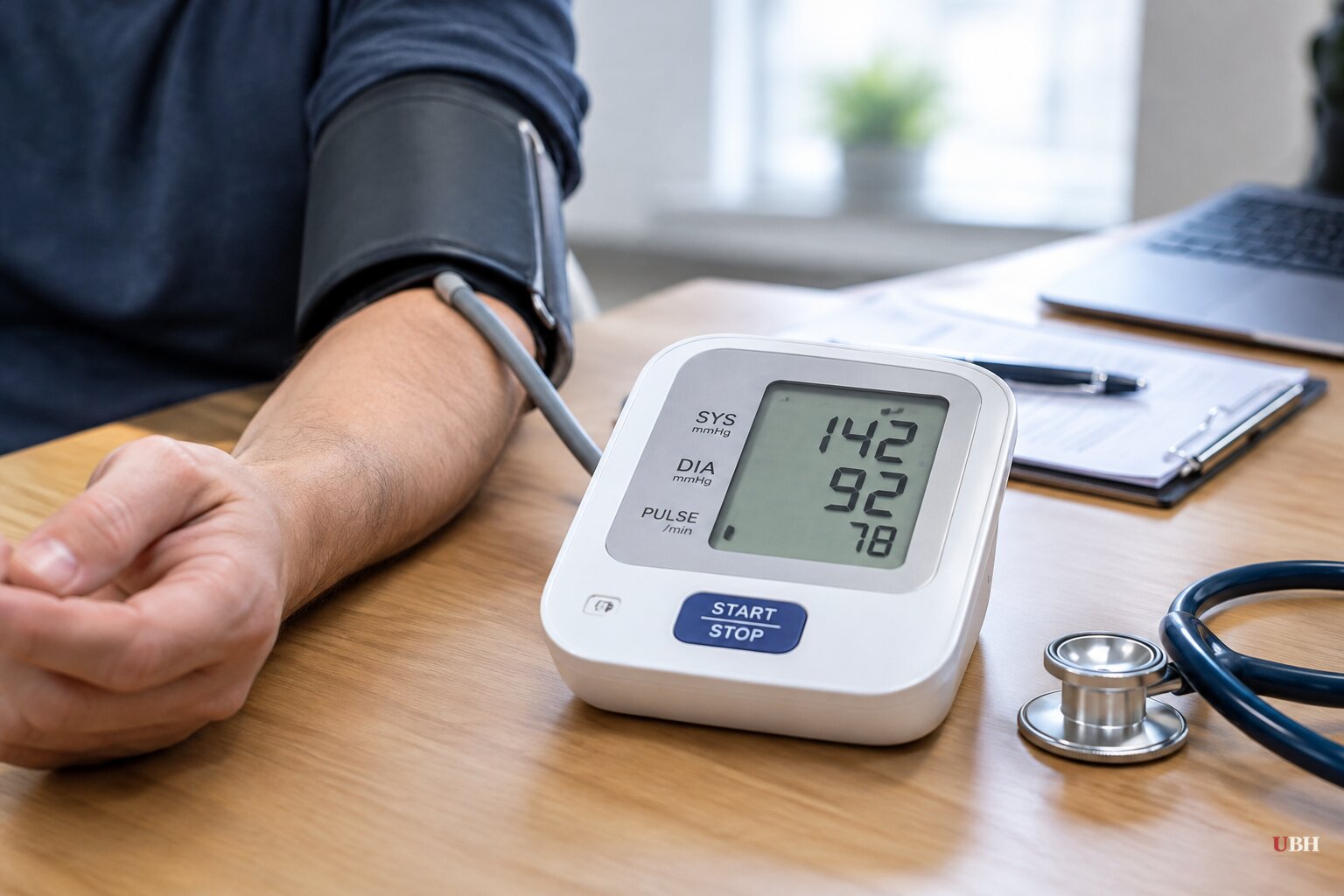
More than a third of adults in England have high blood pressure, and most of them don't know it. That is the finding of an Oxford Population Health study of 1.4 million people, published in BMJ Public Health.
The researchers calculated that 37% of adults met the definition of hypertension. Of those, 59% were undiagnosed and not receiving treatment. Hypertension raises the risk of stroke, heart attack and early death.
What the study measured
The team analysed clinic blood pressure readings from the Our Future Health programme, the largest health research initiative in the UK. Participants enrolled between 2022 and 2025.
They used the World Health Organization definition. A person counts as hypertensive with a systolic reading of 140 mmHg or higher, a diastolic reading of 90 or higher, or if they take blood-pressure-lowering medication.
That bar is higher than the American Heart Association's, which sets the threshold at 130/80.
Prevalence climbs steeply with age. It was 15% among adults aged 18 to 39 and 71% among those 80 and over.
Men fared worse. After adjusting for age, 42% of men had hypertension, against 29% of women.
Even treated patients are often not controlled
Diagnosis is only half the problem. Among participants taking one or more blood-pressure medicines, 50% still had readings of 140/90 or higher.
The researchers said progress on detection and control improved substantially in the 2000s but has plateaued since about 2011. They also pointed to "indications of worsening trends following the Covid-19 pandemic, possibly because disruptions to healthcare delivery may have had lasting effects."
They called the high number and share of undiagnosed cases "the most striking finding."
The guideline question
The authors argue that current NICE guidance may be part of the problem. It requires several measurements before a diagnosis is confirmed. In some cases it recommends lifestyle changes before medication. In the authors' view, that approach leaves some cases undetected or untreated.
"While hypertension is largely a 'silent killer', the current approach to detecting and treating high blood pressure is not fit for purpose," said Wenyu Liu, a medical statistician at Oxford Population Health and the study's lead author.
Liu said the problem is not confined to one group. "It's substantial across almost every demographic we examined," she said. She noted that adults under 40 are not eligible for an NHS Health Check, yet more than 15% of them already had high blood pressure.
Dr Iain Turnbull is a GP, deputy chief medical officer at Our Future Health and a clinical research fellow at Oxford Population Health. He said the findings match what he sees in general practice. He called for "a more proactive approach to detection" and for considering the start of treatment "based on predicted risk of cardiovascular disease in addition to levels of blood pressure."
Why half of treated patients aren't controlled is unexplained
Turnbull said it is not clear why half of patients taking blood-pressure drugs remain uncontrolled. He listed some possibilities.
Blood pressure varies considerably between people. Some need dose changes or two or more medicines before it comes down. Other conditions and drugs can affect it.
He also cited practical factors: side effects, complicated regimens, and competing health or life pressures that make medicines hard to take consistently. Weight, diet, salt intake and alcohol also play a role.
Professor Bryan Williams, chief scientific and medical officer at the British Heart Foundation, said the study "paints a concerning picture of the scale of undetected high blood pressure in the UK."
What comes next
The authors want population-wide prevention strategies alongside targeted treatment for people at high cardiovascular risk. No change to NICE guidance has been announced.
Whether the guidelines should be rewritten, or whether the fix lies in getting more people measured and keeping treated patients on their medication, is left open by the study. The researchers say they cannot yet explain why half of treated patients are not at target.
Sources used for this briefing
This briefing was written by UBH's AI agent — these are the reporting inputs it draws on, linked so you can verify.


