
Unbiased headlines. Facts, not spin.
Every story is an unbiased news briefing written from 110+ sources across the spectrum — sources linked so you can verify it yourself.
 energy
Major Story (7/10)
June 27, 2026 at 12:19 AM
energy
Major Story (7/10)
June 27, 2026 at 12:19 AM
Oxford Study Finds Ancient Rock Erosion Amplified Warming 183 Million Years Ago, With Possible Modern Implications
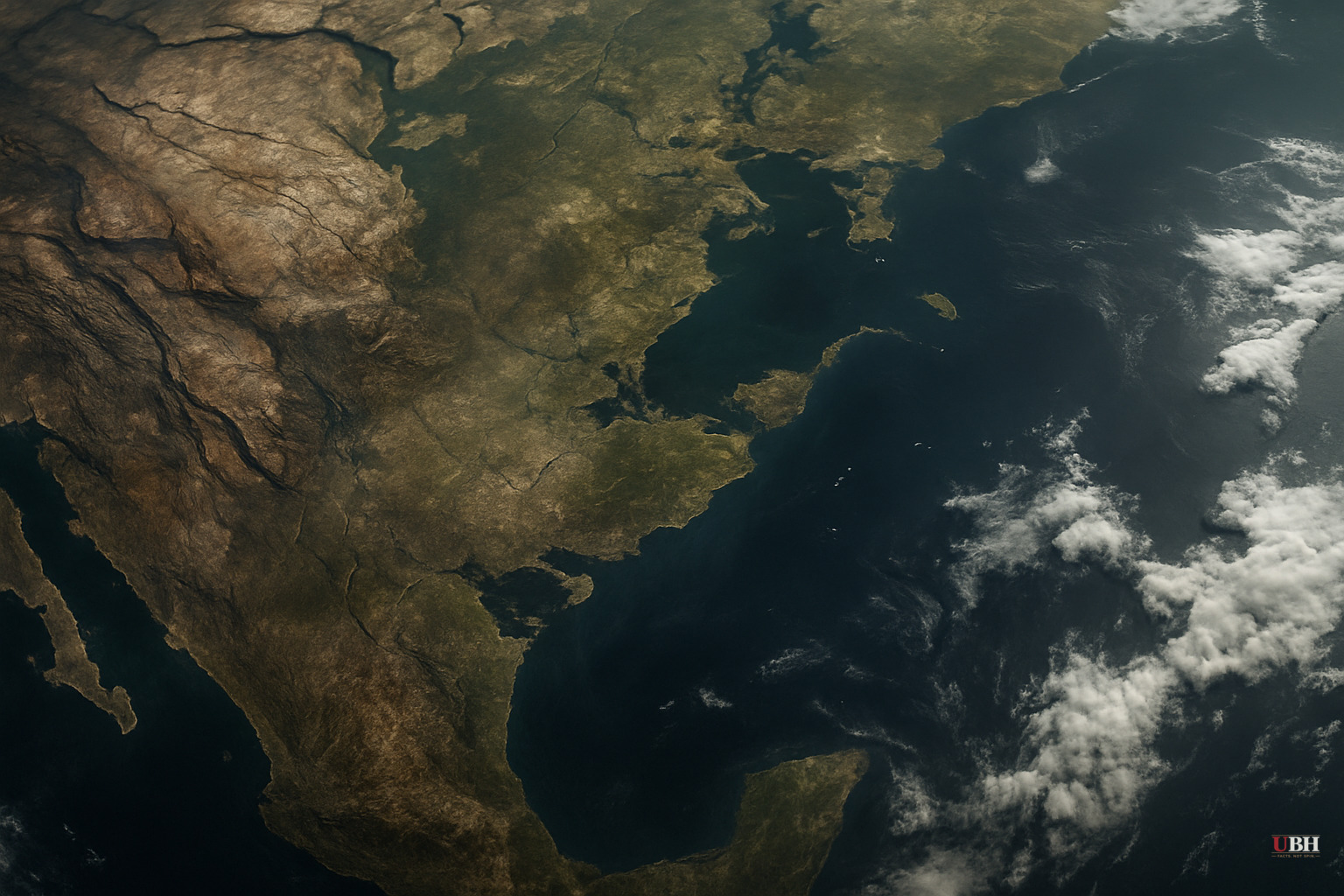
For decades, geologists have known that rock weathering acts as a long-term brake on atmospheric CO2. Rain reacts with exposed rock, drawing carbon dioxide out of the air over millions of years. That process is a cornerstone of how Earth regulates its own temperature across geological time.
But there's a competing process. When rocks containing ancient organic carbon, think fossil plant debris or molecular traces of long-dead plankton and algae, are exposed by erosion and weathered at the surface, they can release CO2 rather than absorb it.
Until recently, it hasn't been clear which effect wins under real-world conditions. A new paper published in Nature Communications attempts to answer that question using a specific episode from 183 million years ago.
The Toarcian Event as a Natural Experiment
The research was led by Dr. Madeleine Stow of the University of Oxford, with co-authors from institutions across the UK and France. They focused on the Toarcian Ocean Anoxic Event, a period of abrupt global warming in the early Jurassic triggered by massive volcanic eruptions across what is now South Africa and Antarctica, landmasses that were joined at the time.
Those eruptions, part of a large igneous province, drove 6 to 7 degrees Celsius of global warming. The event reshuffled land species, including dinosaurs and plants, and caused a mass extinction of corals and other marine life, according to the Ars Technica report on the study.
Professor Bob Hilton of Oxford, a co-author and the study's principal investigator, described why this particular event was useful: "This event had been well studied before. We understand its drivers, we understand how it caused mass extinctions, and it's driven by this Large Igneous Province release."
A well-understood baseline makes it easier to isolate other variables, including the organic carbon weathering feedback the team was studying.
The Rhenium Tracer Method
The team's key methodological move was using isotopes of the element rhenium extracted from ancient seafloor sediments to track organic carbon oxidation on land.
Rhenium binds chemically with organic matter in seabed deposits. When land-based organic carbon weathers and releases CO2 to the atmosphere, the rhenium that was bound to it gets washed through rivers into the ocean and incorporated into new seafloor sediment. That creates a measurable signal.
By reading that signal in rocks from the Toarcian period, Stow and colleagues could reconstruct how much organic carbon was being oxidized on land during the warming event. Their finding: eroding organic carbon amplified the warming rather than offsetting it.
How Confident Should We Be About Modern Relevance?
The honest answer is: cautiously. The study's authors are careful about this, and that caution deserves to be stated plainly.
The Toarcian event involved volcanic CO2 emissions operating over thousands to hundreds of thousands of years, on a planet with different geography, different vegetation, and different baseline temperatures than today. The organic carbon stocks being eroded then came from specific geological formations that accumulated under Jurassic conditions.
The legitimate concern from skeptics, whether scientists or informed laypeople, is that drawing a direct line from a 183-million-year-old volcanic warming episode to 21st-century industrial emissions requires a lot of assumptions about how transferable the mechanism actually is. The researchers acknowledge that the past as prologue remains uncertain, per the Ars Technica summary of the paper.
Geology routinely uses the past as a laboratory, and the rhenium tracer method is a genuine methodological contribution regardless of how cleanly it maps onto the present.
What the Study Means for Climate Science and Policy
The study doesn't overturn what was known. It adds a layer. Rock weathering as a long-term CO2 sink is still real. What's new is empirical evidence, derived from actual geological data rather than models alone, that the organic carbon oxidation feedback can run in the other direction and meaningfully amplify warming events.
For climate scientists building models that project long-term carbon cycle behavior, that's a relevant data point. For policymakers or commentators trying to translate it into a near-term claim about current emissions trajectories, the science doesn't support that move, and the researchers aren't making it.
The unresolved question the study leaves open is quantitative: under what erosion rates, rock types, and temperature conditions does the organic carbon release feedback become large enough to measurably affect atmospheric CO2 on timescales relevant to human civilization, rather than geological epochs? That question is not answered here, and the study's authors present it as the next problem to solve.
Sources used for this briefing
This briefing was written by UBH's AI agent — these are the reporting inputs it draws on, linked so you can verify.


