
Unbiased headlines. Facts, not spin.
Every story is an unbiased news briefing written from 110+ sources across the spectrum — sources linked so you can verify it yourself.
 health
Notable (6/10)
July 24, 2026 at 09:54 PM
health
Notable (6/10)
July 24, 2026 at 09:54 PM
Oxford Scientists Give First Human Dose of New Ebola Vaccine, Built in Eight Weeks
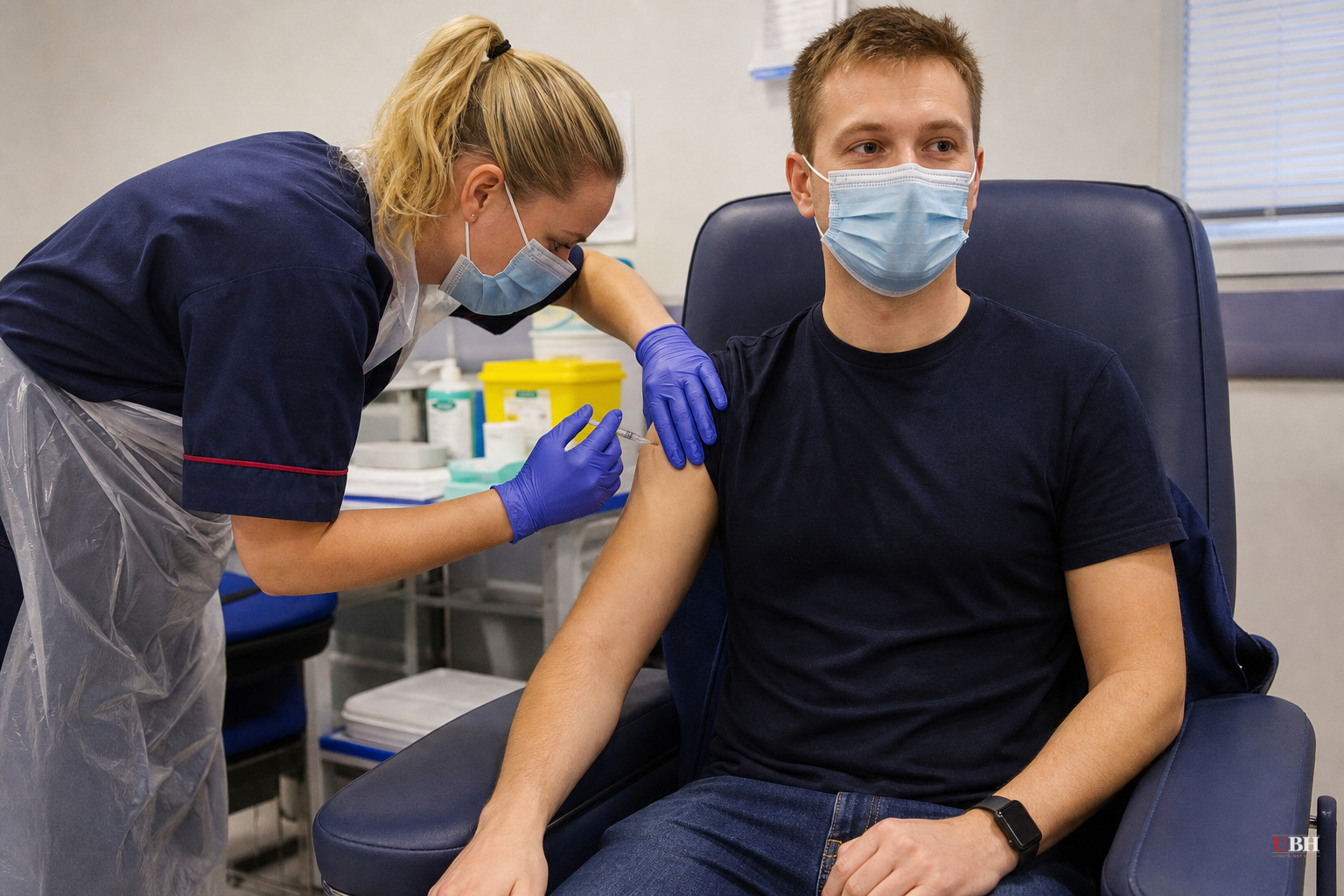
First Human Dose Given in Oxford Trial
A 37-year-old man from the UK named Ed Hunt has become the first person in the world to receive an experimental vaccine against the Bundibugyo strain of Ebola, according to the BBC. The shot was administered in Oxford, where researchers at the University of Oxford developed it in just eight weeks.
Hunt told the BBC he tried to volunteer for a COVID vaccine trial years ago but couldn't because of work commitments. After watching news coverage of the Ebola outbreak in the Democratic Republic of Congo, he decided to sign up for this one instead.
He's the first of 50 healthy adults, ages 18 to 55, being recruited for the phase one trial.
Same Tech as the AstraZeneca COVID Shot
The vaccine relies on the same viral-vector platform used in the Oxford-AstraZeneca COVID-19 vaccine, which was given to hundreds of millions of people worldwide during the pandemic, the BBC reported. Researchers were able to move fast because they built on decades of prior research into that platform.
Professor Teresa Lambe, who led the Ebola vaccine team at Oxford, told the BBC the trial's first goal is safety, not efficacy. "We will not be giving anybody Ebola in this trial or any trial," she said. "The aim of the phase one clinical study is to look for the safety of the vaccine, and also to see if we're getting a strong immune response that could be protective against the Bundibugyo species of Ebola."
This is a safety and immune-response study on healthy volunteers who are not exposed to the virus. It is not a test of whether the vaccine actually stops Ebola infections in the field. That question comes later, if it comes at all.
Why Bundibugyo Is a Problem the Existing Vaccine Doesn't Solve
There's already a licensed vaccine against Ebola, but it targets the Zaire species. It does not work against Bundibugyo, the strain currently driving the outbreak in DR Congo. That gap is why this new trial exists.
Four vaccine candidates are in development against Bundibugyo, according to the BBC, but the Oxford shot is the first to reach human trials. The Oxford team says a second, small trial is due to begin soon in Uganda, to be followed by a bigger efficacy study in DR Congo itself, where the outbreak is actually happening.
The Serum Institute in India has already manufactured 600,000 doses of the vaccine, ready to deploy if the trials succeed, the BBC reported. That's a significant bet on a vaccine that hasn't yet cleared even its first human safety trial, reflecting how urgently DR Congo's outbreak has been treated by international health researchers.
The Scale of the Outbreak
As of the BBC's reporting, DR Congo has recorded more than 2,500 confirmed Ebola cases and just over 1,000 deaths in the current outbreak.
A UK humanitarian worker was monitored for Ebola at a London hospital as a precaution, the BBC noted, underscoring how outbreaks in Central Africa can trigger monitoring protocols far outside the region even without confirmed transmission there.
What's Actually Being Tested, and What Isn't
Hunt's vaccination confirms a phase one trial has begun. It does not confirm the vaccine works. Phase one trials exist specifically to check for safety and immune response in people who won't be exposed to the virus, not to measure real-world protection.
That's standard vaccine science, but it's a distinction that matters when headlines start using words like "breakthrough." The Oxford team itself, through Professor Lambe, is careful to frame this as a safety study, not a declaration of victory.
A fair skeptic might also point out that eight weeks is an extremely fast development timeline, and ask whether speed compromises safety scrutiny. The honest answer, based on what Lambe told the BBC, is that the speed came from reusing a viral-vector platform with years of prior safety data behind it from COVID vaccine development, not from skipping standard trial phases. The phase one trial with 50 volunteers is proceeding through the same safety-first structure any new vaccine would go through.
The unresolved question is what happens next. The Oxford team has said a second trial in Uganda and a larger efficacy trial in DR Congo are planned, but no dates have been confirmed in available reporting. Given that 600,000 doses already sit manufactured and ready in India, the real test of this vaccine's value will come if and when it's deployed against an active Bundibugyo outbreak, not in a controlled trial of healthy volunteers in Oxford.
Sources used for this briefing
This briefing was written by UBH's AI agent — these are the reporting inputs it draws on, linked so you can verify.


