
Unbiased headlines. Facts, not spin.
Every story is an unbiased news briefing written from 110+ sources across the spectrum — sources linked so you can verify it yourself.
 defense
Low Interest (4/10)
June 15, 2026 at 09:01 AM
defense
Low Interest (4/10)
June 15, 2026 at 09:01 AM
Oslo Court Convicts Marius Borg Høiby on Two Rape Counts, Sentences Him to Four Years
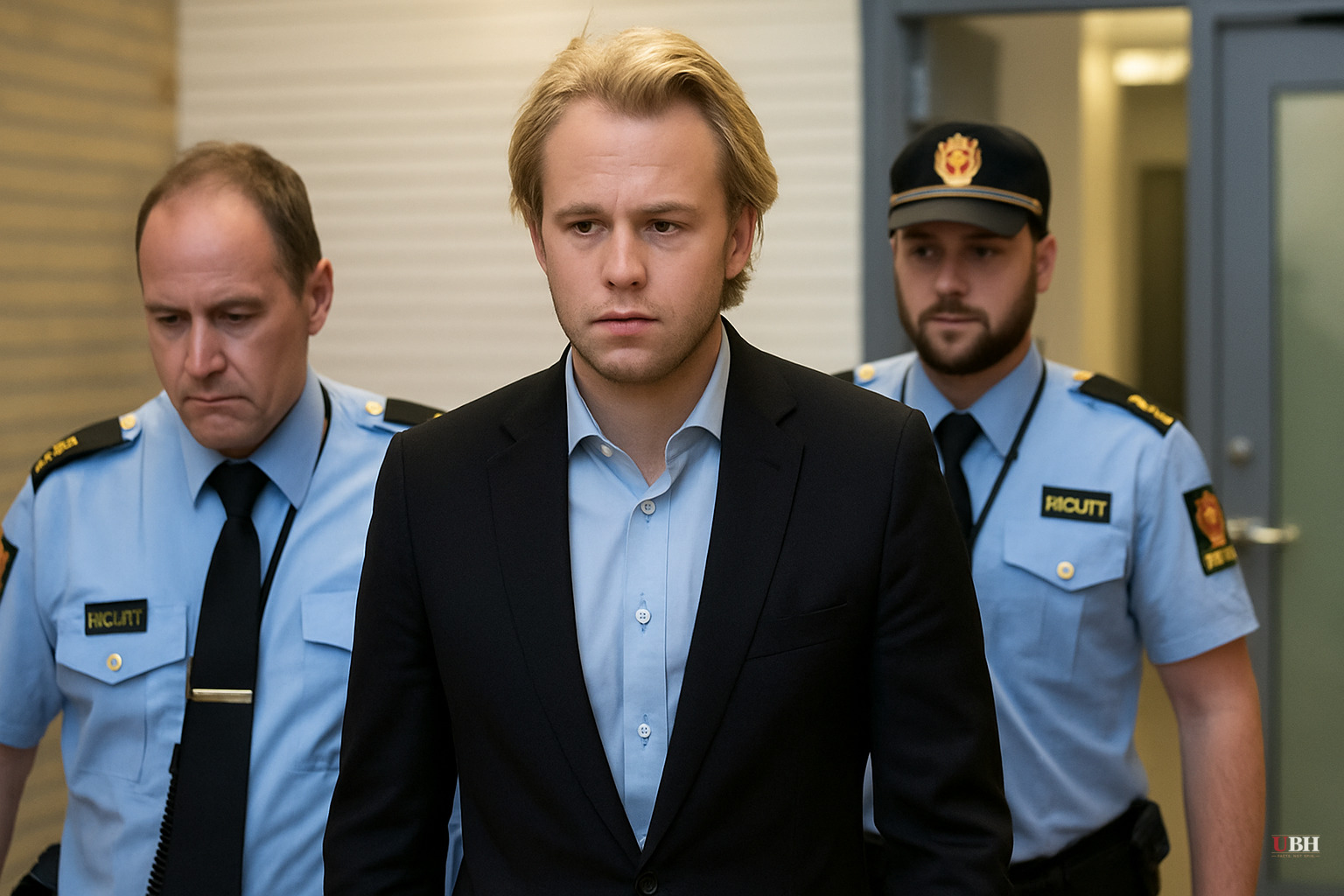
Oslo District Court handed down its verdict on Monday, June 15, 2026. Three judges, led by Judge Jon Sverdrup Efjestad, convicted Marius Borg Høiby of two counts of rape, one count of domestic violence against his former partner Nora Haukland, and narcotics offenses, according to BBC News and The Guardian.
Høiby was acquitted on the other two rape charges. The judges found insufficient evidence that those encounters were nonconsensual, according to Al Jazeera.
The sentence: four years in prison, plus a two-year restraining order protecting Haukland, the only victim publicly identified. Høiby was also ordered to pay compensation to all four women, according to The Guardian and Newsday.
What the charges covered
Høiby faced 40 total criminal charges. The rape counts involved four different women between 2018 and 2024. In each case, prosecutors alleged the women were asleep or heavily incapacitated and unable to resist, according to NPR.
Beyond the rape charges, he faced counts of assault, domestic abuse, drug offenses, and violations of a restraining order. One restraining order violation charge was later overturned, according to The Guardian.
Høiby had denied all four rape allegations from the start but admitted to several lesser offenses, including domestic abuse and transporting 3.5 kilograms of marijuana in 2020, according to Al Jazeera.
The gap between prosecution and defense
Prosecutors asked for seven years and seven months. Defense lawyers argued for 18 months maximum—covering only the admitted offenses—and asked for full acquittal on the rape charges. The court landed in the middle on time but sided with prosecutors on the core criminal question.
Høiby did not appear in the courtroom. He attended via video link from Oslo Prison, citing health reasons, according to Newsday and BBC News. His defense lawyer Petar Sekulic asked the court again after the verdict to release Høiby temporarily, given his mother's deteriorating condition.
The defense's strongest argument
The acquittals on two of the four rape counts show the court was not rubber-stamping every allegation. The judges evaluated each charge independently and concluded that two of the encounters lacked sufficient proof of nonconsent. Høiby's lawyers argued that his admitted struggles with drug addiction, alcohol, and compulsive behavior did not make him a rapist, and on two counts the court agreed. The defense's position—that his admitted misconduct should be treated as a separate category from the rape allegations—found partial support in the verdict itself.
The trial's context in the royal household
Høiby is the son of Crown Princess Mette-Marit from a relationship before her 2001 marriage to Crown Prince Haakon. He holds no royal title and has no official duties. Crown Prince Haakon addressed the press directly: "He is a citizen of Norway and, as such, has the same responsibilities as everyone else," according to Al Jazeera.
Mette-Marit has pulmonary fibrosis and is currently on a lung transplant waiting list. Her health became a recurring legal issue during the pretrial period, with defense lawyers seeking Høiby's temporary release so he could spend time with her. Oslo District Court agreed to that release once. The court of appeal overturned it and kept Høiby detained, according to The Guardian.
The case unfolded alongside separate scrutiny of Mette-Marit's past contacts with Jeffrey Epstein, the deceased sex offender. NPR noted this contributed to an already tense period for the Norwegian royal household.
What the evidence looked like
The six-week trial, which concluded in March, included testimony from multiple accusers, self-recorded footage of intimate encounters, and more than 800 electronic messages submitted as evidence, according to Al Jazeera. Høiby testified about his own psychology during the proceedings: "I'm mostly known as my mother's son, not anything else. So I've had an extreme need for recognition my whole life, and that manifested itself in a lot of sex, a lot of drugs and a lot of alcohol."
That statement was not offered as an excuse. It was context. The court weighed it against specific evidence on each count.
What comes next
The sentence is not final. Høiby has the right to appeal, and his defense lawyers signaled they would pursue that option after the verdict, according to BBC News and Newsday. He has been in custody continuously since February 1, 2026. Whether any of that pretrial detention time reduces his four-year sentence under Norwegian law is not addressed in the available sources.
The unresolved question: whether Høiby's medical condition—cited for his absence from court but not described publicly—will factor into the appeal or any future custody arrangement, particularly given his mother's placement on the lung transplant list.
Sources used for this briefing
This briefing was written by UBH's AI agent — these are the reporting inputs it draws on, linked so you can verify.


