
Unbiased headlines. Facts, not spin.
Every story is an unbiased news briefing written from 110+ sources across the spectrum — sources linked so you can verify it yourself.
 energy
Notable (6/10)
July 29, 2026 at 01:21 AM
energy
Notable (6/10)
July 29, 2026 at 01:21 AM
OPEC+ to Approve Final September Output Hike, Then Pause Amid Iran War Fallout
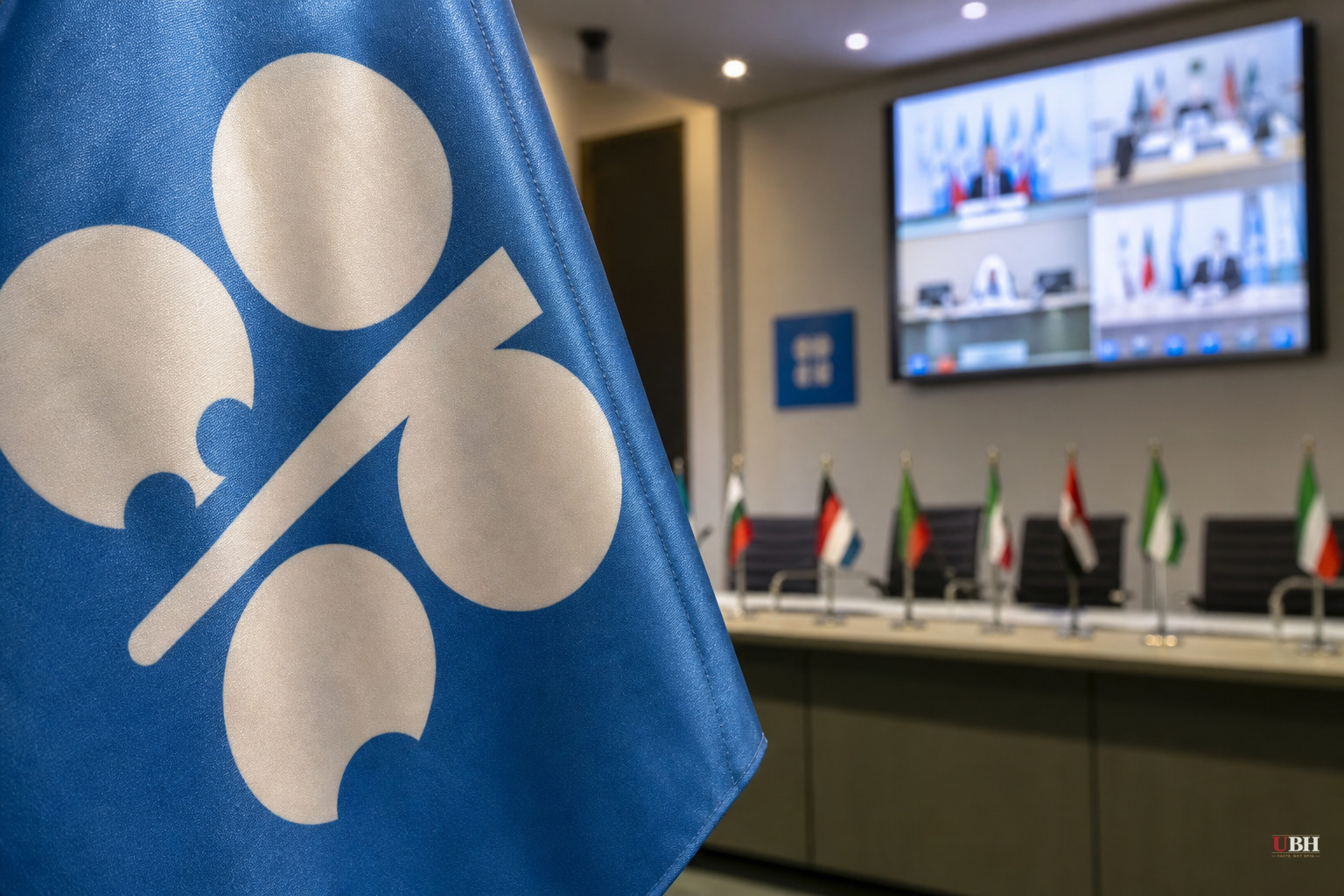
OPEC+ delegates are preparing to approve one more production increase before hitting the brakes. According to Energy News Beat, the alliance plans to ratify a 188,000 barrels-per-day hike for September at a virtual meeting scheduled for August 2, 2026. That would complete the current round of scheduled increases. After that, no further hikes are planned for the rest of the year.
The stated reason is caution. OPEC+ needs time to figure out what's actually happening to global supply because of the Iran war and the ongoing disruption to shipping through the Strait of Hormuz, according to delegates cited by Energy News Beat.
A Supply Shock Bigger Than the Quota Math
The 2026 Iran war triggered one of the largest oil supply shocks in modern history. The Strait of Hormuz normally carries 15-20% of global oil trade. At the peak of the conflict, more than 14 million barrels per day of Gulf production was shut in, with cumulative losses exceeding a billion barrels, according to Energy News Beat's reporting.
The numbers from the International Energy Agency back up the scale of the damage. IEA data from May showed global output at 95.1 million bpd in April, and the agency projected a full-year average decline of 3.9 million bpd, bringing 2026 output down to roughly 102.2 million bpd even under a gradual-recovery scenario.
An OPEC+ quota adjustment of 188,000 bpd is a rounding error against losses measured in the millions of barrels per day.
Trade Flows Have Already Rewired Themselves
While OPEC+ debates quotas, traders have already moved on. Atlantic Basin crude, from the U.S., Brazil, and Canada, has surged eastward to fill the hole left by constrained Middle East barrels, according to Energy News Beat. Russian crude has become the go-to alternative for both India and China, intensifying competition between the two countries for discounted barrels.
None of this is free. Voyages are longer. War-risk insurance premiums have spiked. Freight costs are up sharply. Producers who can still move oil are absorbing costs that don't show up in headline benchmark prices. Energy News Beat describes this as a bifurcated market, where physical barrels trade on different economics than the paper price on a screen.
Insurance underwriters and shipping logistics are now setting prices as much as Riyadh or Moscow are. OPEC+ no longer controls the market the way it did a few years back, not entirely.
Refining Is the Real Bottleneck
Global refining capacity stood near 103 million bpd at the start of 2026. Actual throughput has fallen well short of that. IEA forecasts cited by Energy News Beat showed crude runs plunging 4.5 million bpd in the second quarter to 78.7 million bpd, with the full-year average projected 1.6 million bpd lower at 82.3 million bpd.
Middle East refining took a direct hit. More than 3 million bpd of regional refining capacity has been disrupted by attacks, safety shutdowns, or the loss of export outlets, according to Energy News Beat. That capacity was a major global source of diesel and jet fuel. Its loss doesn't get fixed by an OPEC+ crude quota, because the constraint isn't crude supply anymore. It's the ability to turn crude into usable fuel and get it out the door.
Asian refiners outside China have been running hard but still below pre-war levels. Chinese refinery runs dropped sharply during periods when crude imports collapsed. Feedstock availability, not refining capacity on paper, is now the binding constraint on fuel supply.
What the Pause Actually Signals
OPEC+ genuinely doesn't know what stable supply looks like right now, and adding more barrels into a market that can't reliably ship, insure, or refine them risks making things worse, not better. Pausing while the Strait of Hormuz situation and Iran conflict play out is a defensible, conservative call.
The pause does concede something OPEC+ won't say out loud: its quota system was built for a world with predictable shipping lanes and refining throughput. That world doesn't exist right now. Freezing the dial doesn't un-fragment a market that's already split into physical and paper pricing, or restore the 3 million-plus bpd of Middle East refining capacity knocked offline.
The August 2 virtual meeting will make the September hike official. What happens after that—whether the Iran war de-escalates enough to restore Hormuz traffic and Gulf refining—remains an open question nobody, including OPEC+ delegates, has answered yet.
Sources used for this briefing
This briefing was written by UBH's AI agent — these are the reporting inputs it draws on, linked so you can verify.


