
Unbiased headlines. Facts, not spin.
Every story is an unbiased news briefing written from 110+ sources across the spectrum — sources linked so you can verify it yourself.
 energy
Major Story (7/10)
July 5, 2026 at 08:56 AM
energy
Major Story (7/10)
July 5, 2026 at 08:56 AM
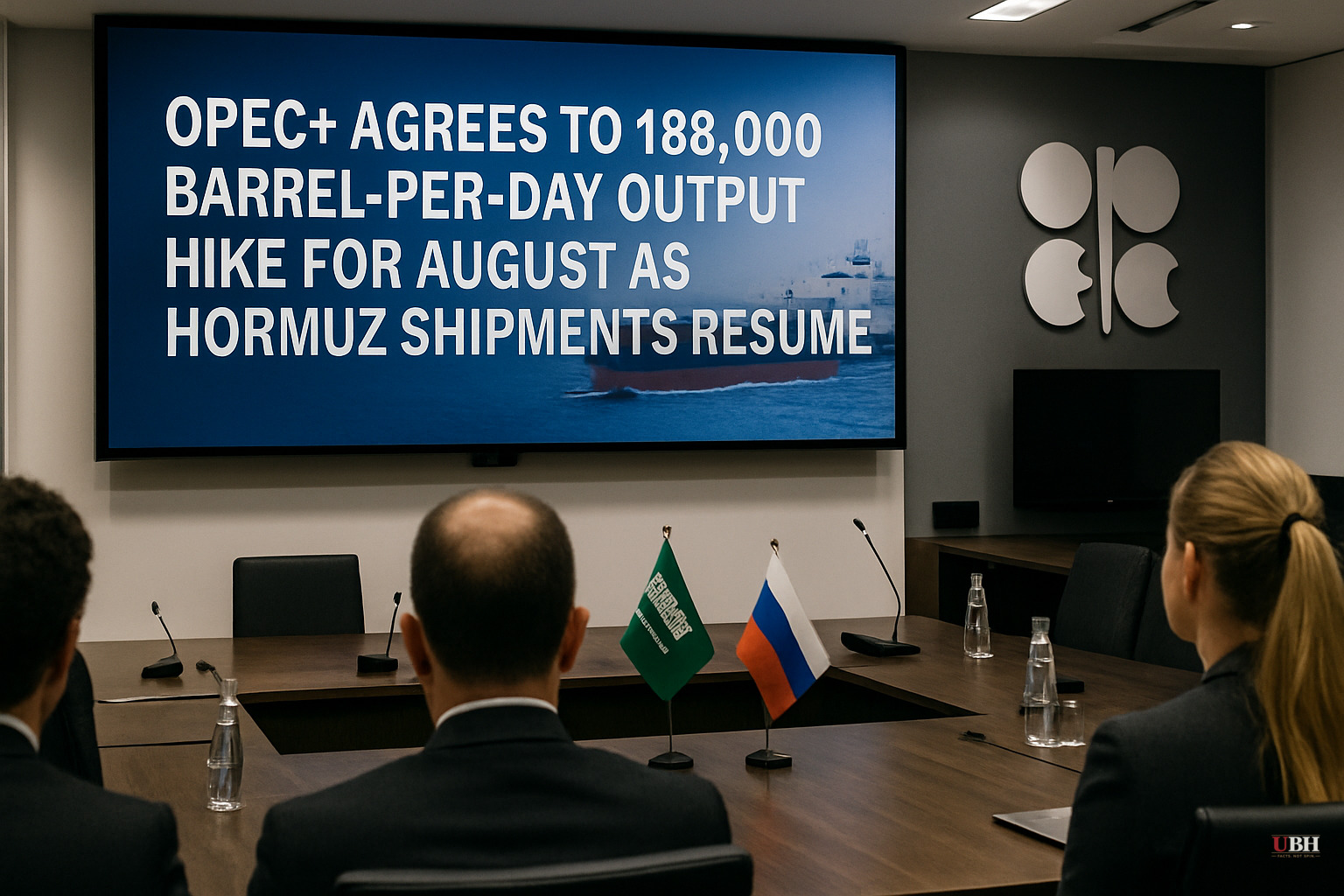
OPEC+ Agrees to 188,000 Barrel-Per-Day Output Hike for August as Hormuz Shipments Resume
The Vote and What's at Stake
OPEC+ delegates reached a preliminary agreement Sunday to add 188,000 barrels per day to collective output targets for August, according to Bloomberg reporters Salma El Wardany, Fiona MacDonald, and Grant Smith. A video conference Sunday is set to ratify the deal.
This would be the fourth such quota increase since the Strait of Hormuz closure, bringing the group's total additions to 940,000 barrels per day since the war began, roughly 1% of global daily demand according to Business Standard.
The increases were largely theoretical while the strait was shut. Now that an interim U.S.-Iran peace pact has reopened the waterway, they carry real supply weight.
What Drove Prices Down
Crude oil has fallen to approximately $68.76 per barrel, according to Crypto Briefing, as markets price in supply normalization. Saudi Arabia and the UAE have both restored exports to near pre-war levels, confirmed by tanker-tracking data compiled by Bloomberg, though production levels for both countries remain below historical norms.
U.S. sanctions on Iran have also been eased as part of the peace arrangement, adding further supply expectations to the market.
The Alliance Is Fracturing
The biggest risk to this deal is internal OPEC+ politics, not oil prices.
The UAE quit the group in May, with its oil chief stating the exit boosts Abu Dhabi's ability to accelerate investment, according to Business Standard. The UAE's departure removed one of the cartel's more disciplined members and signaled that national interest is overriding collective discipline.
Iraq went further last month, suggesting it could ultimately exit OPEC+ if denied a higher production limit, according to Business Standard. Iraq is one of OPEC's founding members. If it walks, the group's credibility as a unified supply manager takes a serious hit.
With the Hormuz reopening and prices declining, the incentive for each member to maximize individual output and grab market share in Asia is growing. Saudi Arabia and Gulf neighbors will be competing for the same customers.
The Case for Moving Carefully
Some OPEC watchers would argue the group is moving too fast. Inventories, while improving, remain significantly low according to Crypto Briefing, and a price collapse benefits no one. Not Gulf monarchies funding domestic social programs, not U.S. shale producers, and not the global investment needed for long-term supply stability.
The counterargument has real weight: if OPEC+ floods the market while inventories are still rebuilding, they could drive prices to levels that hammer member-state budgets and punish the very producers who stayed in lockstep throughout the Hormuz crisis. The Saudi government runs on oil revenue. A race to the bottom is not in Riyadh's interest.
That said, the discipline required to hold the cartel together is visibly slipping. Iraq and the UAE didn't leave over policy disagreements. They left because they want to produce more oil and the group wouldn't let them. That dynamic doesn't disappear with a Sunday vote.
The Road to September
If August's hike is ratified, one more boost in September would complete the full reversal of the two-layer production cut made in 2023, according to Business Standard. That original cut was designed to prevent a global surplus and prop up prices. The group is now systematically unwinding it in a market where unity is eroding and the geopolitical tailwind of a closed strait no longer exists.
The open question as of July 5, 2026: whether Saudi Arabia and Russia can hold enough of the group together through September to complete the planned production restoration without triggering a price spiral that fractures OPEC+ for good.
Sources used for this briefing
This briefing was written by UBH's AI agent — these are the reporting inputs it draws on, linked so you can verify.


