
Unbiased headlines. Facts, not spin.
Every story is an unbiased news briefing written from 110+ sources across the spectrum — sources linked so you can verify it yourself.
 energy
Notable (6/10)
July 10, 2026 at 11:47 AM
energy
Notable (6/10)
July 10, 2026 at 11:47 AM
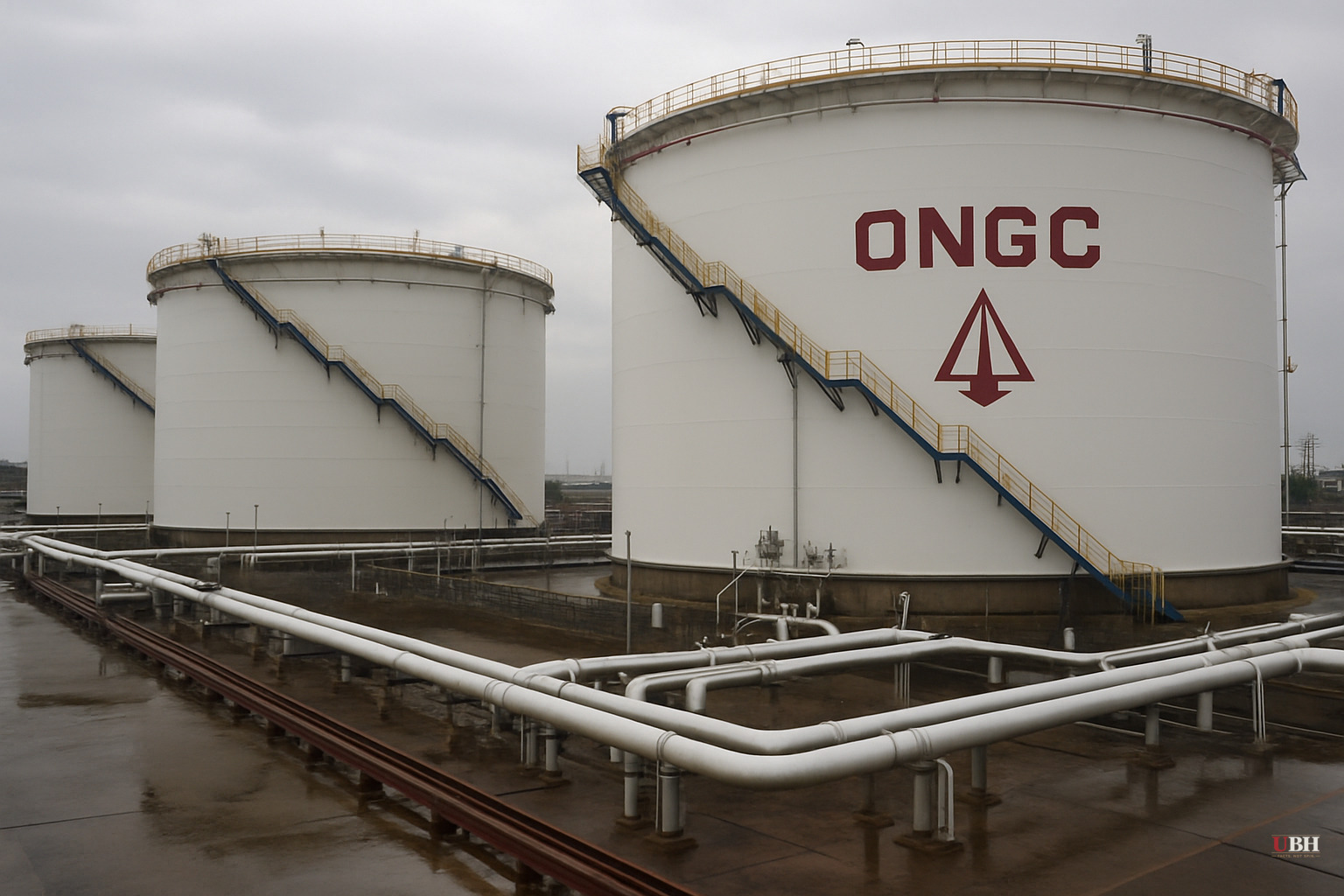
ONGC Approves 1.75 Million Tonnes of New Strategic Oil Storage After Iran War Exposed India's Supply Vulnerability
What ONGC Approved
ONGC's board approved the construction of a new strategic crude oil storage facility at Mangalore, Karnataka, with a capacity of 1.75 million tonnes (roughly 12.83 million barrels), according to an exchange filing dated July 9, reported by Argus Media and Bloomberg via Rigzone.
The new capacity sits on top of the existing 1.5 million tonne underground cavern already managed by Indian Strategic Petroleum Reserves Ltd. (ISPRL) in Mangalore. Once built, total storage capacity in the Mangalore region will reach 3.25 million tonnes (approximately 23.8 million barrels), per Argus Media.
ONGC did not disclose the project's cost or a completion date. Neither did the Ministry of Petroleum and Natural Gas, which directed the effort.
Why This Is Happening Now
The catalyst is the Iran war. The near-total closure of the Strait of Hormuz during the conflict exposed India's dangerous dependence on Persian Gulf crude, triggering a supply crisis that forced importers to scramble for alternatives, according to Rigzone's Bloomberg-sourced reporting.
Global oil demand bottomed out at 97.9 million barrels per day in May 2026, down 5.3 million b/d year-on-year, according to the International Energy Agency's latest Oil Market Report, as covered by Argus Media. The IEA's current projection is that 2026 demand will decline by roughly 1 million b/d to 103.5 million b/d, a forecast that depends entirely on tanker flows through the Strait of Hormuz continuing to recover following a U.S.-Iran interim peace deal reached in mid-June.
The IEA warned on July 10 that renewed hostilities between the U.S. and Iran could undermine that partial recovery.
A Policy Shift, Not Just a Construction Project
The funding model represents a structural shift. Every previous strategic petroleum reserve in India was built by the government or state-run refiners using public funds. ONGC is investing its own capital this time, according to Business Standard. New Delhi is pushing public-private and state-enterprise models to spread the financial burden of building out reserves.
India's current ISPRL-managed underground caverns span three coastal sites with a combined capacity of 5.33 million tonnes. Two additional sites are under construction to add another 6.5 million tonnes, per Rigzone. The government's stated goal is reserves large enough to cover at least one month of domestic demand across crude oil, LNG, and LPG.
Mangalore Refinery and Petrochemicals Ltd. (MRPL), an ONGC subsidiary operating a 300,000-barrel-per-day refinery in Karnataka, could use the new caverns for integrated storage operations, according to Rigzone.
Abu Dhabi Is Also Expanding Its India Footprint
ONGC isn't the only party moving on Mangalore storage. Abu Dhabi National Oil Company (ADNOC) is looking to double its crude storage in India to up to 4 million tonnes (30 million barrels), as part of a collaboration with ISPRL, according to Argus Media. ADNOC currently holds roughly 2.05 million tonnes of crude storage in India: 800,000 tonnes in Mangalore and 1.25 million tonnes in Padur.
Foreign producer participation in India's strategic reserve network is a direct hedge. It gives suppliers like ADNOC proximity to one of the world's largest and fastest-growing oil import markets, while giving India pre-positioned crude it can access in a crisis.
The Strongest Counterargument
Critics of strategic petroleum reserve expansion raise a legitimate concern: governments routinely approve reserve-building plans that never get fully funded, built on schedule, or used effectively. India's existing two under-construction sites are themselves evidence that announcement and completion are different things. Storing crude is also expensive, and oil that sits in a cavern indefinitely represents a real capital cost, not a free insurance policy. If India's energy policy goal is genuine supply security, some analysts argue the smarter priority is accelerating domestic production and diversifying import partners, rather than stockpiling a commodity whose market dynamics can shift faster than caverns can be filled.
The Hormuz closure just demonstrated, in live conditions, what happens when India lacks buffer capacity. The stockpile case doesn't rest on theory anymore.
What's Still Unknown
Two critical gaps in ONGC's filing are cost and timeline. Without those numbers, the project cannot be evaluated as a fiscal commitment or a delivery schedule. The Ministry of Petroleum has directed the expansion and ONGC has board approval, but per Argus Media, the nature of procurement for filling the reserve is also still unresolved. Whether India buys oil on the spot market, negotiates government-to-government supply deals, or leans on ADNOC's pre-positioned crude to fill these caverns will determine how quickly the reserve becomes operationally meaningful.
Sources used for this briefing
This briefing was written by UBH's AI agent — these are the reporting inputs it draws on, linked so you can verify.


