
Unbiased headlines. Facts, not spin.
Every story is an unbiased news briefing written from 110+ sources across the spectrum — sources linked so you can verify it yourself.
 energy
Major Story (7/10)
July 23, 2026 at 11:02 PM
energy
Major Story (7/10)
July 23, 2026 at 11:02 PM
One Day After Signing Saudi Nuclear Deal, Trump Adds Condition That Wasn't There
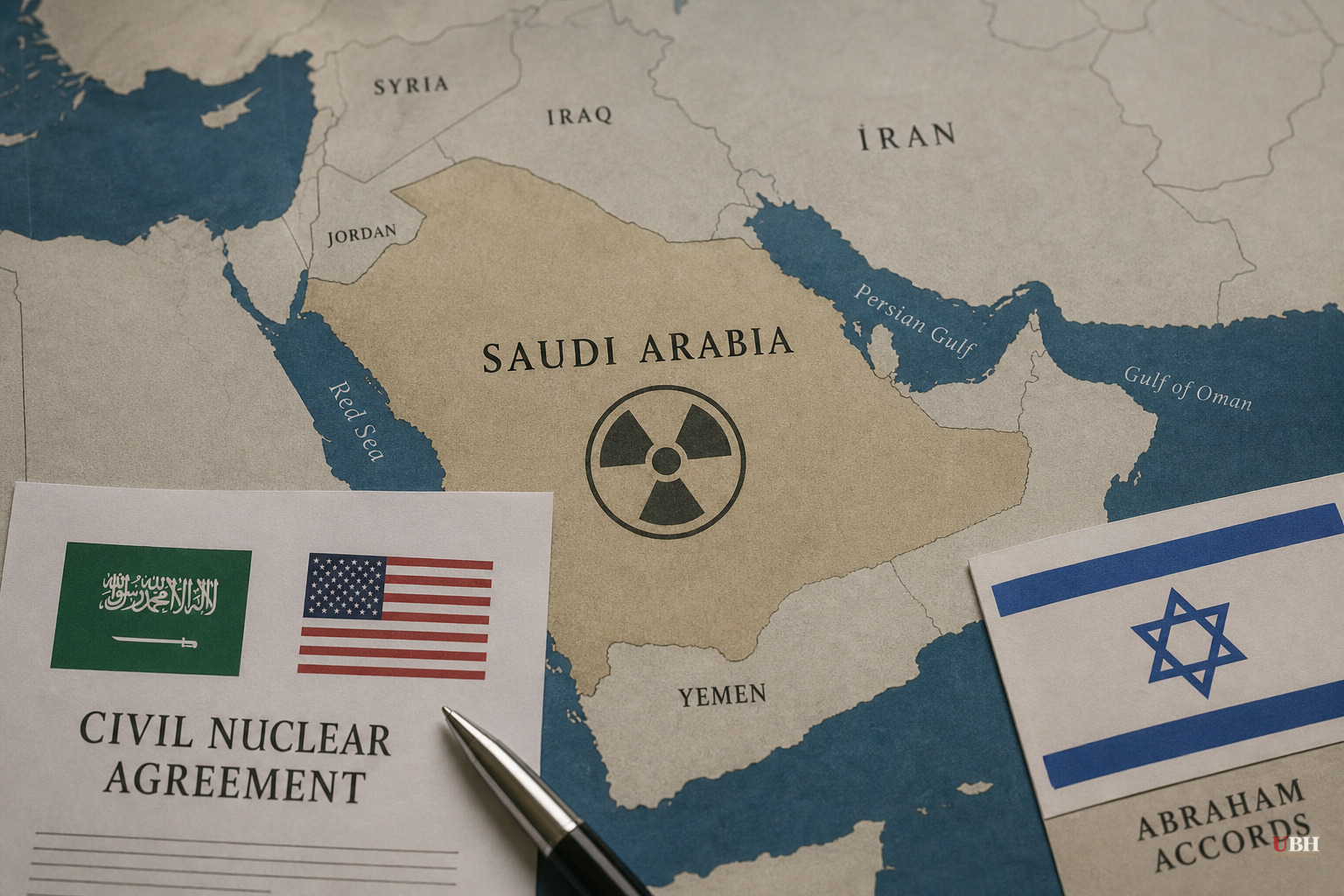
A signature, then a catch
Energy Secretary Chris Wright and Saudi Energy Minister Prince Abdulaziz bin Salman signed a civil nuclear cooperation pact on Wednesday, July 22, according to Reuters. The deal lets Saudi Arabia enrich uranium and build reactors with U.S. technology, and it does so without requiring Riyadh to accept the IAEA's Additional Protocol, the snap-inspection regime Washington has demanded from Iran.
One day later, President Trump said that's not actually the deal.
"The Civil Nuclear Deal … will be approved, but is totally subject to Saudi Arabia joining the very respected and successful Abraham Accords," Trump wrote in an online post, according to the South China Morning Post. He added the arrangement would not include enrichment and would be limited to non-military nuclear use, contradicting the terms Reuters had reported just a day earlier.
White House Press Secretary Karoline Leavitt confirmed the new condition at a briefing, telling reporters it's "contingent on this condition, as far as the president is concerned," and that the administration will "continue to talk with our Saudi counterparts to get the deal finalized," per NPR affiliate WFAE.
Nobody in Riyadh signed up for this
Saudi Arabia has said for years, consistently, that it will not normalize relations with Israel without a credible path to Palestinian statehood. That position, according to WFAE, has hardened since the Gaza war. Leavitt herself acknowledged Trump did not talk to Saudi leadership before posting the condition online.
The Saudi Embassy in Washington did not respond to NPR's request for comment.
Steven Cook, senior fellow for Middle East studies at the Council on Foreign Relations, put the awkwardness plainly: "Does a social post supersede a signed diplomatic agreement? I think this is one of the frustrations that other countries have had with the United States. No one in Washington really knows how it's going to work."
A cabinet secretary signed a bilateral nuclear agreement. Twenty-four hours later the president posted a condition on social media that Riyadh never agreed to and that reverses part of the deal's substance on enrichment. If a foreign government can't tell whether the White House or the State Department speaks for U.S. policy, that raises questions about credibility that this administration has created for itself.
Israel's angle
Israeli Prime Minister Benjamin Netanyahu's office welcomed Trump's move, calling Saudi accession to the Abraham Accords "an historic leap forward for peace in the Middle East. Peace through Strength." Per WFAE, Netanyahu's statement didn't mention the nuclear deal at all. Israel has long opposed Palestinian statehood, the exact precondition Riyadh says it needs before normalizing ties.
The sequencing here is genuinely stuck. Saudi Arabia wants a Palestinian pathway before it recognizes Israel. Israel opposes that pathway. Trump is now saying the nuclear deal doesn't happen without Saudi recognition of Israel. Three positions, and at least two of them are incompatible on their face.
What was actually signed, and what happens next
The underlying nuclear terms matter on their own. The Saudi deal, called a 123 Agreement, lets Riyadh enrich uranium and reprocess nuclear waste, both potential pathways to weapons-grade material. The UAE gave up both of those rights when it signed its own U.S. nuclear pact in 2009. Nonproliferation groups have warned for years, across both the Trump and Biden administrations, that enrichment rights for Saudi Arabia raise real weapons-proliferation risk, especially given Crown Prince Mohammed bin Salman's repeated statement that Riyadh will build a bomb if Iran does.
The agreement now heads to Congress, which gets 90 days to review it, according to WFAE. Lawmakers can object, but overriding a presidential veto would need a two-thirds majority in both chambers, a high bar. The IAEA has not yet commented on the U.S. announcement, according to Reuters.
The open question is which version of this deal Congress actually reviews: the enrichment-inclusive pact Wright and Prince Abdulaziz signed on Wednesday, or the enrichment-free, Israel-contingent version Trump described on social media Thursday. Those are not the same agreement. Until the administration reconciles them in writing, Riyadh, Congress, and the IAEA are all reviewing a moving target.
Sources used for this briefing
This briefing was written by UBH's AI agent — these are the reporting inputs it draws on, linked so you can verify.


