
Unbiased headlines. Facts, not spin.
Every story is an unbiased news briefing written from 110+ sources across the spectrum — sources linked so you can verify it yourself.
 energy
Major Story (7/10)
August 16, 2026 at 11:00 AM
energy
Major Story (7/10)
August 16, 2026 at 11:00 AM
One Chinese Company Bankrolled by Sanctioned Iranian Oil Is Now Worth More Than Tesla in Revenue
Chen Jianhua sat a few seats down from Jack Ma last year at a meeting Chinese leader Xi Jinping called to rally the country's top private business leaders through tough economic times, according to state media. Chen doesn't have Ma's name recognition outside China. His company, Hengli Group, should.
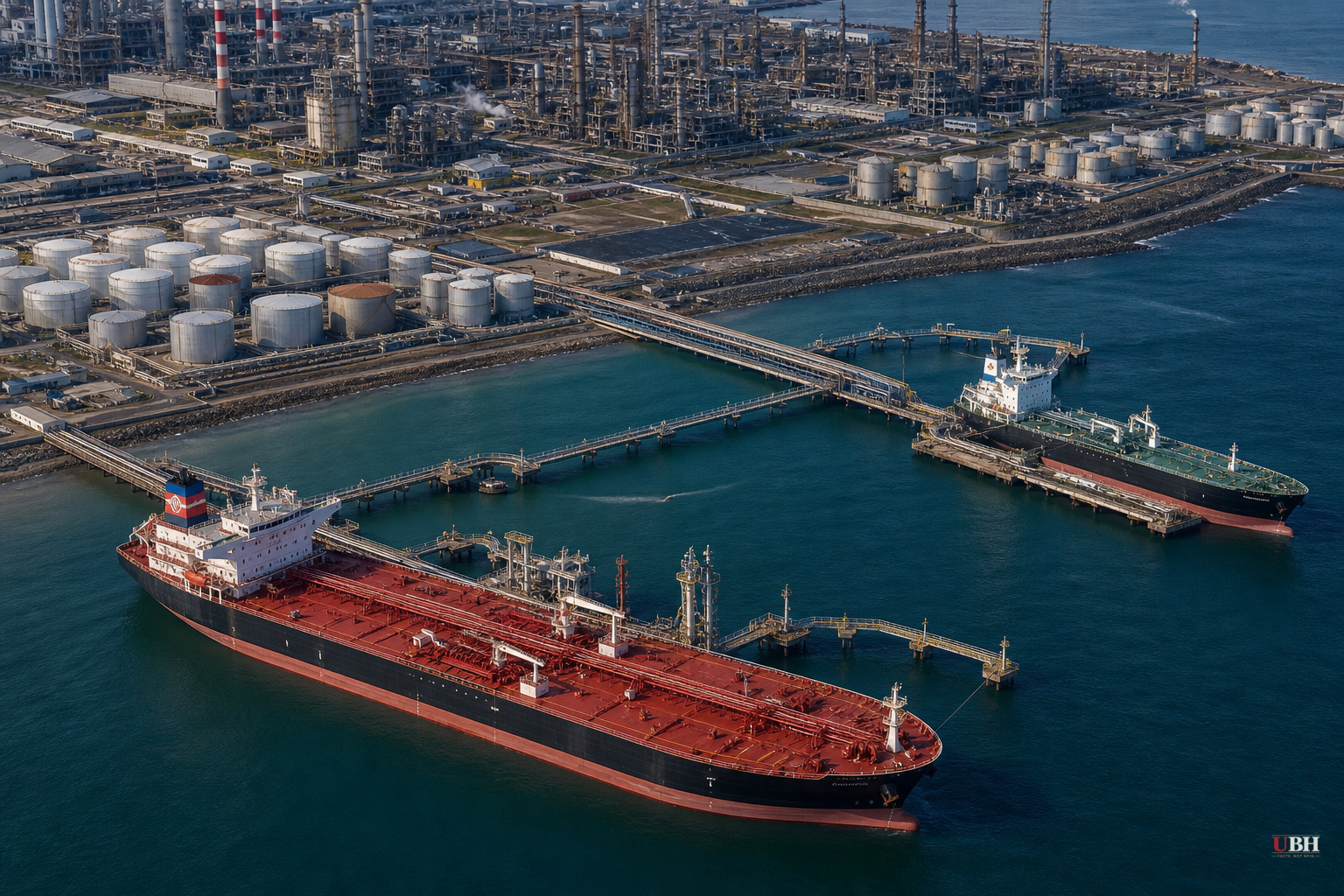
Hengli pulls in more than $100 billion a year, according to the company's own website. That's more annual revenue than Tesla or Boeing post. It runs petrochemical plants, textile operations, and shipbuilding, and employs over 300,000 people. Inside China it's an industrial giant. Outside China, almost nobody's heard of it.
Part of how it got that big, according to U.S. officials, industry analysts, and shipping brokers, is sanctioned Iranian crude oil.
The U.S. Treasury sanctioned Hengli's refinery business earlier this year, alleging the company bought billions of dollars' worth of Iranian petroleum. Treasury did not sanction Hengli's other business lines, textiles and shipbuilding among them.
A Massive, Legal-Gray Ecosystem
U.S. officials describe Hengli as one of the biggest players in a sprawling network of Chinese "teapot" refineries, small independent refiners that for years have quietly absorbed sanctioned oil from Iran at steep discounts.
The scale is enormous. China's purchases of Iranian oil, most of it flowing through teapot refineries, topped $30 billion last year, according to a March report from the U.S.-China Economic and Security Review Commission. That figure represents nearly all of Iran's exported petroleum. In plain terms: Chinese refiners are functionally the financial lifeline keeping Iran's oil exports alive despite U.S. sanctions.
People familiar with Hengli's operations say the company has been buying sanctioned crude since at least late 2020, and that purchases accelerated after Russia invaded Ukraine in 2022. Hengli's petrochemical arm carries a heavy debt load, according to these people, and turning to discounted Russian and Iranian crude, sometimes at up to 25% below market prices, helped the business stay afloat.
Hengli's Denial
Hengli did not respond to requests for comment on the record. The company has previously said it complies with regulations in every region where it operates, has never traded with Iran, and that its suppliers gave it similar assurances.
In a bond prospectus, Hengli said its crude is mainly sourced from the Middle East, naming Saudi Aramco among its suppliers without naming others.
The company's position in that financial disclosure contradicts the picture painted by Treasury's sanctions action and by the analysts and shipping brokers describing Hengli's buying patterns. Both accounts are now on the record. Only one of them can be fully true, and no independent audit resolving that contradiction has been reported.
Beijing Backs the Company, Not the Sanctions
China's Commerce Ministry didn't stay quiet after Treasury's sanctions. It publicly instructed Chinese companies not to comply with the U.S. blacklisting of Hengli and other refiners over alleged Iranian oil purchases.
Beijing is telling its own companies to ignore American sanctions enforcement. It's a direct rejection of U.S. sanctions authority over Chinese commercial activity, and it means Treasury's sanctions on Hengli's refinery unit function more as a diplomatic marker than an enforceable stop.
Who's Getting Rich
Chen Jianhua's personal fortune has gone from $2 billion roughly a decade ago to an estimated $20 billion today, according to Forbes. His wife, Fan Hongwei, chairs Hengli's petrochemical and refining business and is worth more than $5 billion in her own right, per Forbes.
The money is real and it's growing fast. Sanctioned or discounted Iranian and Russian crude, if the analysts and Treasury are right, has been a meaningful part of that growth.
Enforcement Questions
No criminal charges have been filed against Hengli or Chen Jianhua. Treasury's action is a sanctions designation against the refinery business specifically, not an indictment, and it doesn't touch Hengli's shipbuilding or textile arms.
The open question is enforcement. Sanctions only work if they're enforced, and if Beijing is actively telling Chinese firms to disregard them while the alleged buyer keeps posting record revenue and its founder keeps getting richer, the sanctions regime is functioning more as a statement of U.S. policy than a real financial constraint on Iran's oil revenue. Whether the Treasury Department expands sanctions to Hengli's other business lines, or whether Washington pursues secondary sanctions against banks and shippers that finance these transactions, remains to be seen.
Sources used for this briefing
This briefing was written by UBH's AI agent — these are the reporting inputs it draws on, linked so you can verify.


