
Unbiased headlines. Facts, not spin.
Every story is an unbiased news briefing written from 110+ sources across the spectrum — sources linked so you can verify it yourself.
 energy
Major Story (8/10)
July 31, 2026 at 10:55 AM
energy
Major Story (8/10)
July 31, 2026 at 10:55 AM
Oil Set for Biggest Monthly Gain Since March as US-Iran Conflict Rattles Shipping Lanes
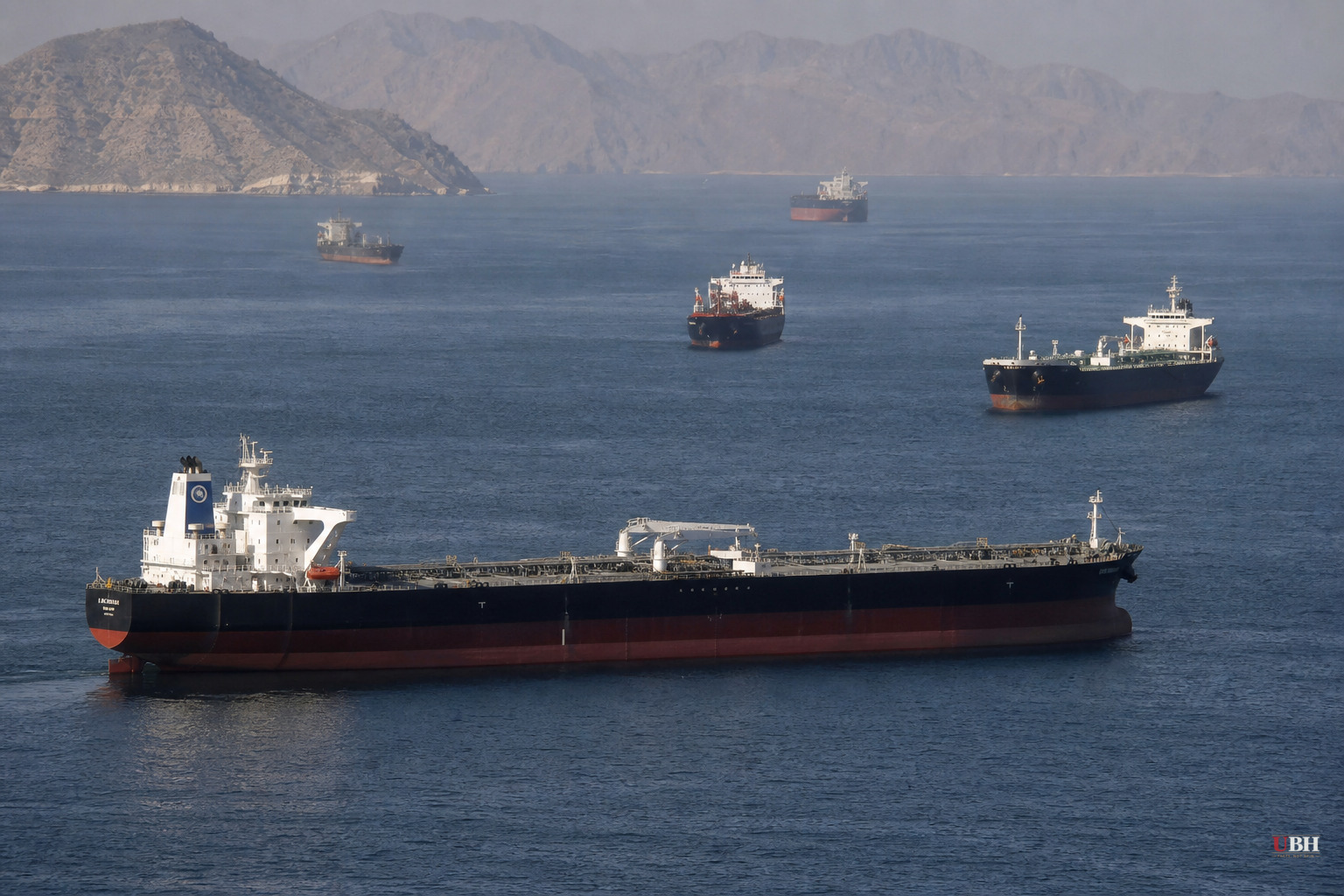
Biggest monthly jump since March
Oil is closing out July with its sharpest monthly gain since March, according to NDTV Profit. Brent crude has gained more than 21% this month, while West Texas Intermediate has climbed roughly 20%, according to Channel News Asia (CNA), snapping two straight months of declines for both benchmarks.
Brent futures traded up 47 cents, or 0.53%, at $89.50 a barrel by 0952 GMT Friday, CNA reported. WTI was up 4 cents to $83.63. NDTV Profit put Brent above $86 and WTI near $82 in its own snapshot the same day, a reminder that these numbers move by the hour, not just the day, in a market this jumpy.
CNA reported Brent swung nearly $11 a barrel this week alone. A market getting yanked around by real-time military developments in the Middle East would produce that kind of movement.
What's actually driving it
The proximate cause is the escalating conflict between the U.S. and Iran. NDTV Profit reported the two sides exchanged fresh strikes on Thursday, extending a fight that has pulled in regional players including Yemen's Houthis and Iraqi militias, who NDTV Profit said have joined forces for a reported attack on Saudi Arabia.
Iran's Revolutionary Guards stopped two tankers from transiting the Strait of Hormuz this week, while four others changed course, according to Fars news agency as cited by CNA. Two very large crude carriers did make it out of the strait Friday, but overall traffic through the waterway remains thin, according to Kpler ship-tracking data cited by CNA. Before this conflict, Hormuz alone carried about a fifth of global oil and LNG supply, CNA reported.
Saudi Arabia is now trying to organize a coalition, reportedly holding talks with representatives from 43 countries, aimed at protecting shipping in the Red Sea, Bab el-Mandeb and the Gulf after Iran-backed Houthi rebels imposed a blockade on the kingdom last week, according to NDTV Profit. Houthi leader Abdulmalik al-Houthi warned that any broader Saudi military escalation would draw a stronger response, NDTV Profit reported.
Separately, a drone strike sparked fires on two gas vessels in Egypt's Damietta port, according to CNA, opening up a new threat to the Suez Canal, one of the last major routes still open for Saudi oil exports as the wider conflict spreads.
The market has moved past the war headlines
Prices steadied Friday even with all that going on. "The market has stopped trading the war and started trading the shipping data," said Ole Hvalbye, market analyst at SEB Research, quoted by CNA.
That's a real distinction. Traders aren't just reacting to who bombed what. They're watching actual tanker counts through actual chokepoints. CNA reported 29 commodities vessels passed through Bab el-Mandeb on Thursday, and that two VLCCs cleared Hormuz Friday, evidence that some shipping is still getting through despite the conflict.
Talks between Iran and Oman on managing the Strait of Hormuz are ongoing, according to the Iranian Labour News Agency as reported by CNA, though Iran has rejected Oman's proposal for joint management of the waterway. No resolution yet.
Other pressure points
The Middle East isn't the only chokepoint in play. CNA reported the Caspian Pipeline Consortium terminal, a key export route for Kazakh crude, has faced repeated tanker attacks in the Black Sea, halting loadings there too.
Ukraine's military said it struck Russia's Volgograd oil refinery overnight Thursday into Friday, sparking a fire, according to CNA. That's one more supply-side headache layered on top of an already strained global picture.
Add falling U.S. crude inventories, reported by NDTV Profit as reinforcing expectations of a tightening physical market, and ADNOC's reported purchase of five VLCCs for about $590 million, according to three sources cited by CNA, and the picture is a market bracing for a longer disruption, not a one-week scare.
What's next
BankPro CEO Paolo Broccardo told CNA he expects Brent to stay in a "relatively wide $80-100 per barrel range in the near term" as markets keep reacting to geopolitical risk. That's a wide range for a reason: nobody knows if Hormuz traffic normalizes or chokes off again next week.
Investors are also waiting on quarterly earnings from Chevron and ExxonMobil, according to NDTV Profit, for a read on how the volatility is hitting U.S. producers' output and demand assumptions. Shell already reported its second-highest quarterly profit on record this week, per NDTV Profit, a sign the chaos has been very good for refining and trading margins even as it raises costs for everyone else filling up at the pump.
The open question is whether Saudi Arabia's proposed 43-country maritime coalition actually forms and whether it can secure Bab el-Mandeb and the Red Sea faster than the conflict spreads further. Until that's resolved, expect the same pattern: prices steady on any day shipping data looks okay, and spike hard the moment it doesn't.
Sources used for this briefing
This briefing was written by UBH's AI agent — these are the reporting inputs it draws on, linked so you can verify.


