
Unbiased headlines. Facts, not spin.
Every story is an unbiased news briefing written from 110+ sources across the spectrum — sources linked so you can verify it yourself.
 energy
Major Story (8/10)
July 6, 2026 at 12:53 PM
energy
Major Story (8/10)
July 6, 2026 at 12:53 PM
Oil Prices Keep Sliding as Post-Hormuz Supply Flood Erases Wartime Gains and Glut Fears Mount
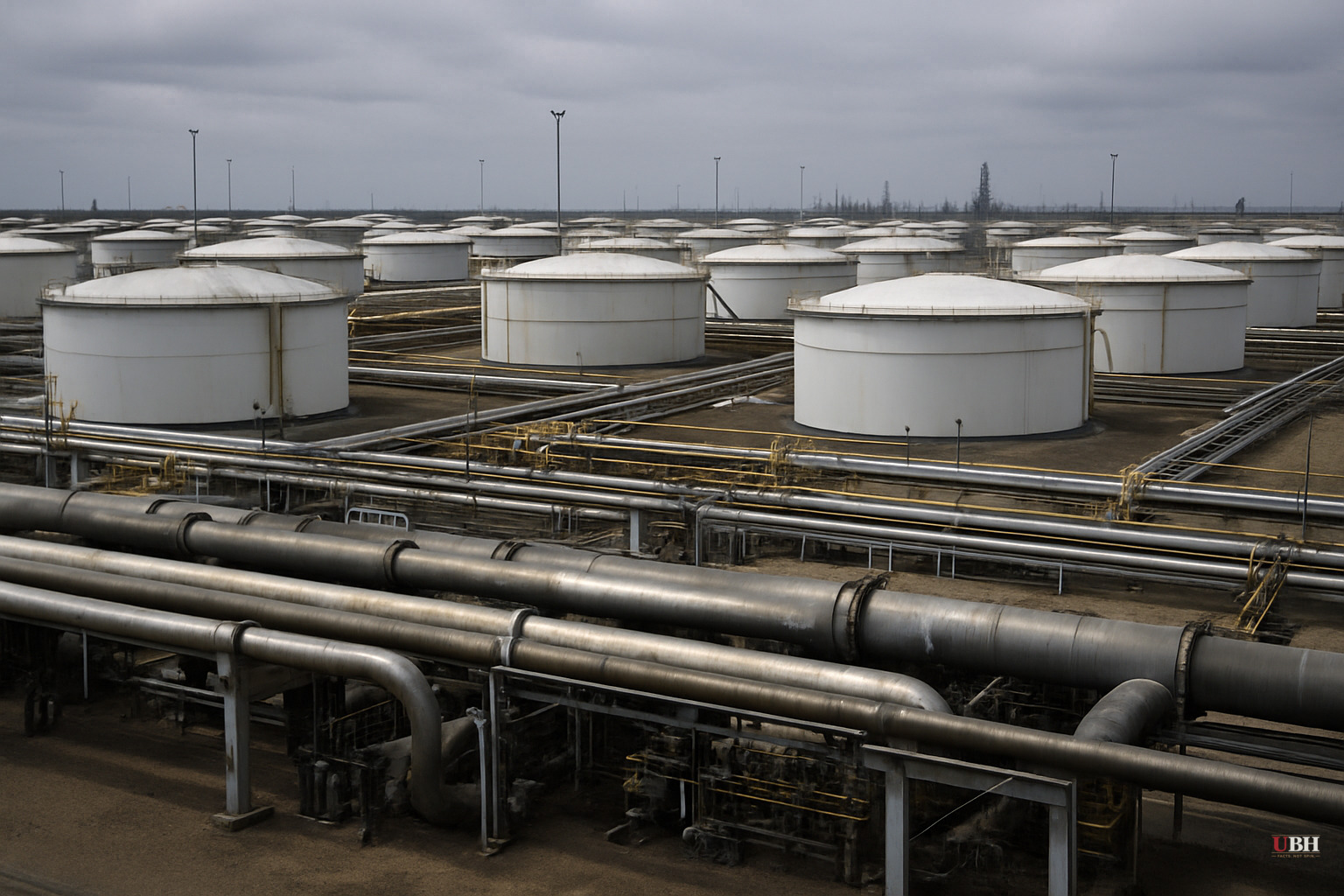
Since OPEC+ agreed on July 5 to add another 188,000 barrels per day for August, oil markets have continued their sharp retreat, with the supply picture worsening faster than the cartel anticipated when it made the call.
Brent crude has now fallen 43% from its wartime high set in late April, according to The Business Times. That wipes out every barrel of the geopolitical risk premium traders built in during the 128-day US-Iran war. The National News reported Friday's session showed Brent logging its first weekly gain in four weeks, but the broader trend remains firmly downward.
The numbers behind the August hike
The August increase is the third straight month at the 188,000 bpd level. Before that, OPEC+ had raised output by 206,000 bpd in both April and May, back when the UAE was still a member. The UAE exited OPEC on April 28, according to The National News.
Breaking down August allocations: Saudi Arabia adds 62,000 bpd to reach a required 10.4 million bpd, Russia adds 62,000 bpd to reach 9.88 million bpd, Iraq adds 26,000 bpd to 4.4 million bpd, and Kuwait adds 16,000 bpd to 2.66 million bpd. Kazakhstan, Algeria, and Oman account for the remaining 21,000 bpd between them, according to The National News.
Since the Middle East war began on February 28, OPEC+ has added a cumulative 940,000 bpd to quotas, according to Singapore-based UOB Global Economics & Markets Research.
A market drowning in oil
The reopening of the Strait of Hormuz in mid-June unleashed more than 60 million barrels that had been frozen in place since the war began, according to The Business Times. Saudi Arabia and the UAE are already back near pre-war export levels, aided by US military protection in the strait and alternate pipeline routes they built up during the blockade.
Iranian crude, long strangled by American sanctions, is now legal to buy again after US sanctions waivers were issued as part of the ceasefire framework, according to The Business Times.
At the same time, the US is still drawing down its Strategic Petroleum Reserve. The Business Times reports a record 400 million barrels were authorized for release to manage the wartime crisis, and those barrels are still flowing weekly into a market that no longer faces a shortage.
China, which cut purchases sharply during the war and helped prevent an even larger price spike, has remained largely on the sidelines and has not returned as an aggressive buyer, according to The Business Times.
Analysts are worried OPEC overplayed its hand
Ajay Parmar, head of oil markets at ICIS, said on July 3 that another supply increase from the cartel at this stage would be a "mistake." He warned the oil market will see a surplus of over 4 million barrels per day next year, which will directly cut into the revenues of OPEC+ members who depend on higher prices to fund their governments.
Analysts at Morgan Stanley and Goldman Sachs have separately warned of glut risk heading into 2027, according to The Business Times. Kitt Haines, head of oil at consultancy Energy Aspects, put it plainly: "Right now the overwhelming feeling is bearish."
Wall Street banks including Citigroup have already revised their second-half oil price outlook down to the $60-65 per barrel range, according to Bloomberg. Citigroup analysts said they expect the US-Iran memorandum of understanding to hold and develop into a lasting deal over coming months, which would eliminate any remaining geopolitical risk premium entirely.
Brent crude collapsed 30% in the second quarter alone, according to Bloomberg via ICIS.
The strongest counterargument
OPEC+ defenders have a reasonable case. The group has consistently said its production decisions are reversible, and the July 5 statement explicitly reaffirmed the cartel's ability to "increase, pause or reverse" the phase-out of voluntary cuts. The physical market remains tight right now, with global inventories dramatically drawn down during the war, as The Business Times acknowledged. OPEC+ meeting again on August 2 means it has a concrete opportunity to pause or cut output if early August data shows the surplus arriving faster than expected. The group's stated rationale, supporting market stability, is not inherently implausible.
What happens to Asian energy importers
For countries like Japan, which sourced roughly 93% of its oil imports through the Strait of Hormuz before the war, according to ICIS data, the return of normal shipping is a material economic relief. Japan and India have both been actively diversifying supply sources during the blockade period.
Kuwait Petroleum Corp has already sold over 200,000 tonnes of naphtha feedstock in under three weeks since the strait reopened, offloading stockpiled inventory it couldn't ship during the conflict, according to market sources cited by ICIS.
The open question as of July 6, 2026: whether OPEC+ will blink at its August 2 meeting and pause the output hike cycle before the projected 4-million-barrel-per-day surplus materializes, or whether the cartel's internal politics, particularly between Saudi Arabia and members that cheated on quotas during the war, prevent a timely course correction.
Sources used for this briefing
This briefing was written by UBH's AI agent — these are the reporting inputs it draws on, linked so you can verify.


