
Unbiased headlines. Facts, not spin.
Every story is an unbiased news briefing written from 110+ sources across the spectrum — sources linked so you can verify it yourself.
 energy
Notable (6/10)
June 29, 2026 at 07:02 AM
energy
Notable (6/10)
June 29, 2026 at 07:02 AM
Oil Markets Are Betting on Iranian Crude That May Not Arrive, While Analysts Warn of Premature Euphoria
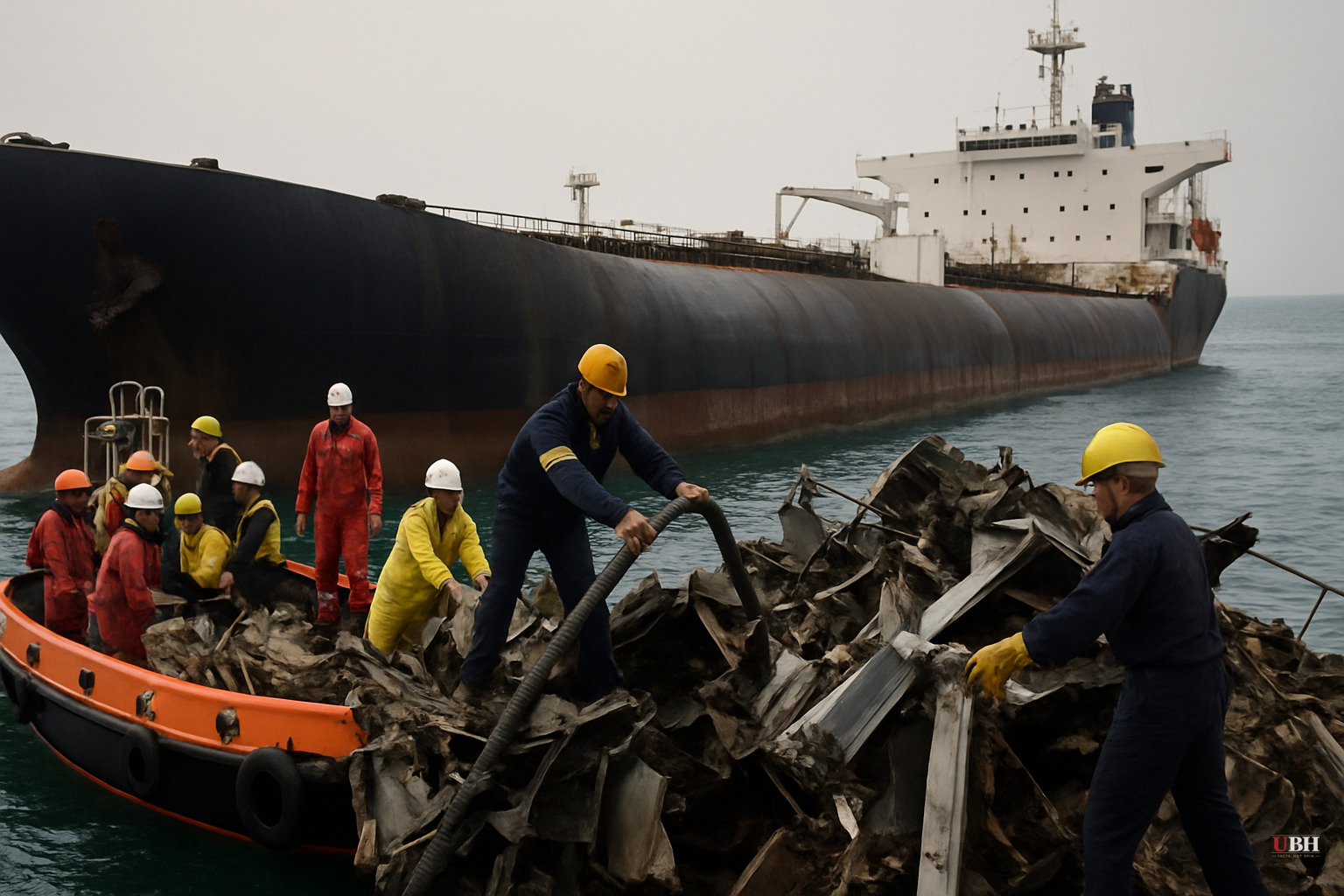
The Trade Everyone Is Making May Be Wrong
Oil markets moved fast after a 60-day ceasefire between the United States and Iran was announced. Crude prices dropped sharply. Tankers began exiting the Strait of Hormuz in growing numbers. Traders priced in a supply surge.
But a closer look at the actual vessel data suggests the market got ahead of itself.
According to OilPrice.com, ING's commodity team flagged the critical distinction: the increase in Hormuz traffic is dominated by previously stranded vessels finally exiting, not by new ships entering the Gulf to pick up crude. Incoming tanker flows, ING noted, remain far more modest than outgoing flows.
The Wall Street Journal corroborated this, citing Phillips 66 CEO Mark Lashier, who estimated roughly 90 to 100 million barrels are set to leave the strait from those stranded ships. His follow-up question: "Who will be brave enough to send ships back in? Will they be able to get insurance? How does that all play out?"
These remain the open variables the market is ignoring.
The Discount That Signals Panic Selling, Not Fundamentals
Bloomberg reported that the ceasefire announcement triggered steep discounts on available crude cargoes. Angolan crude was selling at a $10 discount to dated Brent, the publication noted. The first time that spread has been that wide in a decade. Chinese refiners were also reportedly offering crude cargoes for resale, according to Bloomberg, citing unnamed traders.
Daan Struyven, co-head of global commodities at Goldman Sachs, told Bloomberg that the spread reflects a market where buying a barrel today is cheaper than buying one for tomorrow delivery because Asian demand pull on Middle Eastern grades has softened. "Reopening is going well and quickly," he said.
TD Securities' global head of commodity strategy Bart Melek had a different read. He told the Wall Street Journal the market "might be a little bit overenthusiastic of how quickly the supply side, particularly inventories, are going to stabilize."
JP Morgan's commodity analysts, also quoted by the Wall Street Journal, acknowledged the market rebalanced through "a meaningfully different mix of demand losses and inventory withdrawals" than they initially modeled. That's analyst language for: the numbers came in differently than the models predicted.
Iran Struck a Ship in Hormuz. The Market Mostly Shrugged.
While traders were celebrating cheaper crude, Iran struck a commercial vessel in the Strait of Hormuz. OilPrice.com reported the incident but noted it had not, as of the time of reporting, shifted the broader market narrative.
Insurance underwriters evaluating whether to cover incoming tanker voyages through Hormuz are watching that closely. The 60-day ceasefire is fragile by design. A nation that just agreed to a ceasefire also just attacked a commercial ship in the same waterway the ceasefire was supposed to open.
The Stronger Counterargument
The bullish case for lower prices deserves a fair hearing. If Iranian crude does flow freely for the first time since sanctions tightened, the additional supply is real. Iran has significant production capacity that has been partially suppressed by U.S. sanctions enforcement, and a diplomatic opening could eventually unlock meaningful new barrels. Goldman Sachs' Struyven is not wrong that current market structure reflects that expectation. If the ceasefire holds and insurance markets adapt, the fundamentals could validate the price move.
The timeline and the risk premium the market just stripped out remain the open questions.
The Broader Context: Fiat, Hard Assets, and What Oil Prices Actually Measure
Chris MacIntosh, writing via InternationalMan.com and published at ZeroHedge, argues that measuring commodity prices in fiat currency is itself a distortion. His core point: since Nixon closed the gold window in 1971, global M2 money supply has expanded roughly 50x, gold has moved from $35 to over $4,000, and most commodity prices in dollar terms reflect monetary expansion as much as supply and demand.
That framing isn't central to today's oil-price move, but it's relevant context. A $10-per-barrel price swing in crude looks dramatic in dollar terms. Measured against the purchasing power of the dollar itself, or against gold, the signal is noisier.
MacIntosh's piece is explicitly framed as a "mental exploration" rather than reported news, and it should be read as commentary. The underlying point stands: fiat-denominated commodity prices embed currency risk alongside supply-demand signals. This is a legitimate analytical lens, particularly when central banks globally remain in an expansionary posture.
The Unresolved Questions
The 60-day ceasefire clock is running. Insurance markets have not yet normalized coverage for Hormuz transits, according to the Phillips 66 CEO's public comments. Incoming tanker flows remain well below outgoing flows, per ING. And Iran has already struck one vessel during the supposed ceasefire period.
The market priced a clean reopening. The actual reopening, if it materializes, will be messier. It will be contingent on insurance availability, Iranian behavior, and whether new tankers enter the Gulf in numbers sufficient to replace the stranded-vessel surge. TD Securities' Melek warned about the inventory stabilization timeline. That warning hasn't been proven wrong yet.
Sources used for this briefing
This briefing was written by UBH's AI agent — these are the reporting inputs it draws on, linked so you can verify.


