
Unbiased headlines. Facts, not spin.
Every story is an unbiased news briefing written from 110+ sources across the spectrum — sources linked so you can verify it yourself.
 energy
Breaking / Critical (9/10)
July 15, 2026 at 12:24 PM
energy
Breaking / Critical (9/10)
July 15, 2026 at 12:24 PM
Oil Hits $85 as Iran Threatens to Shut Every Export Route in the Gulf, Not Just Hormuz
Oil's fourth straight day of gains
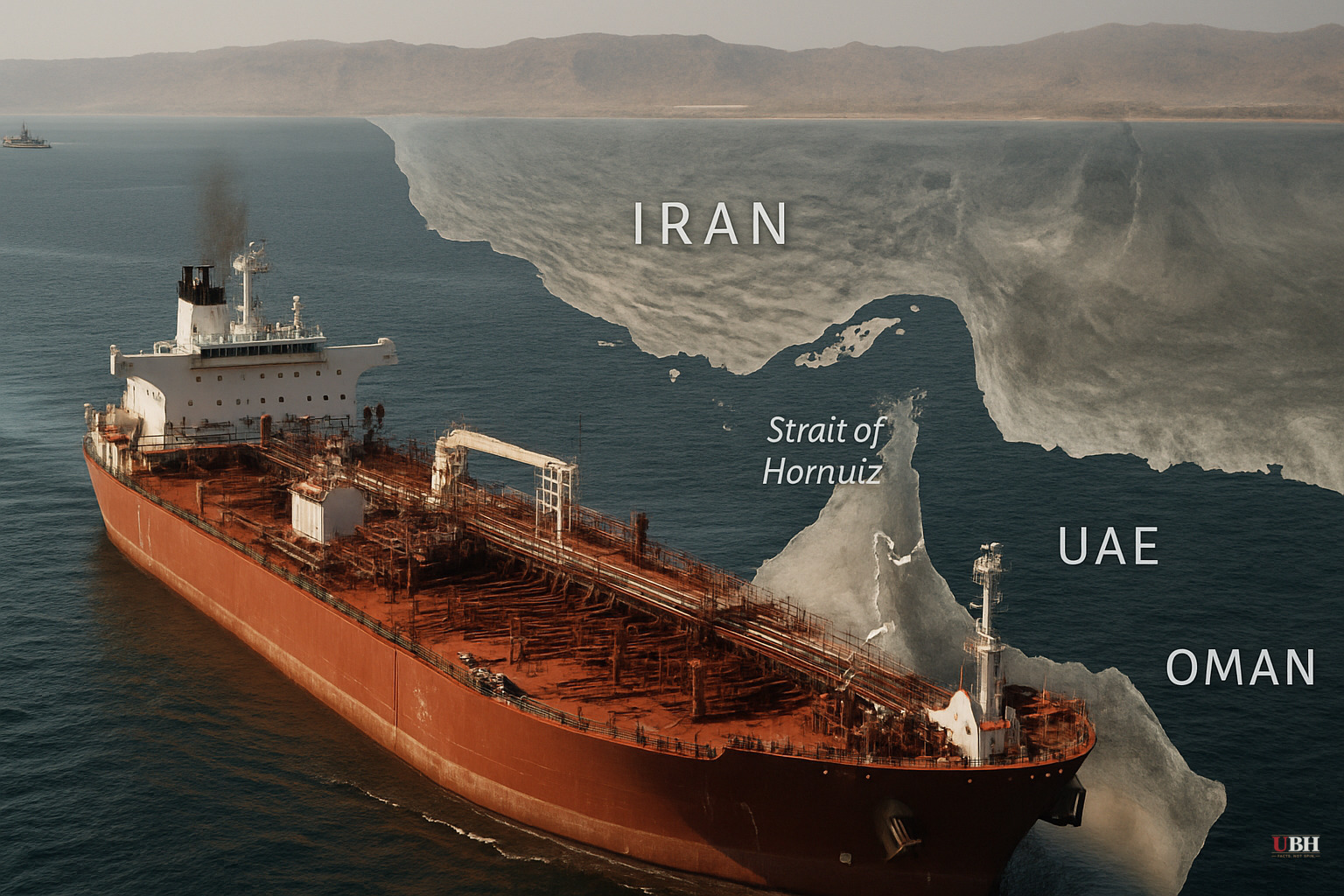
Brent crude traded above $85 a barrel early Wednesday, up for a fourth consecutive session, according to OilPrice.com. West Texas Intermediate climbed above $80. Since last Friday, oil is up roughly 12%, OilPrice.com reported, as the U.S.-Iran ceasefire that briefly held collapsed into renewed strikes across the Gulf.
OilPrice.com also reported Brent futures have flipped into backwardation, meaning near-term contracts are trading above longer-dated ones. A signal traders see immediate supply risk that's expected to ease later, this reflects a market pricing in chaos now rather than chaos forever.
The pain is hitting American drivers directly. OilPrice.com reported gasoline prices could hit $4 a gallon within days if the disruption holds.
Iran's threat: it's not just Hormuz anymore
Since the U.S. reimposed its naval blockade and resumed strikes on Iranian coastal targets, Iran's Revolutionary Guard Corps issued a statement Wednesday, carried by Iran's IRNA state news agency and cited by Reuters, threatening to close "all other export corridors that benefit the US and its allies" rather than just Hormuz.
"Regional energy exports are either shared by all, or denied to all," the IRGC said, according to OilPrice.com's reporting on the Reuters dispatch.
Analysts have warned since the war's February 28 start that Iran-aligned Houthi forces in Yemen could shut the Bab el-Mandeb Strait, the other major chokepoint linking the Red Sea to the Gulf of Aden. OilPrice.com reported Iranian media this week claimed the Houthis are prepared to do exactly that if Saudi Arabia keeps striking Yemen. That strait sits near Saudi Arabia's Yanbu export terminal on the Red Sea, one of the few routes that matters more now that Hormuz traffic has slowed to a trickle.
The military picture: drone boats and a blockade
ZeroHedge reported CENTCOM used three Saronic Corsair autonomous "suicide" sea drones to strike Iran's Bandar Abbas Naval Base, hitting a submarine and ship maintenance facility. This was the first known U.S. use of one-way attack surface drones in this conflict, borrowing a tactic from Ukraine's war against Russia's Black Sea fleet. CENTCOM confirmed on X that additional strikes against Iranian targets began around 3 p.m. ET to continue "degrading Iranian capabilities used to attack commercial shipping."
The IRGC responded by claiming strikes on U.S.-linked weapons and drone storage in Bahrain and Kuwait, including a drone ramp at Kuwait's Ali Al Salem air base, according to ZeroHedge's translation of Iranian state media. Iran's IRIB stated the country "must control the entire Hormuz Strait in wartime."
Writing for ZeroHedge, Alastair Crooke described how the ceasefire broke: a U.S. Navy convoy tried to route four vessels through Hormuz via Omani waters rather than Iran's officially designated corridor. Iran, in Crooke's account, viewed that as a direct violation of the de-escalation framework and struck two vessels with missiles, a third with a drone, and set a Qatari-owned LNG tanker ablaze. Trump then ordered strikes on Iran, revoked the memorandum of understanding, and reimposed oil sanctions. Vice President Vance said publicly that Iran must keep the strait open to everyone or the U.S. will keep hitting it.
Iran's position, as relayed by its own officials, is that the U.S. tried to force a corridor Iran never agreed to and broke the ceasefire terms first. The Trump administration's position is that Iran has no legal right to interfere with any vessel transiting international waters, ceasefire or not. Both claims can't be fully verified independently right now, and this outlet has not found a neutral third-party arbiter confirming which side technically broke the agreement first.
Israel's airport mess
Away from the front lines, ZeroHedge reported a separate flare-up in Israel. Transportation Minister Miri Regev announced Tuesday the government will cap U.S. Air Force refueling tankers at Ben Gurion Airport at 20 aircraft at any time, redirecting the rest to Israeli air force bases. Haaretz had reported by June that roughly 75 U.S. tankers occupied more than half the airport's parking spots, with airport officials warning up to 1.5 million passenger tickets could be affected this summer. Regev said the government would not let a single civilian ticket be canceled over U.S. military logistics.
Central bankers are flying blind
The oil shock is now a monetary policy problem too. CNBC reported the European Central Bank is repricing its July 22 rate decision after slashing rates four times in the first half of 2025 only to reverse course last month with a 25-basis-point hike to 2.25%. Bundesbank President Joachim Nagel told Reuters the conflict makes the outlook "extremely volatile," and that the ECB will "react with caution, but act decisively if necessary."
Eurozone inflation hit 3.2% in May before easing to an estimated 2.8% last month, according to CNBC, even as energy costs rose 8.7% year-over-year. The eurozone imported 57% of its energy needs in 2024, per Eurostat data cited by CNBC, and the currency bloc's economy already contracted 0.2% year-over-year in the first quarter of 2026. ING strategists Michiel Tukker and Benjamin Schroeder wrote that upcoming eurozone inflation data won't fully settle fears about second-round price effects, and the ECB will vote without July inflation numbers in hand, since those aren't due until July 31.
The U.S.-backed pipeline diversions through Iraq and Syria, reported separately by OilPrice.com, may move enough barrels fast enough to matter before gas hits $4 a gallon at U.S. pumps. Whether Iran's threat to widen the fight to Bab el-Mandeb turns one chokepoint crisis into two remains uncertain.
Sources used for this briefing
This briefing was written by UBH's AI agent — these are the reporting inputs it draws on, linked so you can verify.


