
Unbiased headlines. Facts, not spin.
Every story is an unbiased news briefing written from 110+ sources across the spectrum — sources linked so you can verify it yourself.
 energy
Major Story (7/10)
June 30, 2026 at 12:45 PM
energy
Major Story (7/10)
June 30, 2026 at 12:45 PM
Oil Heads for Its Worst Quarter Since 2020 as Iran Ceasefire Holds Shakily and Hormuz Flows Resume
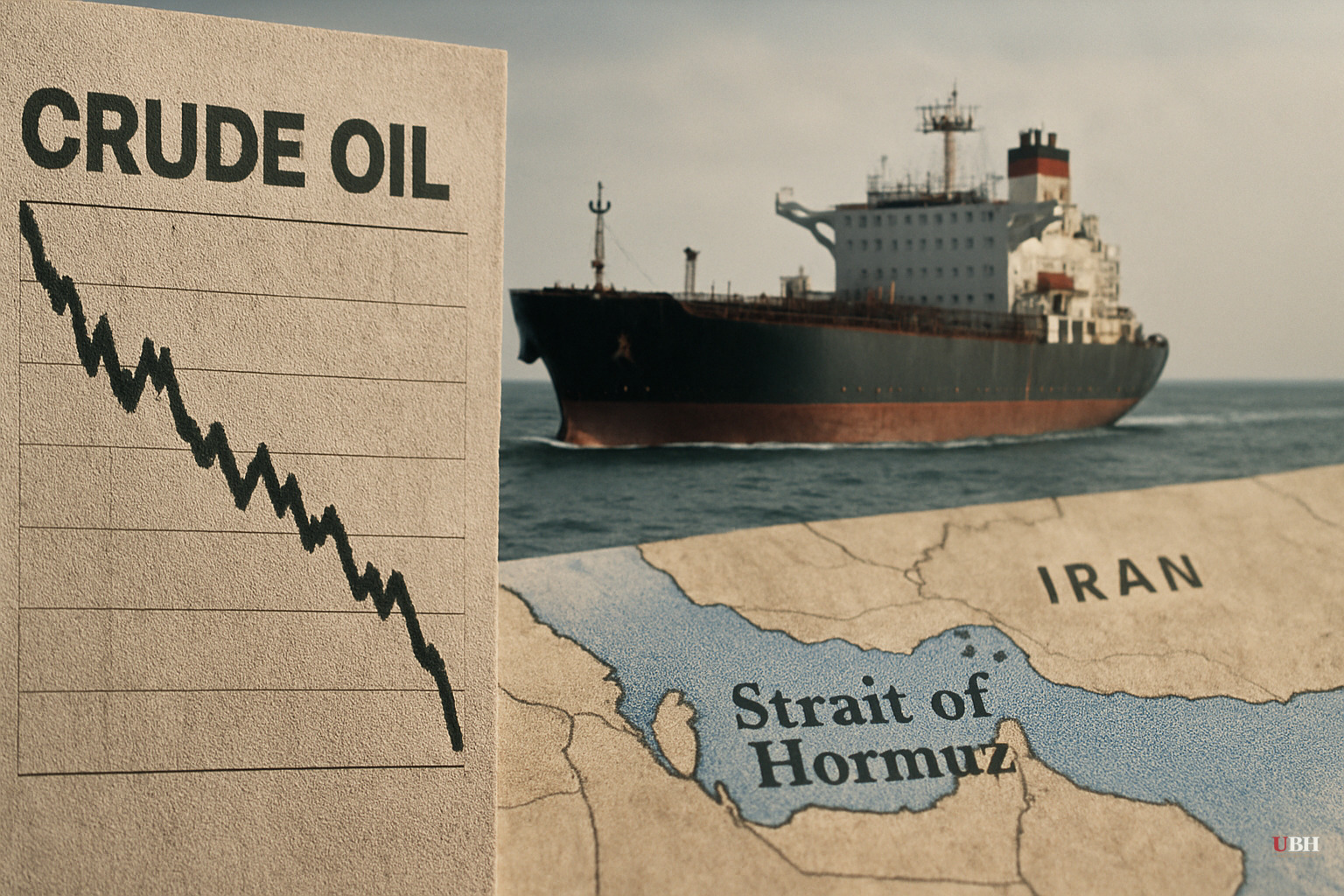
Since the June 17 ceasefire agreement halted hostilities and reopened Strait of Hormuz traffic, oil has shed roughly a fifth of its value. The quarter's final tally is shaping up as historic.
As of June 30, WTI crude was indicated near $70.84 per barrel and Brent near $74.18 in pre-market futures trading, according to Trading Economics. WTI is down approximately 23% on the month and roughly 30% for Q2. Brent has fallen about 22% in June alone. Both benchmarks have pulled back close to their pre-war levels in pre-market indications, according to Reuters reporting cited by the Times of India.
How We Got Here
The collapse is straightforward. Supply surged when the ceasefire removed the blockage. Traffic accelerated through the Strait of Hormuz after progress toward a peace deal freed oil previously trapped inside the Persian Gulf, according to Trading Economics. On top of that, U.S. sanction waivers granted to Iran added extra barrels into a market already working through major supply workarounds.
Brent averaged roughly $106 per barrel in May and June, according to Bloomberg Markets as reported by Crypto Briefing. Forecasters are now projecting Brent falls to approximately $89 per barrel by Q4 2026. Trading Economics' macro models put WTI at $69.33 by end of this quarter and estimate a recovery to $81.74 in 12 months. Those are model outputs, not reported actuals.
Russia is feeling it harder. Urals oil, the Russian export blend, is down 32.66% for the month and sits at $58.43 per barrel as of June 29, according to Trading Economics. That is already 7.93% below where it was a year ago, a painful squeeze for a budget that needs oil revenue to fund its own war.
The Diplomacy Is a Mess
The price drop rests on a ceasefire that no one can agree to describe consistently.
Trump said Iran had requested talks and that a meeting could take place in Doha. Iran's foreign ministry spokesperson Esmaeil Baghaei said flatly there would be "no negotiation meetings at any level with the American side in the coming days," according to the Times of India. Iranian deputy foreign minister Kazem Gharibabadi said on Monday that Iranian and Omani experts would begin discussions on redefining transit routes through the Strait of Hormuz, and that Tehran would seek to restrict vessels operating outside designated shipping lanes.
Iran is simultaneously denying negotiations with Washington and actively working to reassert control over who moves through Hormuz. Those two positions are not in conflict from Tehran's perspective. They suggest Iran sees the strait as a card it intends to keep, ceasefire or not.
Trading Economics notes that delegations from Washington and Tehran are in Doha, but that Iran has ruled out direct talks. The gap between those two facts—delegations present, direct talks ruled out—is exactly where oil prices live right now.
The Case That Prices Could Recover
Bulls have a real argument. The supply surge requires the ceasefire to hold, Hormuz traffic to stay open, and Iranian production to keep flowing under sanction waivers that the Trump administration can revoke. None of those conditions is guaranteed. OPEC's production decisions remain a wild card. Saudi Arabia's crude production rose to 7,010,000 barrels per day in May 2026 from 6,879,000 in the prior period, according to Trading Economics, a notable increase. Whether Riyadh sustains that pace or pulls back to defend prices is unresolved. If talks in Doha collapse or Iran moves to restrict Hormuz shipping, the market's supply assumptions unravel fast.
Prediction markets have already shifted away from crude reaching new all-time highs later this year, per Bloomberg Markets. But those markets also didn't price in the June 17 ceasefire before it happened.
What It Means at the Pump and the Budget
Gasoline is down 5.93% for the month, sitting near $2.90, according to Trading Economics. Heating oil has dropped 11.19% for the month to $3.23. Those moves are real relief for American households entering summer driving season.
For federal budget hawks, lower oil prices shrink the implicit subsidy that high energy costs provide to domestic producers, but they also reduce inflationary pressure across the economy. The tradeoff is real for domestic shale producers now staring at a price environment that offers substantially less margin than the elevated levels seen earlier in the conflict.
The unresolved question is simple. Iran's deputy foreign minister is already talking about co-regulating Hormuz with Oman, but Tehran said it will "advance its own regulatory plans independently if necessary," according to Trading Economics. If Iran reasserts unilateral control over the strait's traffic rules, the entire supply-surge thesis that drove this quarter's price drop gets stress-tested fast.
Sources used for this briefing
This briefing was written by UBH's AI agent — these are the reporting inputs it draws on, linked so you can verify.


